

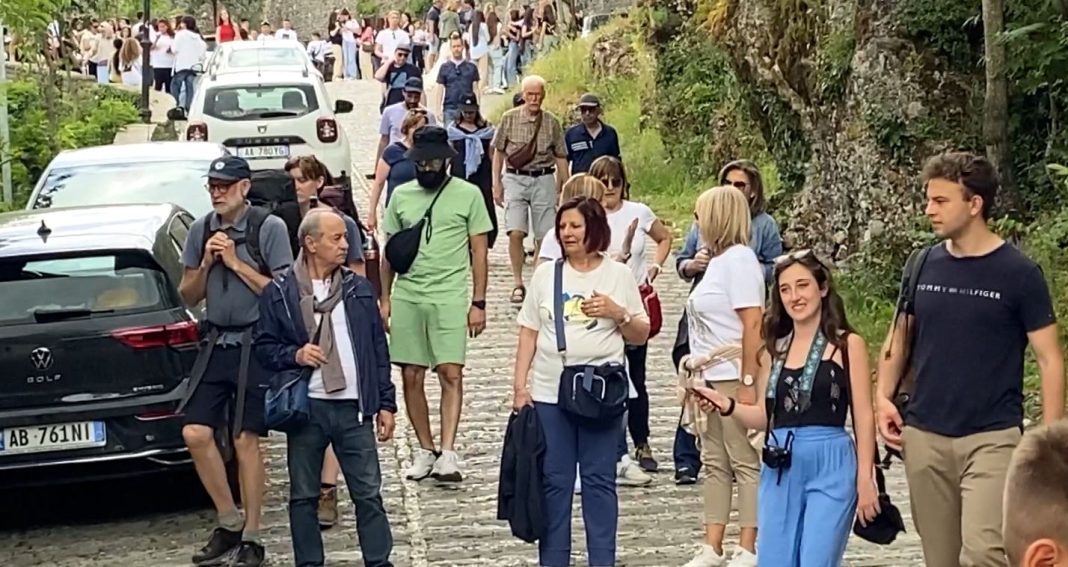
During the summer tourist season, museums in the city of Gjirokastra are important points for attracting local and foreign tourists.
There are about 28,000 tourists who, since the beginning of the year, have visited the four public museums operating in the city: the Weapons Museum, the Ethnographic Museum, the Kadare Museum and the Cold War Museum.
Bruno Pjetri, curator of the “Kadare” museum, says that French visitors are the ones who show more curiosity about his life or works.
“It is mainly French visitors who are more curious to know about the writer, the month of August has been quite successful, they always want to know where Ismail Kadare grew up, to know more about his work, where he spent his childhood, and now after the writer’s death, I can say that the number of visitors has increased and we hope that these days of August and September will be successful in terms of attendance” – said Pjetri.
“The Cold War Museum is one of the museums that has been visited the most by tourists, we have had many tourists mainly from Spain, Ialia, France and also the number is changing from year to year and is still increasing.” – says Arla Toro, curator of the Cold War Museum.
Now the well-functioning of museums has a special tradition, but the ever-increasing development of tourism has turned them into important centers for visitors arriving in Gjirokastra. During the tours in the museums of the stone city, tourists get to know the history, traditions, prominent personalities of Gjirokastra, etc.
During this year, the “My Muse” memorial center dedicated to the dissident Musina Kokalari was opened in Gjirokastra. This museum attracts researchers and visitors who are informed about the political, literary and intellectual activity of Musine Kokalari.