

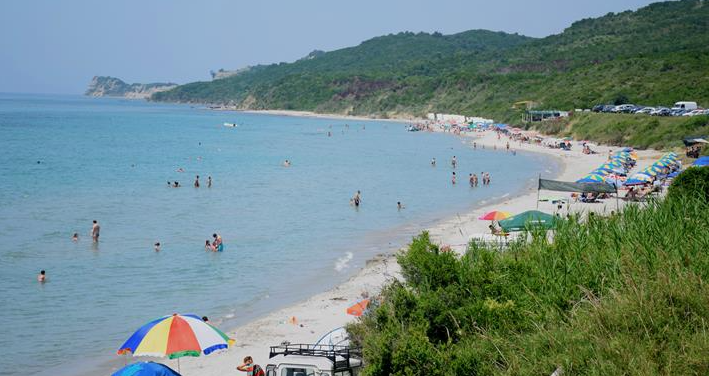
Albania has emerged as an increasingly popular destination for tourists from all over the world this year, witnessing a surge in foreign visitors who have flocked to explore the country from north to south.
The country’s relatively affordable prices compared to Western European nations, coupled with extensive coverage of its natural beauty in foreign media, have enticed travelers from Italy, Spain, Nordic countries, the Czech Republic, Poland, and beyond. Additionally, loyal visitors from Kosovo have continued to choose Albania for their vacations.
However, on the flip side, Albanian citizens themselves are facing difficulties in affording vacations. According to the latest Balkan Barometer, a publication by the Regional Cooperation Council (RCC), 60% of Albanians find it challenging to finance a week-long vacation away from home.
This figure remains consistent with the previous year, making it the highest percentage in the region, surpassing the regional average by 15 percentage points. Only 39% of Albanian citizens are financially able to take a week-long vacation outside the country, the lowest percentage in the region.
Montenegro comes second, with 50% of respondents stating that they cannot afford a week-long vacation abroad. North Macedonia and Serbia follow suit with 47% and 45%, respectively.
Interestingly, citizens of Kosovo, a significant proportion of whom prefer vacationing in Albania, seem to have a different perspective. Around 38% of them admitted difficulties in financing vacations, while 58% claimed they could afford such trips.
In the region, Bosnia and Herzegovina residents have the highest percentage of people who can afford vacations, with 67% stating they can manage a week-long trip for leisure.
The inability of Albanian citizens to afford vacations is closely linked to their use of funds for more essential services. For instance, 25% of respondents reported difficulties in paying electricity and energy bills at least once in the past year, compared to the regional average of 19%.
Furthermore, 19% experienced problems with credit payments, 52% struggled to maintain adequate heating in their homes (compared to the regional average of 24%), and 21% couldn’t afford basic necessities like food and clothing (compared to the regional average of 17%).
The Balkan Barometer, a survey conducted annually with the participation of six thousand citizens across the Western Balkans, delves into various aspects of their opinions, including regional cooperation, EU integration, trust in public institutions and media, major concerns, employment, climate change, security, digital life, transportation, rule of law, travel, and more. This marks the ninth consecutive publication of the survey by the Regional Cooperation Council.