

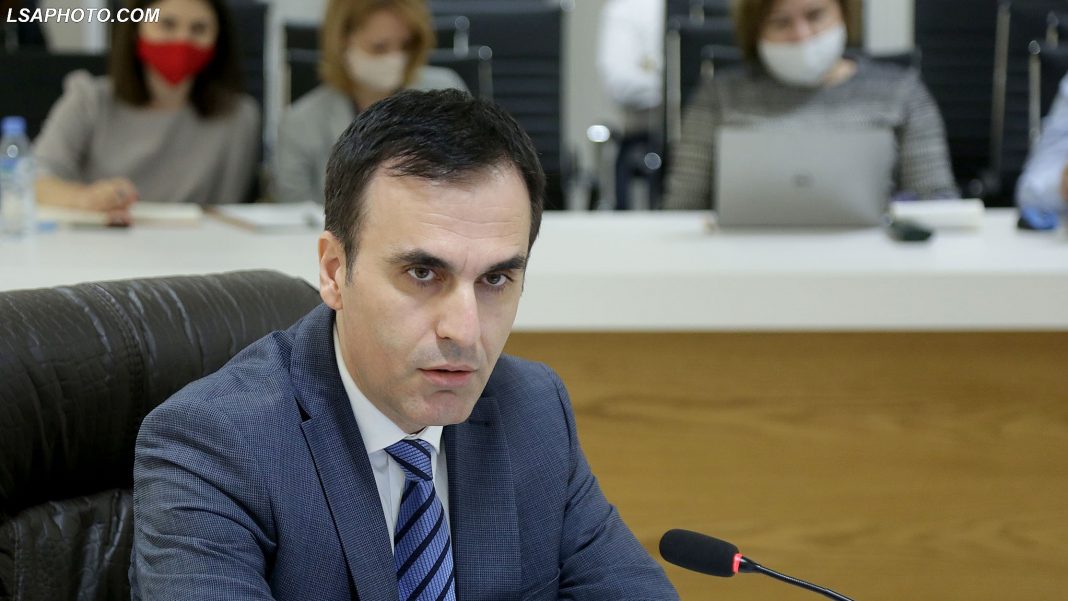
Although there were more prosecutions on offenses related to money laundering, the number of cases that ended up in court in 2020 remained lower than those acquitted. A fact that was described as “concerning” by the Albanian Prosecutor General Olsian Çela during the annual report at the Assembly.
The main objective in 2020 was combatting money laundering and prosecution offices had signed several cooperation agreements with local and international institutions.
According to the prosecutor general, this contributed to an increase of 20.19% of proceedings, and double the amount of persons tried in court, nevertheless without achieving a satisfactory level as a significant proportion of these cases were exonerated due to insufficient evidence.
“[…] the efficiency of criminal proceedings on cases related to money laundering and funding terrorism in 2020 remains again in levels that are not satisfactory, after evidencing the small number of criminal cases taken to court compared to cases that were acquitted”, said Çela.
Another concerning fact is that in 2020, there were 4.647 cases sent for acquittal, marking a 53.16% rise compared to the previous year, while a majority of the cases were dropped due to lack of evidence.
Overall, in 2020 the prosecution tried 11.530 people suspected to be involved in offenses, while at the same time period courts sentenced 8.022, and 152 were declared innocent.
The prosecutor general noted that in comparison to 2019, there was a 5.4% decline in defenders, 8.96% of the convicted, and 19.15% of those pronounced not guilty.
A little more than a fourth of the proceedings were logged in the district of Tirana, while Durres (9%) and Elbasan (7.69%) were ranked as highest after the capital.
Prosecutor General Çela noted that Dibra had the lowest criminality rate per 100.000 inhabitants, while Gjirokastra the highest.
2020 statistics indicate once again that a significant majority (92.71%) of those committing offenses are men and that there is a correlation between low education levels, unemployment, and criminality – 59.87% had only completed elementary learning and 72.49% were unemployed.




