

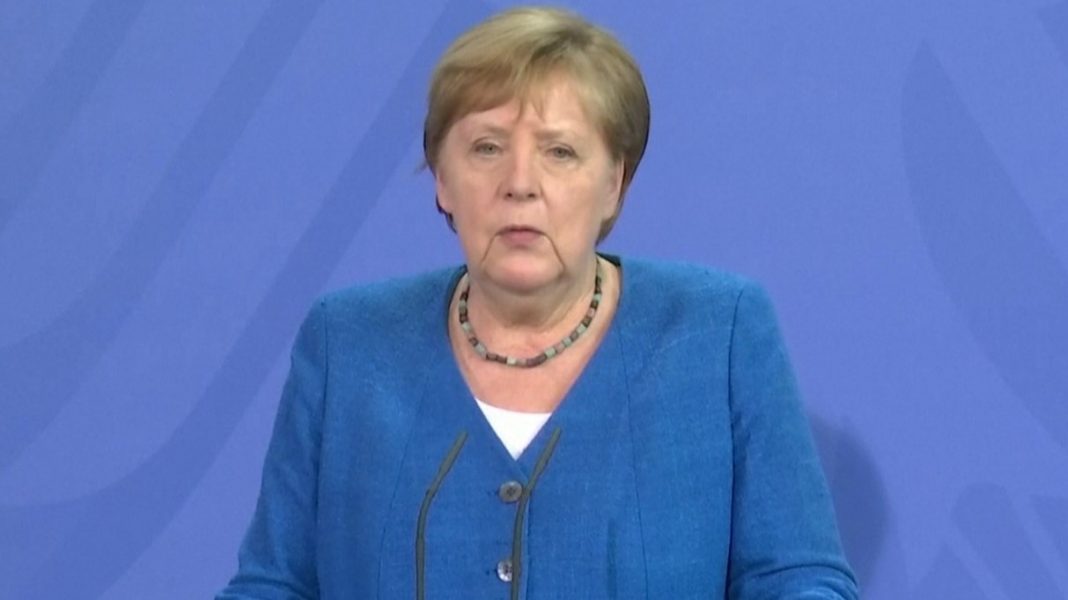
During her last meeting as the head of the Berlin Process, the German Chancellor, Angela Merkel, wasn’t able to reach an agreement between leaders of the Balkans in regards to free movement using ID cards and the recognition of university diplomas.
Even though she was personally committed to this process, by preceding this meeting with several communications with Balkan leaders, they were still unable to come to an accordance regarding these two prominent matters, that have been part of the Action Plan for the Creation of the Joint Regional Market, approved in November of last year, in Sofia.
During a press conference at the wrap up of the Summit of the Western Balkans, Merkel noted that “a reciprocal recognition for university diplomas and free movement using ID cards in the region” wasn’t reached, but she didn’t go more in-depth about the possible reasons that could’ve been behind this or the leaders that weren’t convinced. Angela Merkel also said that she hopes that this will be achieved during the eighth summit of the Berlin Process on October 6th, during the Slovenian Presidency of the EU.
The PM of Kosovo, Albin Kurti also expressed his regret, adding that only through facing the past, there can be hope for reconciliation.
“It’s disheartening that an agreement wasn’t reached regarding the leniencies previously discussed by the Council of Regional Cooperation. Certain parties are still pushing a language that isn’t in accordance with reality or the spirit conveyed by the Berlin Process. Kosovo is completely committed to regional cooperation and economic integration, based on the recognition of reality and truth, equilibrated rights of minorities in the entire region, facing the past with the aim of reconciliation and having citizens be the ultimate beneficiaries of the dialogue,” said PM Kurti.
Seven years from the start of the Berlin Process, the only achievement has been the drop of ‘roaming’ charges and the green corridors of transport.
The Berlin Process is an initiative of the Chancellor, created back in 2014, in order to keep the Western Balkans, close to the EU, for as long as the EU still wasn’t ready to accept these countries to become part of the block. Chancellor Merkel was amongst the leaders that supported the enlargement process the most, even though there was very little progress. Today, the process continues to be stalled and the steps forward for the Balkans member states for the past 7 years have been almost insignificant.
Bulgaria’s veto on North Macedonia, after the year-long blockade with Greece was resolved, shows that the EU needs to make some changes, said Merkel at the end of her remarks.
YOU MIGHT ALSO LIKE





