

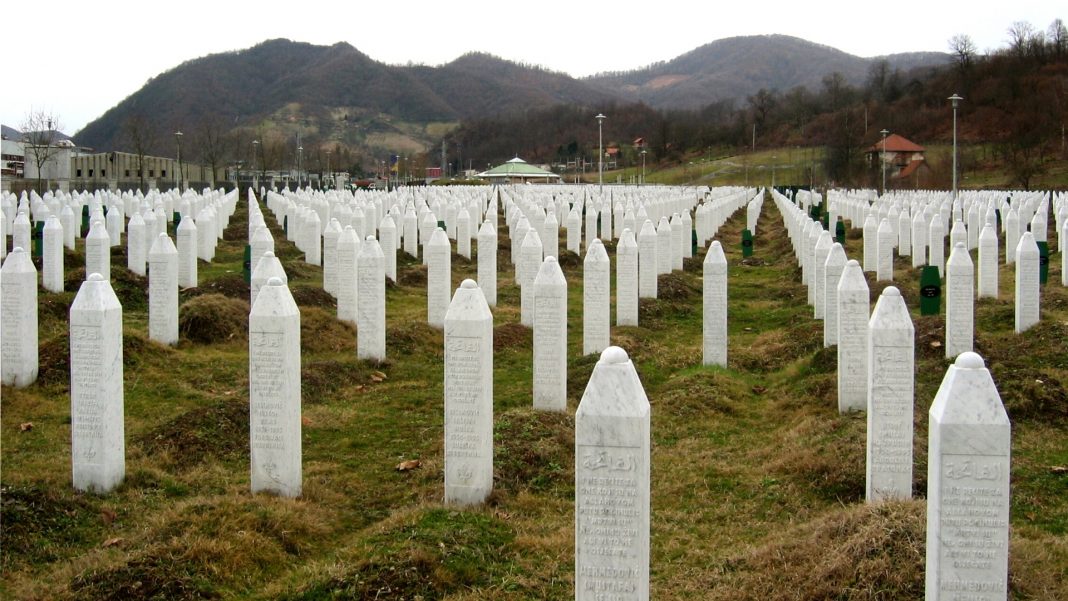
Citizens in Bosnia and Herzegovina gathered on Sunday to commemorate the 26th anniversary of the Srebrenica massacre, where more than 8,000 Bosnian Muslim men and boys were killed, and to bury 19 identified victims.
Each year on July 11, the remains of those identified during the last year are buried in the Potocari Memorial Center, as the citizens commemorate the massacre in a series of events.
On July 1995, Bosnian Serb forces killed over 8,000 Muslim men and boys in the Srebrenica enclave, designated a “safe haven” by the United Nations.
On July 9, 1995, the then Serb leader, Radovan Karadzic, issued a new order to occupy Srebrenica. Troops surrounded the enclave and attacked Dutch peacekeepers taking 30 of them hostage.
A day later, on July 10, Bosnian Serb soldiers began bombing Srebrenica. Dutch forces threatened the Serbs that there would be NATO air strikes if they did not withdraw by morning.
NATO planes bombed Serbian tanks outside Srebrenica. Serbian forces threatened to resume bombing and kill captured Dutch soldiers. The airstrikes stopped, and on the evening of July 11th, Bosnian Serb commander General Ratko Mladic entered Srebrenica.
About 30,000 Muslim refugees gathered around a Dutch peacekeeping base in Potocari, north of the town of Srebrenica, after Bosnian Serb forces took control of the safe zone.
The United Nations noted that most of the refugees arriving from Srebrenica were women, children, and the elderly.
About 15,000 Bosnian Muslim soldiers and civilians fled Srebrenica overnight trying to reach Muslim-controlled territory. Many died from bombardment and sniper strikes.





