

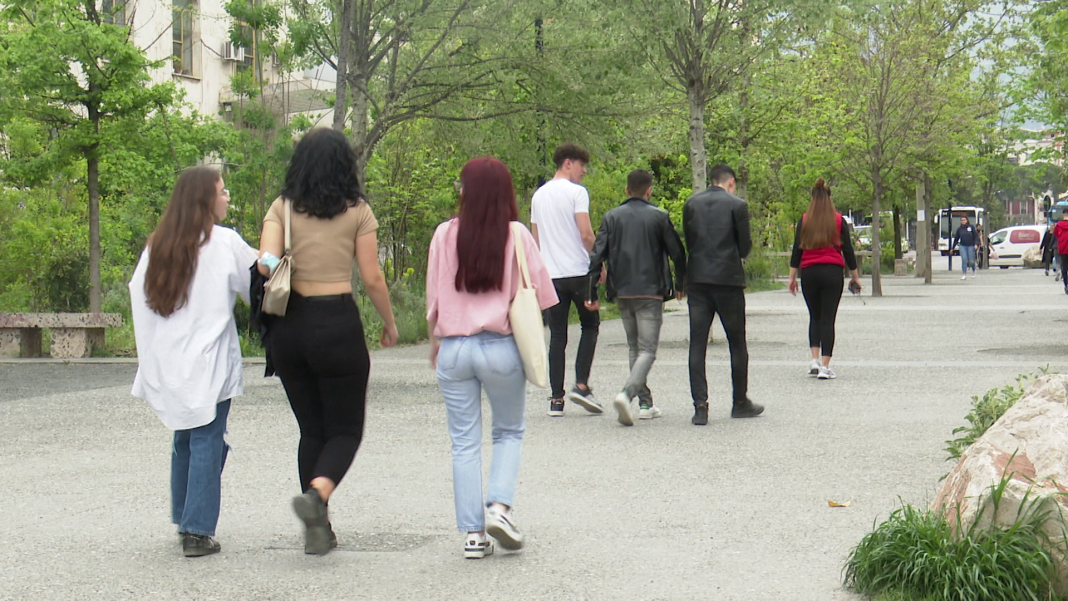
The Albanian Assembly marked 8 December as National Youth Day back in 2009, in remembrance of the students’ movement which toppled the Communist regime in the 90s.
At the time, a group of students and university professors were the main actors of a major turning point in the country’s history organizing protests that would bring down communism and install democracy.
“It’s in the youth’s nature to be energetic, but energy needs to be channeled in the right way for youth”, said a citizen.
The 15-29 age group made up circa 23% of the entire population in 2019-2020. But today, this is the age group that is more determined to leave the country.
“Our youth is definitely over here. Here there is no money, no good education”, said a young girl.
“I don’t think that the majority of people my age have a future in here”, said another young man we spoke to.
“People cannot develop their full potential here. If we stand together, we might be able to achieve something. We shouldn’t be celebrating, but protesting instead”, he added.
Former director of INSTAT, the national statistics institute, said on Good Morning that people who have attained higher learning are among the groups with the highest tendency to leave.
“I will refer to Eurostat, the figures are much higher than what is actually declared, over 76% are younger than 34. This is a huge problem that will become a burden in the future”, said Ines Nurja.
Although Albanians are among the youngest populations in Europe, it is also aging fast. Data from Eurostat indicate that the average age in 2010 was 31.9 years old, while in 2021 it was 37.6 years old.
YOU MIGHT ALSO LIKE