

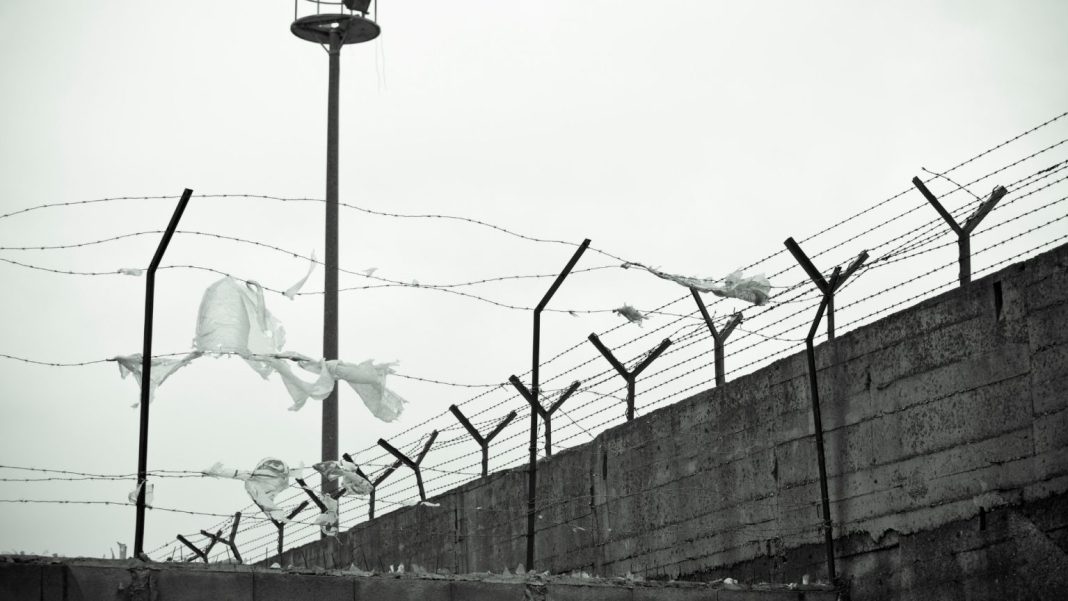
Kosovo has the capacity to take in 300 inmates from Denmark and will shelter them for the entire course of their sentence.
Authorities have announced that Kosovo will be profiting 210 million euros from this project, which will be mainly dedicated to capital investment and more specifically, renewable energy.
Advisor to the minister of justice, Albulena Haxhiu, Alban Muriqi said during an interview for Euronews Albania that Kosovo’s ministry of justice has been subcontracted from its analog in Denmark to rent out some of its prison cells for a specified number of inmates.
Who are these inmates?
The ministry of justice has announced that the inmates coming from Denmark aren’t high-risk prisoners and their maximum sentence doesn’t exceed 10 years. They are mainly prisoners from third-world countries but who have family members in Denmark.
Those exempt from the agreement are high-risk prisoners, those convicted for terrorism as well as those suffering from mental disorders – seeing that these categories would be too challenging for Kosovo’s current capabilities.
Felons coming to Kosovo have usually committed what are known as common or ‘ordinary crimes’, said Muriqi adding that after a thorough analysis of their profiles, they haven’t noticed any serious offenses.
“They have mainly been convicted for crimes like theft, injuries, forgery or smuggling,” – he added.
“Danish experts have assessed that Kosovo fulfills also standards and criteria,” – said Muriqi.
In addition, he said that Kosovo’s prisons aren’t overpopulated and that there are currently around 700 to 800 open cells.
Why is Denmark sending its prisoners away?
The majority aren’t Danish citizens.
Moreover, the population of Denmark’s jails has gone up by 19% since 2015, reaching more than 4.000 inmates since the beginning of 2011, which has exceeded 100% of capacities, according to official stats.
During the same timeframe, the number of prison guards has declines by 18% in the Scandinavian country of 5.8 million residents.
“Until 2025, we will be 1.000 cells short in our prisons,” – said the Danish justice minister, Nick Hakerup.
“Through this deal, we have agreed to rent 300 prison cells in Kosovo and thus extend the current capacities of Danish prisons by a few hundred cells,” – he said.
What laws will be implemented?
The ministry of justice has explained that the prisoners will be subject to the Danish system and law on prisons. Denmark will be responsible for the entire management and facilitation of this project as well as the training of prison staff in Kosovo.
In addition, inmates will have access to the same rights and benefits as they would in Denmark.
“Kosovo will be offering the physical capacities, a considerable part of the personnel as well as other services, whereas the entire penal responsibility in regards to the rights and their implementation will be taken care of by the country sending in the inmates. Denmark will be completely responsible and this has already been decided in the draft agreement and in the treaty,” – explained Muriqi.
Each inmate will begin serving their time in Denmark, then after completing procedures on their admission, we will go on with their transfer to Kosovo, said Muriqi.
In addition, he said that the maximum sentence is 10 years, but there are also those sentenced to 5-6 years.
When they get close to the end of their sentence, precisely 5 or 6 months before, they will be sent back to Denmark, where they will get all their paperwork ready to return to their places of origin.
Kosovo’s capacities to take in prisoners from other countries
At the moment, Kosovo has a total of 700-800 open spots in its prisons. The maximum number of inmates coming in from Denmark will be 300, which means that the prison population won’t see any enormous growth.
In any case, Kosovo will need to hire additional prison staff in their local correctional facilities. Authorities have calculated that they will need an estimate of around 150 extra staff, whose salaries will be covered through the spending precalculated in the budget of the agreement with Denmark.
Kosovo’s benefits
The Republic of Kosovo will be receiving a total of 210 million euros over a period of 10 years, which will be used for prison maintenance as well as dedicated to capital investments.
Kosovo’s correctional facilities will be spending around 5 million euros a year to cover for the operational services for these prisoners; the Ministry of Justice will then spend around 10 million euros on prison reforms.
This means that 15 million euros a year will be managed by the Ministry of Justice to facilitate this agreement in Kosovo.
“The remaining part will go for investments or donations in renewable energy – something which has proved to a be a current issue in Kosovo,” – said Muriqi.
This international agreement hasn’t been finalized yet as it will have to go through Parliament, where it will need at least 2/3 of votes.
Kosovo has a total of 11 correctional facilities, of which 5 are detention centers, 1 if a high-security prison, 1 women’s prison, 1 educational center for minors below the age of 18 and 3 correctional facilities or prisons.
The agreement is planned to be fully implemented over the course of 10 years.




