

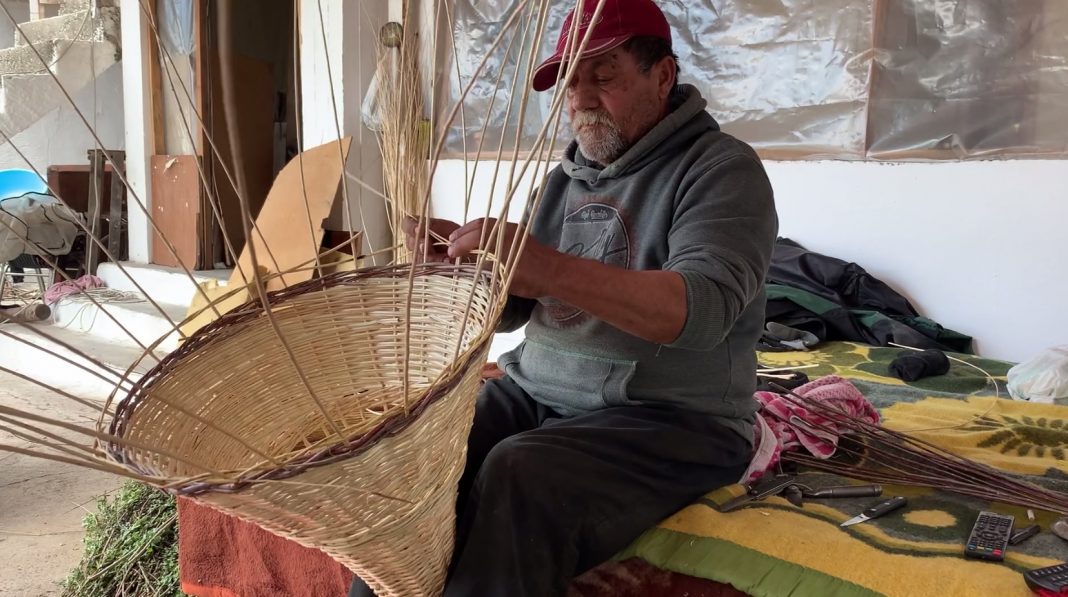
Once upon a time, weaved baskets were the only tools that could be used to carry or transport food and other agricultural products. Left in oblivion for many years, today there is a market demand for decorative baskets and canisters made in an artisanal manner, but those who make them are rare.
Pëllumb Mustafai inherited the craft from his grandfather and father. It started as a passion, but today, this work helps him support the family.
“During monism, we made baskets for the farm. Now that I have no job, no one will hire me because of my old age, I was forced into cutting birches and continuing the craft of our parents,” the artisan tells Euronews Albania.
Weaving baskets takes a lot of time and is not an easy task. Pëllumbi explains the procedure to us.
“A working day goes only into cutting and bleaching the birch. The next day, you can start making the baskets. The weaving process takes about three hours for a normal-sized basket, while the 50×40 basket takes four and a half hours,” says Mustafai.
The artisan confesses that his work is underappreciated, while merchants who sell his products earn more than him.
“If I make a 50×40 basket, I get ten thousand lek from the merchant, while he sells it for 20 euros.”
But despite the lack of appreciation, he says that he does this work passionately, and as a continuation of the tradition of his ancestors. He regrets being the last generation of the family to weave baskets.




