

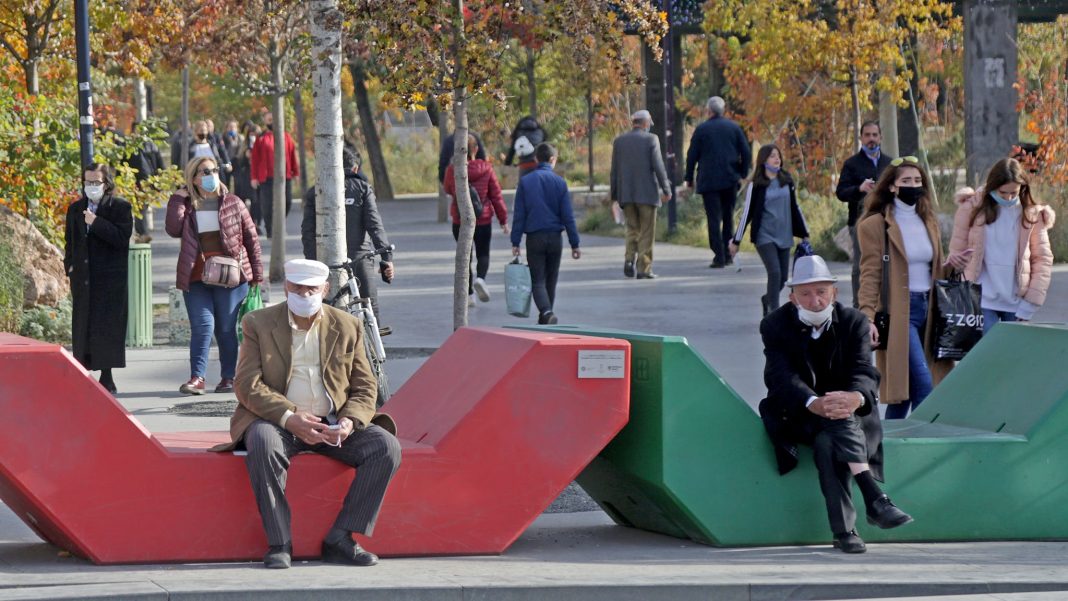
Albania has one of the youngest populations in Europe, with a median age (the median that divides the population into two equal parts) of 38.2 years, but after a few decades it is expected to be the oldest population, not only in Europe, but across the globe.
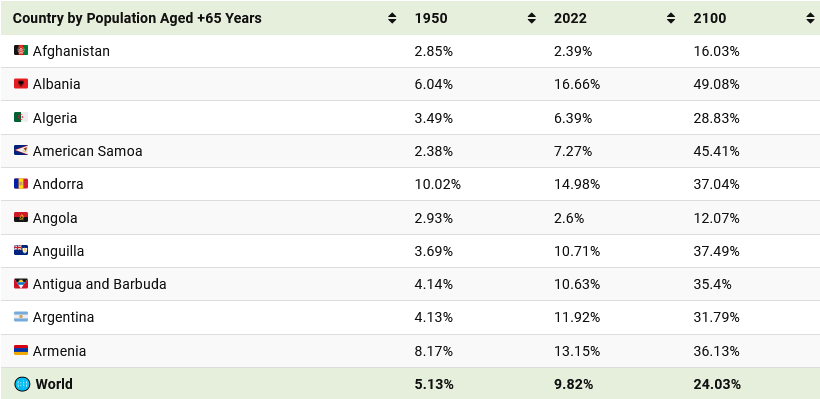
The calculations were made by the data processing unit “Visual Capitalist”, which analyzed data of the population division of the United Nations Organization (UN). According to forecasts, 49% of Albania’s population will be 65 or older by 2100, the highest proportion in the world and double the global average by that year.

In 2022, according to the report, there were 771 million people aged 65 and over worldwide, accounting for almost 10% of the world’s population.
This segment has grown at a great rate and is expected to reach 16% in 2050, and eventually 24% by 2100.
Some of the countries with high percentages of elderly people today include high-income countries such as Japan (30%), Italy (24%) and Finland (23%).
The lowest percentages are concentrated in the Middle East and Africa. In many countries only 2% of their population is aged 65 and over, such as Qatar, Uganda and Afghanistan.
But over time, almost all countries are expected to experience growth in older population segments. In just three decades, it is estimated that one in four European, North American and Asian residents will be over 65 years old.
By 2100, a number of Asian countries and island nations facing low population growth are expected to have more than a third of their population aged 65 or older, including South Korea and Jamaica, with 44%.
But, “Visual Capitalist” points out that Albania is expected to reach the highest level in the world, with 49% of the population over 65 years old in 2100.
The challenge of an aging population, the report points out, will affect all sectors of society, including the labor and financial markets, the demand for housing and transport, and especially family structures and intergenerational connections.
Read more here.




