

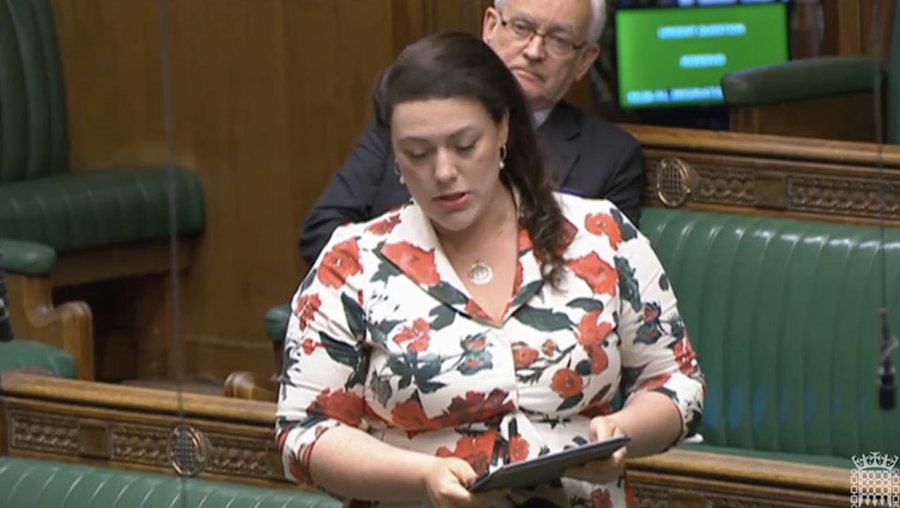
United Kingdom Member of the Parliament Alicia Kearns, who also serves as Chair of the Foreign Affairs Select Committee, held a speech in support of Kosovo in a parliamentary debate on the unrest that has erupted in northern Kosovo these past ten days.
Kearns clearly condemned Serbia for orchestrating not only the boycott of the April 23rd local elections in the four northern municipalities, but also for causing the violence in the streets of Kosovo.
Criticizing the US and EU for their stances on the matter, Kearns said that if something similar were to happen in the United Kingdom, it would be considered an attempt to suffocate democracy.
Part of Alicia Kearns’ speech in parliament and response from the Minister of State Andrew Mitchell
Alicia Kearns: Kosovo if often faced with a cycle of escalatory and de-escalatory violence on its streets. Kosovo is not Serbia, but earlier this year Belgrade orchestrated a boycott of democratic elections. As a result, as result that we recognize in the West, and yet now we’re asking them to rerun it, there was only a 3% turnout. That was due to foreign interference, which seems to be missing so often from the discussion. Last week elected mayors did seek to take up their roles, not in a violent manner, it became violent due to the orchestrated violence around the mayoral offices, and whilst I recognize this was an escalatory action, it would not be, should hostile forces take control of the mayoral office in the UK, we would not say, well you just need to go and work from home, we would say this is an unacceptable attempt to suffocate democracy. We then saw orchestrated violence on the streets by Belgrade funded and armed militias against KFOR and the police. There were Molotov cocktails, there was firing of guns against them, there was setting on fire of police cars. So, why was there such a disproportionate and unbalanced response by our allies? It is wrong that the US and EU chose to attack Kosovo with no criticism of the armed militias who created the situation. A democratic ally bore the brunt of those sticks. Secondly, what countermeasures are we putting in place of Belgrade? Because at the moment it appears to be a failure of deterrence diplomacy. How does our policy differ from the US and the EU? Because we are too quiet on what is happening right now. And can we finally call out these Belgrade armed unfunded militias who when an individual says no, I don’t want to support your militia, finds a grenade outside their child’s doorstep the next day? This is intimidation in its worst sense. And finally, how are we supporting Serb Kosovo communities in the north to make sure they can live the lives they want and they can participate in democracy without foreign interference having a chilling effect on democracy in Kosovo?
Andrew Mitchell: The Government is exercising a very responsible role on this matter, it’s a part of the world, as she knows, that we know extremely well. We emphasize the importance of dialogue; we emphasize the importance of de-escalation. The Prime Minister had a chance to mention these matters, when he met the President of Kosovo on the 1st of June. The Minister with specific responsibilities for this part of the world, has visited both Kosovo and Serbia in mid-December. I hope that she will feel that we are trying to deescalate the situation. I hope that she will be reassured by what I am saying about the contribution that Britain is making.




