

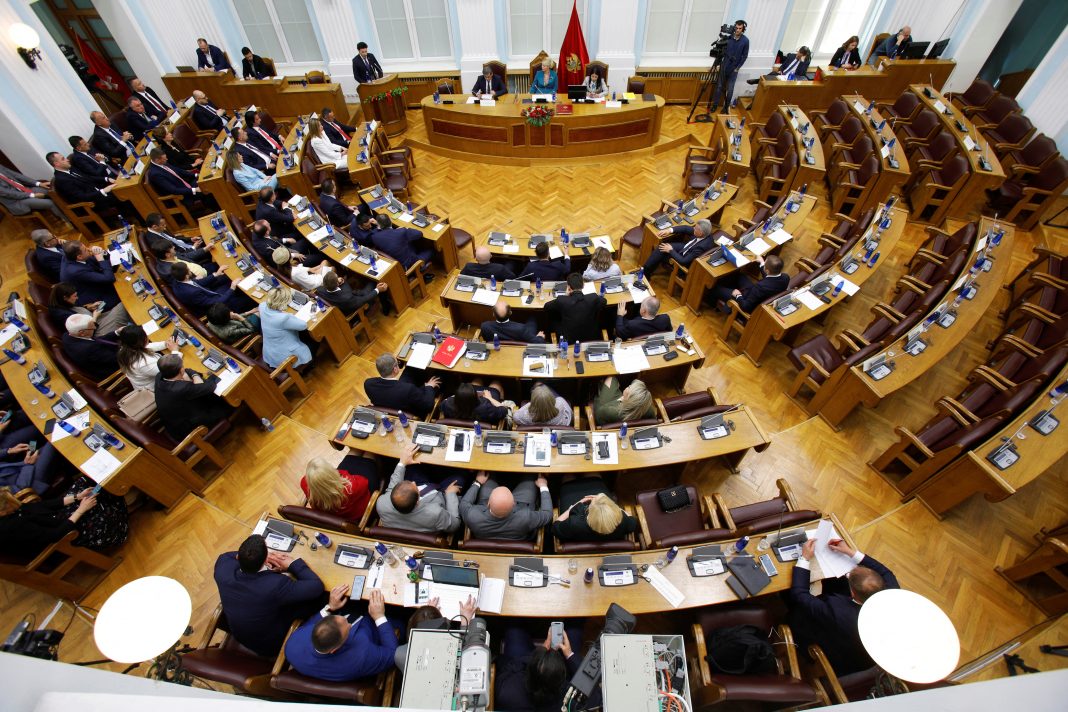
The preliminary results of the snap parliamentary elections held in Montenegro on Sunday have revealed a significant shift in the political landscape of the country.
Pro-democratic and pro-European parties have emerged as the winners, indicating a potential change in the government’s composition.
Movement “Europe Now” secured the highest percentage of votes, capturing 26% or 24 mandates.
While this places them as the leading party, it falls short of the majority needed to form a single-party government.
The Democratic Party of Socialists, led by former President Milo Đukanović, followed closely with 23.7% or 21 mandates in the Parliament of Montenegro.
The pro-Serb and pro-Russian coalition “For the Future of Montenegro” (formerly the Democratic Front) achieved 15% of the votes, corresponding to 13 mandates.
The URA coalition led by Dritan Abazović in partnership with the Democrats of Aleksa Bečić, garnered 12.3% or 11 mandates.
Other minority parties made notable gains, with the Bosniak Party securing 6.8% of the votes or 6 mandates.
Additionally, the Albanian Forum will enter the parliament with 2 mandates, while the Albanian Alliance and the Croatian Civic Initiative each obtained 1 mandate.
The voter turnout for these elections was 56.4%, indicating a decrease compared to the previous parliamentary elections in 2020 (76.6%) and 2016 (73.3%). The lower participation suggests a potential disillusionment or disengagement among some voters.
The preliminary results demonstrate a significant shift towards pro-democratic and pro-European parties, primarily represented by the Movement “Europe Now”.
This party, established only last year, is also associated with the newly elected President of Montenegro Jakov Milatović.
The URA coalition, along with the Democrats and minority parties, holds the potential to form a majority in the parliament.
Notably, the pro-Serb and pro-Russian Democratic Front, which previously formed the parliamentary majority, experienced a notable decline in this election. The coalition has since split into three separate parties.
The election outcome will result in 81 deputies, with the new parliamentary majority responsible for selecting the Prime Minister and forming the government. The shifting dynamics within Montenegro’s political scene suggest a potential transition towards a pro-democratic and pro-European direction.
The prolonged political crisis, institutional blockages, and increasing societal polarization in Montenegro have raised concerns among the international community.
Notably, Montenegro’s accession to NATO in 2017, following an unsuccessful coup attempt, and its alignment with the EU’s sanctions against Russia have affected its relations with Russia and the broader geopolitical landscape.




