

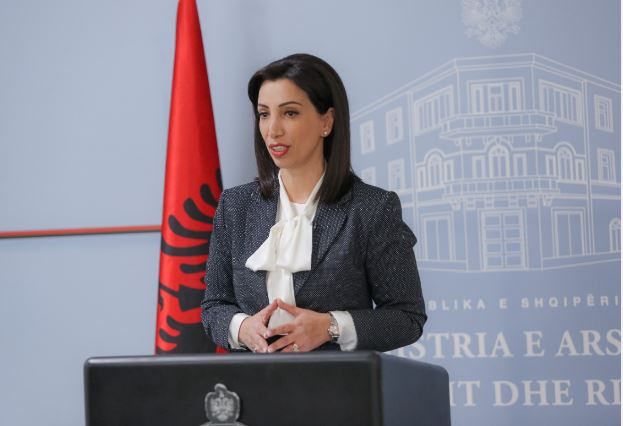
The Minister of Education and Sports Evis Kushi participated today in the meeting of the Parliamentary Committee for Education and Public Information Media, where some additions and changes to the Law on the Pre-University Education System were presented.
One of the proposed changes is that children who want to enter school but are not 6 years old when school starts can still register as long as their birthday is within December 31 they can start school. This is good news for all those children who are penalized only for a few days or a few months and are forced to attend school a year later.
The minister made a summary of the changes that are considered the main ones in this draft law.
Transformation of special education schools into resource centers, according to the best models of the region and the EU, for more support for students with different abilities is one of the main reasons for the change in the law.
“First, one of the reasons we decided to change the law was precisely the special schools for students with different abilities. We have seen not only in the region but also the developed countries of the EU for a better way of functioning, from the side of the structure of how they are organized, but also of the functioning,” the minister emphasized.
On the other hand, another change is not allowing the employment in schools of persons convicted of criminal offenses against minors, to educational institutions, that violate the figure of the teacher, as well as those who are part of the national registry of those convicted of sexual crimes, despite their rehabilitation.
Other points of changes are:
- The right to enroll in first grade for children who reach the age of 6 by December 31 of that year, at the request of their parents;
- Giving special status to schools of oriented education, as well as educating and promoting talents in basic education, not only in oriented schools, but also in normal schools through oriented classes;
- Establishing a structure in each ZVA for available teachers, who will come to the aid of schools for their needs when there is a shortage of teachers;
- Clear definition of responsibilities for monitoring, evaluation and inspection of educational institutions;
- Legal regulation of private complementary institutions that provide services to students after school hours.




