

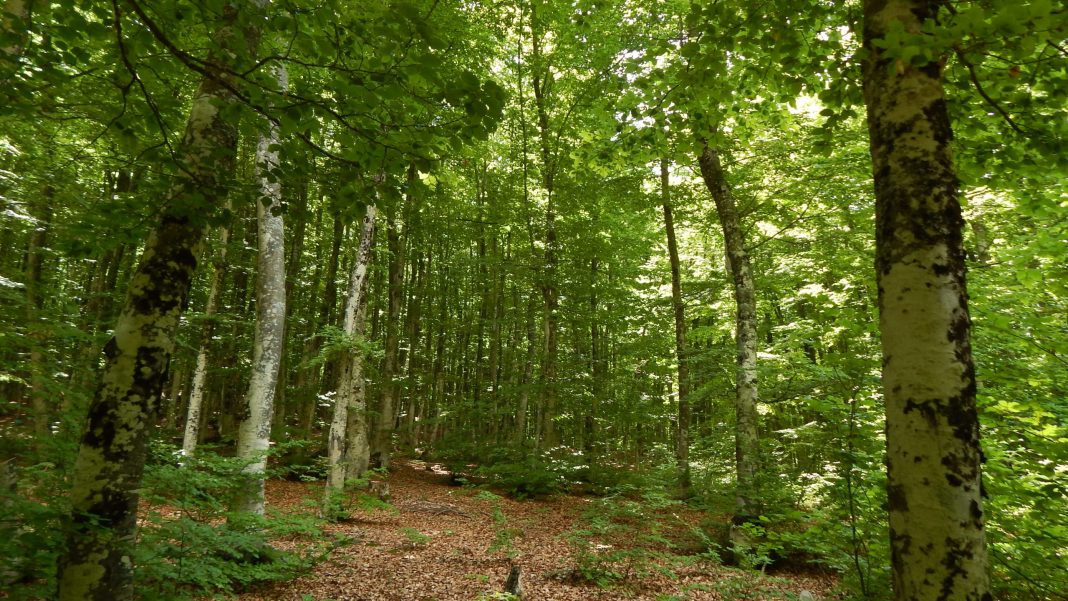
With around 1.3 million hectares of forests, Albania has been facing the challenge of managing this national asset for years. Over the past 30 years, the forested area has been shrinking, resulting in consequences not only for the country’s economy but also for the environment, says forestry engineer Mark Rupa.
“We are facing several global challenges, such as climate change, but at the same time, we also have our local challenges, such as the ability to manage forested territories, the capacity to administer them, and cope with these increasing challenges in the field of forests. We continuously observe the increase in fire frequencies throughout the Mediterranean basin, especially in Albania. It is concerning that while these frequencies are constantly rising, our management and responsive proximity remain unchanged.”
According to the National Inventory of Forests and Pastures, 11% of the forested area in Albania, equivalent to 132,000 hectares, has been affected by fires. In a significant portion of it, natural regeneration possibilities are limited due to the extent of the damage. According to the Director of the National Agency of Forests Artur Kala, after the fires, the main issue in forests is illegal logging. The National Inventory of Forests and Pastures indicates that approximately 8% of the forested area, or more than 96,000 hectares, has been affected by illegal logging. Kala states that efforts are being made to strengthen measures.
“After the fires, which are naturally the main issue where we have focused our attention, we also have the issue of damages in forests, which we are working hard on. We have increased interinstitutional cooperation with the state police, and we are trying to strengthen the capacities and inspection structures within municipalities to increase their monitoring and control role in forests. This is to prevent all damages and bring all abusers to justice.”
Albania has declared a 10-year moratorium on forest cutting and has increased the severity of penalties for arsonists and perpetrators of illegal logging. However, the cases of apprehending and punishing the perpetrators are few. Municipalities, responsible for forest administration, continue to have limited capacities to control and manage the territory, and the capacities of the police and army to extinguish fires are also limited. Meanwhile, according to Rupa, the consequences on the environment and the lives of local communities are significant.
“They cause erosion, rapid filling of basins, faster water runoff leading to floods in lowland areas. We constantly observe the increasing phenomenon of floods, and one of the main causes is the degradation of forests in these ecosystems. They impoverish people because the main sources of income for residents living in high mountain areas are the forests themselves, the natural resources.”
Representative of the organization CNVP (Connecting Natural Values and People) Jani Male says that the damage to forested areas has increased the level of erosion, bringing changes to the environment.
“Erosion in the Drin River basin, as well as in other basins, is very problematic, and it occurs as a result of degradation and the opening of agricultural lands in many forested areas. These areas are now abandoned, and through cooperation with municipalities and forest associations, we have identified the most difficult areas with strong erosion, which will be reforested.”
With the financial support of the Austrian government, CNVP is implementing the project “Integrated Forest Management in the Drin River Basin”, which is the largest in Albania and where the level of damage to forest cover and erosion is quite high.
The Ministry of Tourism and Environment, on the occasion of the 100th anniversary of Albanian forest services, has declared 2024 as the Year of Forests in an effort to enable better protection and rehabilitation of this national asset through the involvement of local communities that traditionally base their livelihoods on forests.




