

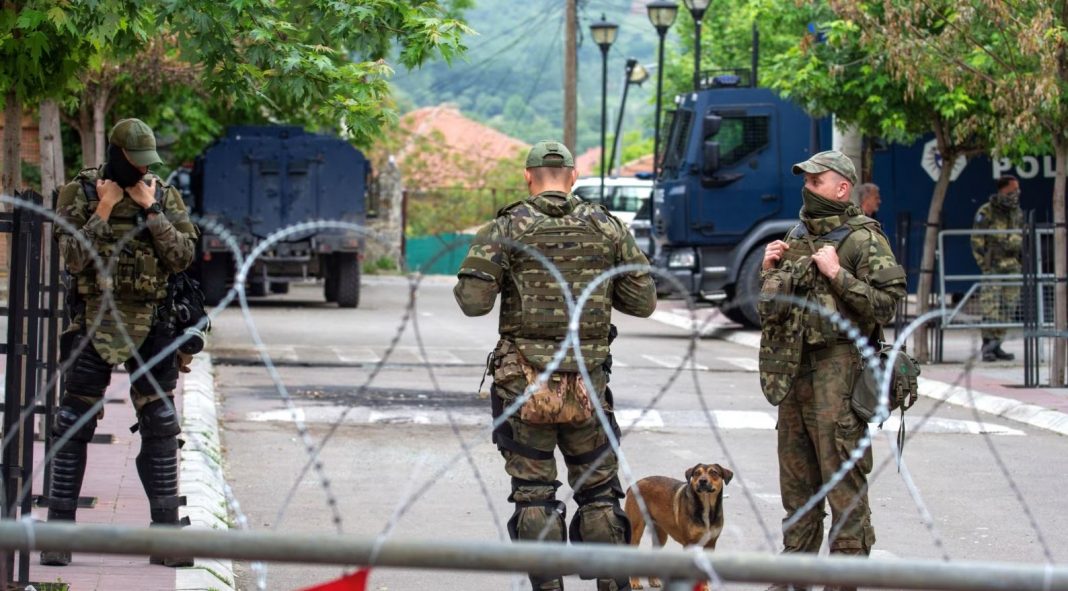
German defense officials said earlier this week that they are considering the possibility of sending additional troops to Kosovo to strengthen NATO’s peacekeeping mission following the recent violence and tensions in the northern part of the country.
“With a request from my Austrian colleague Klaudia (Tanner), we are considering whether we can increase our engagement within the current (parliamentary) mandate to support Austria,” said German Defense Minister Boris Pistorius.
NATO deployed additional troops to Kosovo after tensions erupted on 26 May in the northern part of the country, where groups of Serbian protesters took to the streets to oppose the installation of ethnic Albanian mayors elected in the 23 April elections, which were boycotted by Serbian political parties. At least 30 peacekeeping forces were injured during the clashes at the end of May.
Western diplomats have been trying to persuade Kosovo and Serbia to reduce tensions by fulfilling the three requests of the European Union; suspending police operations, relocating mayors to alternative offices, and holding snap elections with the unconditional participation of Kosovo Serbs.
Western diplomats have expressed concern about the possibility of the security situation escalating at a time when neither Kosovo nor Serbia have taken steps to reduce tensions despite their calls to do so.
The European Union’s special envoy for Kosovo-Serbia negotiations, Miroslav Lajčák said that meetings with the leaders of both countries have helped clarify the next steps to de-escalate the situation, after visiting Pristina and Belgrade in an effort to find a way out of the crisis in northern Kosovo.
Kosovo’s Prime Minister Albin Kurti has expressed support for holding new elections and reducing the presence of special police units in the north, along with the establishment of the rule of law. He has requested international guarantees that the elections will be held without pressure from Belgrade and that the results of the 23 April elections, boycotted by local Serbs, will not be repeated.
Serbian President Aleksandar Vučić said that Belgrade has fulfilled all the requirements of the European Union and is ready to work further on de-escalation, which, according to him, does not depend solely on Serbia. He has warned that he will seek an emergency session of the United Nations Security Council to stop what he described as “persecution” of Serbs in Kosovo.
Four months ago, Kosovo and Serbia agreed on a plan drafted by the European Union to end hostilities and help improve relations, but tensions have continued and the parties have accused each other of incitement.




