

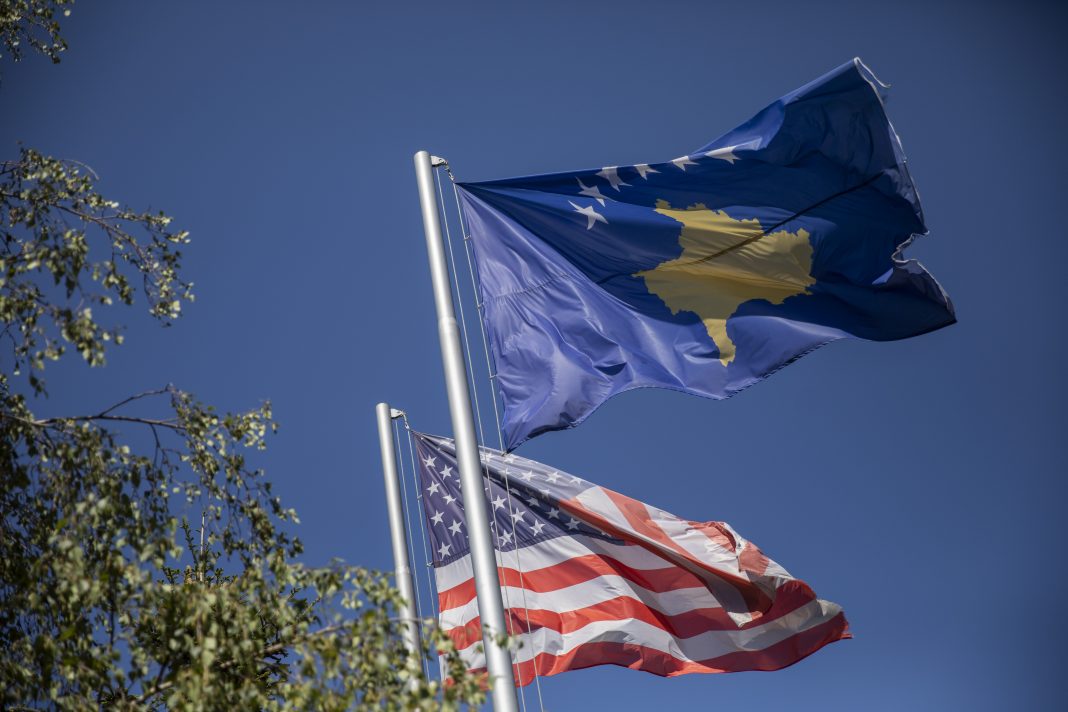
Amid tensions in the northern part of the country and strained relations with international partners such as the European Union and the United States, the Government of Kosovo has engaged a lobbying company located in Washington, D.C.
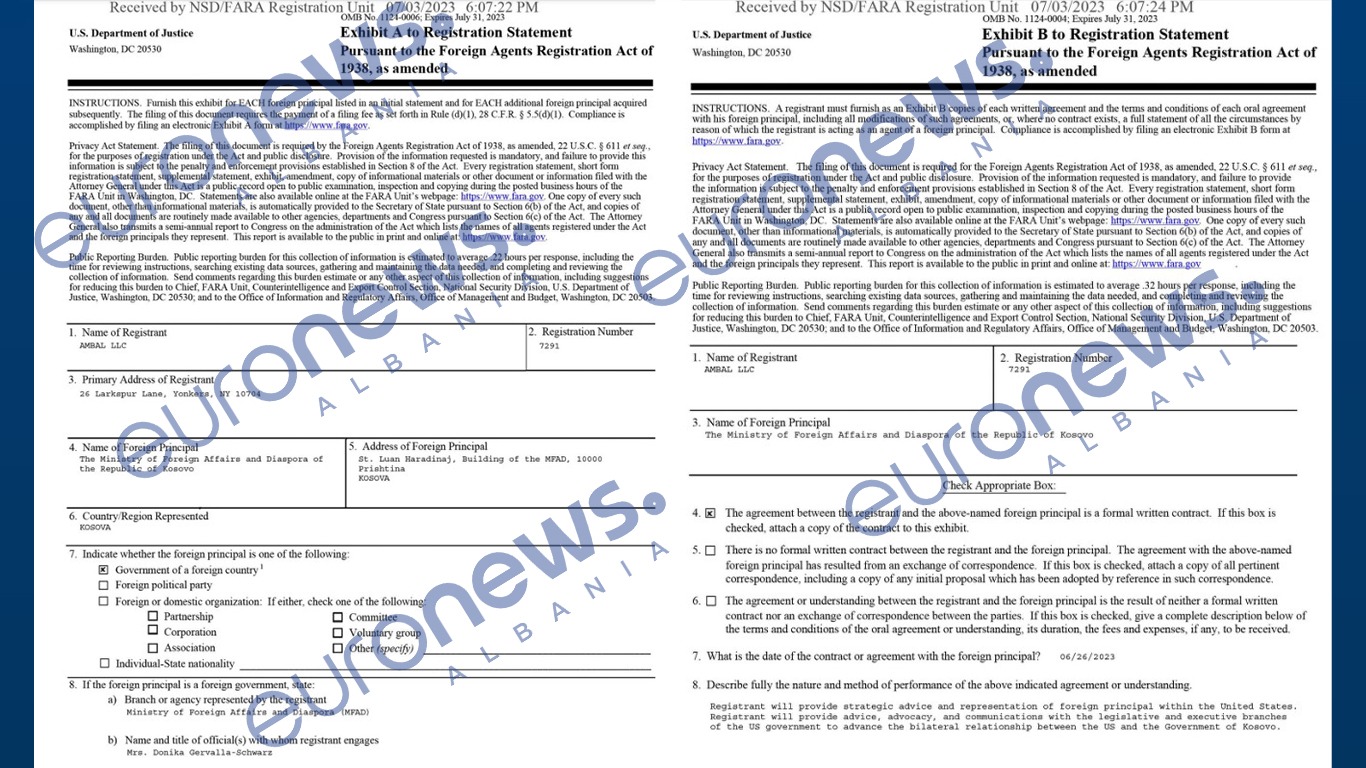
According to a document exclusively obtained by Euronews Albania, it is stated that the lobbying company, paid by the Government of Kosovo with the sum of 147,000 euros, will provide strategic advice and foreign representation within the United States.
According to the contract signed by the Minister of Foreign Affairs and Diaspora of Kosovo, Donika Gërvalla-Schwarz, the company will offer advice, support, and communication with the legislative and executive branches of the US government to improve bilateral relations between the US and the Government of Kosovo.
The contract, signed on June 26 between the Ministry of Foreign Affairs and Diaspora of Kosovo and the representative of the lobbying company, Albanian-American Avni Mustafaj, came into effect on July 3 and is valid for one year.
Tensions in north Kosovo escalated at the end of May when ethnic Albanian mayors in the north entered municipal buildings, escorted by the police. Serbs in the north have protested, demanding the withdrawal of the mayors and special units of the Kosovo Police.
Following tensions and the Kosovo Government’s initial refusal to withdraw mayors in the northern municipalities, the United States and European Union declared sanctions against Pristina.
The US announced it had cancelled Kosovo’s participation in the “Defender Europe 2023” exercises, all the while calling on Prime Minister Albin Kurti to comply with the demands of the international community in de-escalating the situation in the north.
The EU also announced it had imposed punitive measures on Kosovo, including the temporary suspension of the work of the bodies established on the basis of the Stabilization and Association Agreement (SAA), Kosovo’s exclusion from high-level meetings and the suspension of bilateral visits, except those focusing on addressing the crisis in northern Kosovo within the framework of the EU-facilitated dialogue.
However, on July 10, Kosovo and the EU reached an agreement on the initial steps toward deescalating the situation in northern Kosovo, which is predominantly populated by Serbs.
The Government of Kosovo has agreed to reduce police presence in the north and support the holding of new elections in the four northern municipalities as part of efforts to de-escalate the situation.
According to the Kosovo Government, all steps “will be finalized within a two-week period”.
This agreement was reached during an informal meeting held in Bratislava between Kosovo’s Deputy Prime Minister Besnik Bislimi and the EU Special Envoy for the Kosovo-Serbia Dialogue Miroslav Lajčák.
According to the Government, the police presence in and around municipal buildings in the north will be immediately reduced by 25 percent.
Additionally, Kosovo and the EU have also agreed to take several other steps.
The European Union had presented several requests for reducing tensions in the north.
Earlier, state leaders in Kosovo expressed readiness in holding new elections in the municipalities in the north but requested their preparation to prevent boycotts.
The elections held on 23 April, which resulted in the election of Albanian mayors in the four northern municipalities, were boycotted by Serbian parties and population.
All in all, Kosovo has continuously requested the implementation of the Agreement on the Normalization of Relations with Serbia, reached in Brussels on 27 February. The parties also reached an Annex for the implementation of this agreement in Ohrid on 18 March.
The 11-point agreement does not include mutual recognition, which Kosovo insists on, but requires Kosovo and Serbia to accept each other’s documents and symbols, including passports, diplomas, and license plates.
The document requires parties implement all agreements reached so far in the dialogue for the normalization of relations, including the one on the formation of the Association of Serb-majority Municipalities in Kosovo, which the government in Pristina has rejected so far, arguing that it could jeopardize the functionality of the state.




