

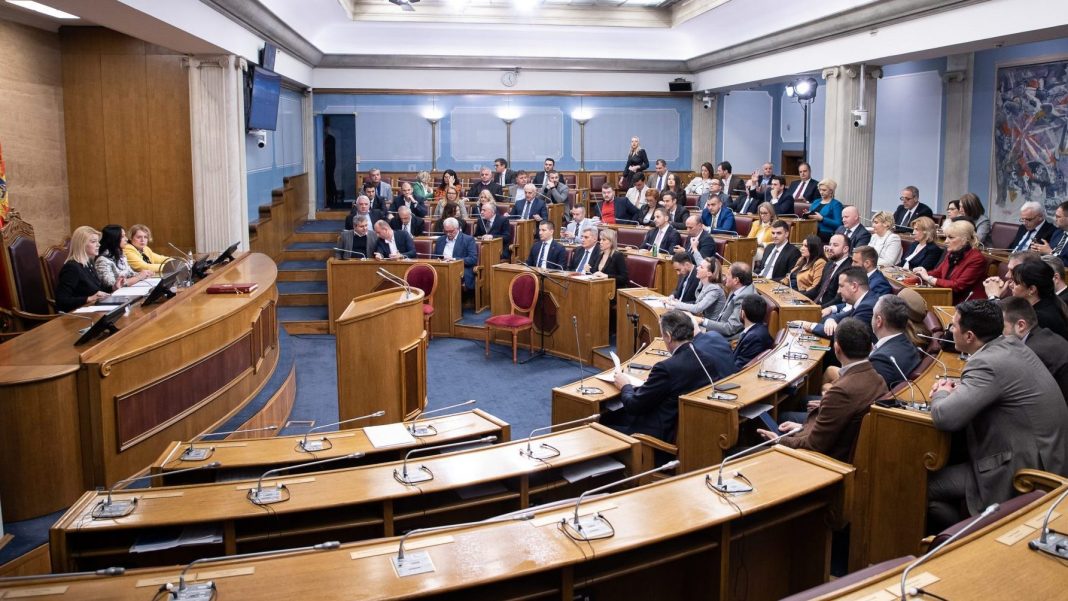
The newly constituted Parliament of Montenegro convened on Thursday to verify the mandates of the 81 deputies elected in the extraordinary parliamentary elections held on June 11. However, the crucial decision to elect a new chairman was deferred to a future session.
In the parliamentary session, Nikola Mugoša, the Chairman of the State Election Commission, presented the report on the results of the extraordinary elections, announcing the names of the incoming Montenegrin parliament deputies. However, no candidate proposal for the chairman’s position was submitted, necessitating further discussion in the next parliamentary session.
The delay in electing the chairman was a consequence of the delayed announcement of the final election results. This development prompted the Europe Now Movement and potential Prime Minister candidate Milojko Spajić to officially initiate negotiations for the new government on July 20, which are set to continue in the days ahead.
The Europe Now Movement’s leadership has already endorsed 10 principles for the formation of the 44th Government of Montenegro. These principles have been forwarded to potential partners in the future government, except for the Democratic Party of Socialists led by former President Milo Đukanović and the URA Movement led by outgoing Prime Minister Dritan Abazović, both of whom the Europe Now Movement does not wish to include in the new government.
To resolve the current leadership vacuum, President Jakov Milatović announced that consultations with representatives of political parties for the new Prime Minister candidate of Montenegro would commence on Monday in Cetinje.
“I have 30 days for consultations. I believe I will finalize them within approximately fifteen days. Sufficient time remains to reach a consensus,” stated President Milatović after the parliamentary meeting.
The European Union has urged Montenegro’s political actors to expedite the formation of the new parliament and government to accelerate necessary reforms for EU accession.
The June 11 parliamentary elections were deemed fair and devoid of significant irregularities by both local and international observers.
The Europe Now Movement, established last year, secured the highest number of votes, securing 24 seats in the parliament. The movement was followed by a coalition led by the Democratic Party of Socialists, previously in power for over three decades in Montenegro.
While Montenegro has been considered a regional leader in the EU accession process and has opened all negotiating chapters for membership, political and institutional crises have stalled progress, leading to a lack of intergovernmental conferences since December 2021.
As projected by the Europe Now Movement, the new government is expected to consist of 22 ministries and departments, alongside four deputy prime ministers.




