

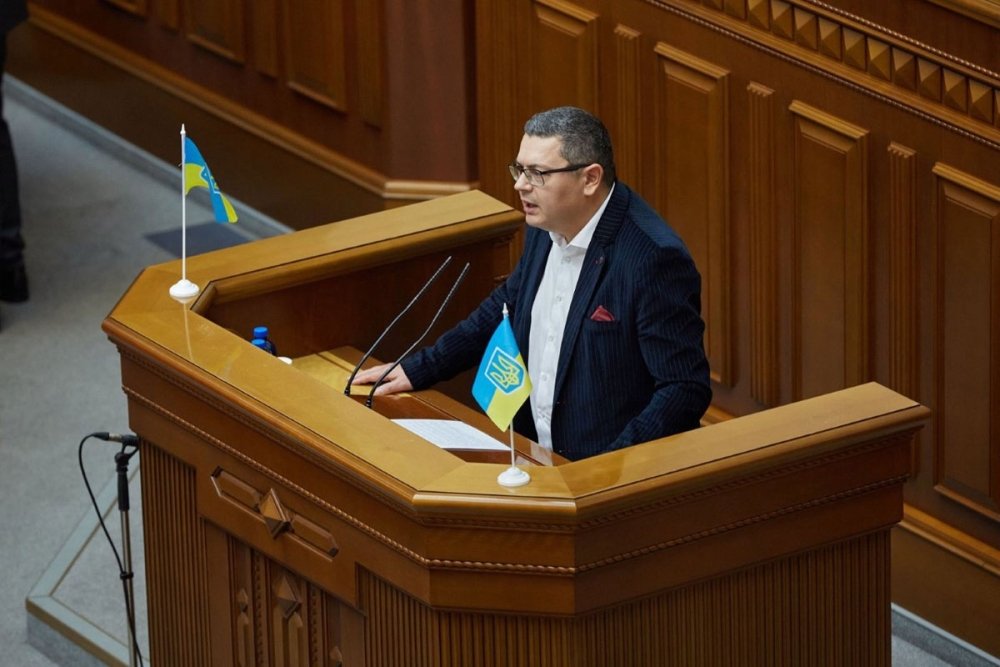
Oleksandr Merezhko, the Head of Ukraine’s Parliament Foreign Affairs Committee and one of the signatories of a letter expressing concern about current Western policies towards Kosovo-Serbia relations, has stated that the potential escalation in the Balkans holds significance for Ukraine as well.
Merezhko emphasized that Russia could exploit such escalation to serve its interests, including diverting attention from its aggression against Ukraine. He conveyed this during an interview with Voice of America, responding to a request for comment from the Albanian service.
The letter, signed by legislators and politicians from various Western countries, including ten foreign relations committee chairs and 56 deputies, was addressed to U.S. Secretary of State Antony Blinken, EU Chief Diplomat Josep Borrell, and UK Foreign Secretary James Cleverly. It calls for a preventive and balanced diplomatic approach while avoiding repeating past errors.
The letter expresses dissatisfaction with the current approach and urges the international community to draw lessons from history, ensuring that Belgrade isn’t the focal point for the Balkans. It highlights Kosovo’s challenges following attempts by municipal leaders to occupy their offices in northern Kosovo.
10 Chairs of Foreign Affairs Committees and 56 Parliamentarians have called on the US, EU & UK to change our approach to #Kosovo and #Serbia.
We need deterrence diplomacy, where we ensure there is balance in our dealings, and we do not repeat the mistakes of the past. 1/ pic.twitter.com/zEYsvTNFP3
— Alicia Kearns MP (@aliciakearns) August 6, 2023
Alicia Kearns, a prominent author of the letter and a British Conservative MP who chairs the Foreign Relations Committee, thanked Merezhko for his signature, labeling it a “unique” gesture.
Merezhko acknowledged that Ukraine does not recognize Kosovo’s independence. While the recognition matter falls under the President’s jurisdiction per the constitution, Merezhko, as a deputy, expressed his stance on the issue. He acknowledged Kosovo’s support for Ukraine and its imposition of sanctions on Russia.
Merezhko criticized incidents in Kosovo where extremists wrote the letter “Z” on vehicles belonging to peacekeeping forces and attacked KFOR representatives. He referred to violent events in May when Serbian protesters clashed with NATO-led troops, causing injuries and employing the “Z” symbol, previously used by Russian forces during the aggression in Ukraine.
The period saw tension rise as Albanian leaders of northern Kosovo municipalities took office with police support after boycotted local elections in April. The Serbs sought implementation of an EU-mediated agreement for increased self-governance.
Western diplomacy aimed to reduce tension through suspending police activities in the north, relocating municipal leaders to alternative offices, and announcing early elections with unconditional Serb participation.
The letter contends that coordination between Kosovo and KFOR is vital to prevent escalation. Merezhko criticized the lack of pressure on Serbia following the arrest of Kosovo police officers and the failure to hold them accountable for attacks on KFOR, highlighting the need for impartiality in addressing tensions.
Thank you, @aliciakearns. It's an honour to stand in support of freedom, democracy, peace & stability. The free world mustn't take its eye off the ball in the #Balkans! Balance & proportionality should be our watchwords in dealing with #Kosovo & #Serbia.
▶️https://t.co/kXfqafcHZX https://t.co/WHnKnZnwGA pic.twitter.com/AcglXikRRu— Олександр Мережко (@ChairOlek) August 7, 2023
The letter emphasizes that Western diplomacy should prioritize normalizing relations and the ongoing Euro-Atlantic path for both Serbia and Kosovo. Recent disturbances necessitate renewed focus on de-escalation and prevention.
Discoveries of weapon depots in northern Kosovo and ongoing arms smuggling across the Serbia-Kosovo border underscore the risk of further escalation. The letter asserts Kosovo’s sovereignty and functional democracy as the foundation for Euro-Atlantic policy in the current crisis.
The letter calls for public criticism of Serbia’s attempts to disrupt democratic elections in Kosovo and highlights the importance of accountability if such efforts persist. This would facilitate future elections with full participation from all communities in northern municipalities.
Two paths are suggested to facilitate new elections: the resignation of current leaders or a petition, which authorities believe would be a more democratic approach ensuring Serb participation.
Kosovo’s police have halved their forces in the north after the government’s agreement to support new elections in majority-Serb municipalities, aiming to ease tensions.
The agreement was reached in Bratislava in July between Kosovo’s chief negotiator and the EU’s envoy for Kosovo-Serbia talks.
Kosovo authorities have called on the international community to prevent Serbia’s interference in upcoming elections, as such interference often leads to violence and intimidation of citizens in the region.
Western legislators and politicians advocate for preventive diplomacy and the facilitated EU dialogue, seeking positive outcomes and adherence to the Ohrid Agreement.




