

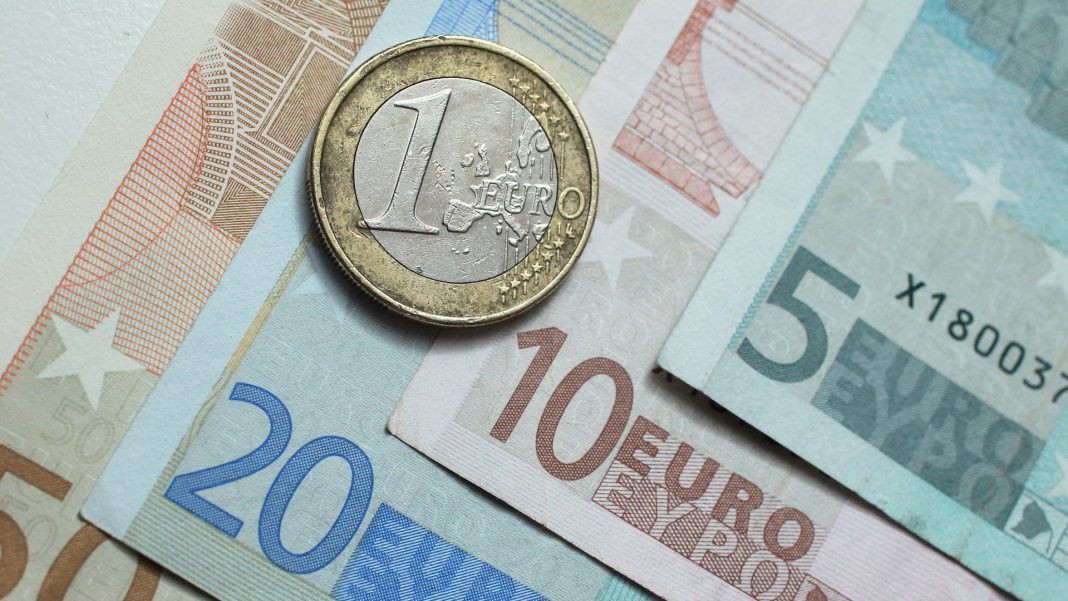
The exchange rate between the Albanian lek and the euro is once again undergoing a decline this week. According to the official exchange rate provided by the Bank of Albania, the euro was traded at 103.21 lek on Wednesday. This marks a decrease of around 1.2 lek since the previous Thursday, when the last significant increase was observed, following indications from the Bank of Albania.
Last week, Governor Gent Sejko announced the Bank of Albania’s intention to intervene in order to counter the lek’s excessive appreciation in the foreign exchange market. Subsequently, the Bank of Albania formalized plans to increase its currency purchases for this year, raising the limit from the previous 220 million euros to a new threshold of 300 million euros.
The Bank of Albania conducts its currency purchases through scheduled auctions, with the primary aim of augmenting foreign exchange reserves, rather than directly influencing the exchange rate. However, due to the rapid strengthening of the lek this year, the Bank of Albania is employing this mechanism to draw some of the substantial currency inflows away from the market.
Nonetheless, experts suggest that the additional sum of approximately 80 million euros that the Bank of Albania plans to acquire is unlikely to yield significant alterations in exchange rate dynamics. During the past week, the Bank of Albania procured 18 million euros, yet the trend of the exchange rate’s descent persisted.
Analysts assert that this year’s foreign exchange inflows are considerable, primarily due to the notable influx of foreign tourists visiting Albania. Conversely, the deliberate deceleration of credit expansion and the stringent fiscal policies implemented by the Albanian government contribute to the lek’s fortification.
However, presently, the exchange rate appears to be gradually stabilizing, accompanied by a reduction in trading margins. This implies a moderated level of uncertainty among market participants. The exchange rates of other currencies have also experienced modest declines over the week, although they remain slightly elevated compared to the historical lows reached around July 20, consequent to the euro’s devaluation.
Experts anticipate that the lek will maintain its robust position during this period. The seasonal effect is expected to wane towards the end of August, even though the tourist season continues to display a prolonged upward trend.
Following the autumn period, it will become apparent whether the euro can regain some ground. However, for this year, forecasts generally favor the lek’s sustained strength. The only unpredictable variables that could potentially elevate demand for the euro include electricity imports, particularly if autumn precipitation is limited, or a more pronounced intervention by the Bank of Albania to withdraw currency from the market.




