

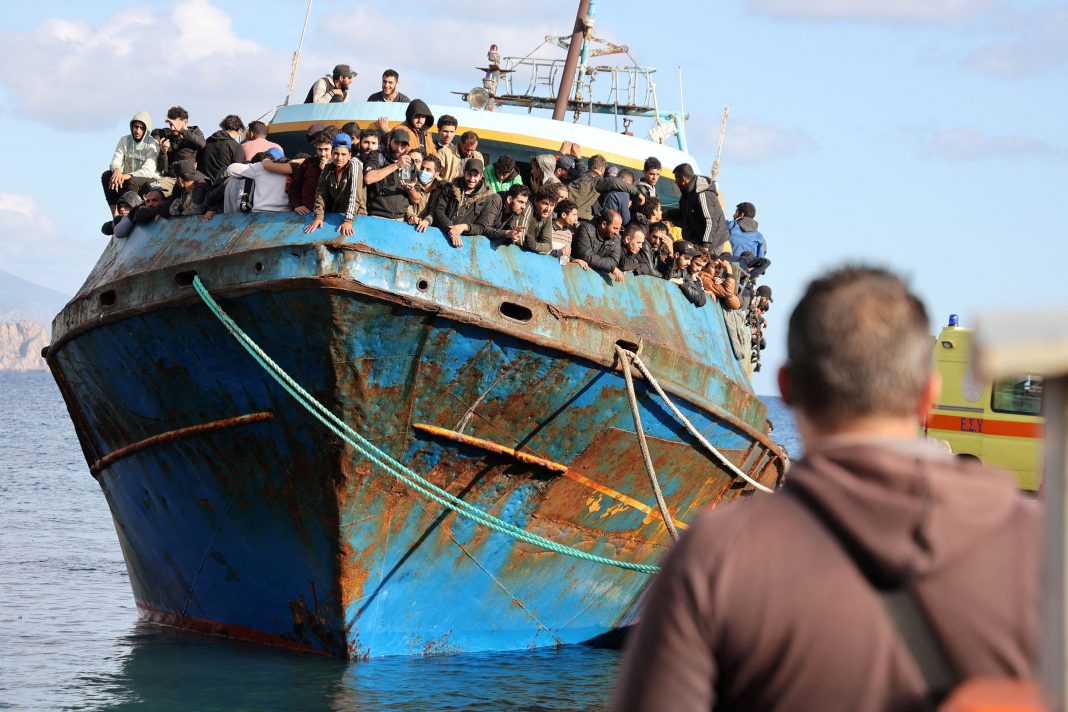
The European Union has experienced an unprecedented surge in irregular border crossings, particularly through the Central Mediterranean route, as reported by the European Border and Coast Guard Agency, FRONTEX, on Friday.
In the first seven months of 2023, the number of irregular border crossings at the EU’s external borders soared by 13%, reaching approximately 176,100 attempts – a figure not seen since 2016 for the January-July period.
This surge is predominantly attributed to the Central Mediterranean route, which remains the principal migration path into the EU and accounts for over half of all border detections, according to FRONTEX.
Central Mediterranean route saw a staggering 89,000 irregular migrant crossings reported by national authorities during the initial seven months of 2023, marking the highest total for this route for this period since 2017 and indicating an increase of over 115%.
FRONTEX’s report predicts that this trend could continue in the coming months, as smugglers offer reduced prices for migrants originating from Libya and Tunisia due to intense competition among criminal groups.
Regrettably, sea crossings remain highly perilous, with the report noting that over 2,060 migrants went missing in the Mediterranean between January and July, the majority of them on the Central Mediterranean route.
Conversely, arrivals on other migration routes have decreased compared to the previous year, with declines ranging from 2% in the Western Mediterranean to 29% on the Eastern Mediterranean route.
Amidst these developments, Albania, positioned as part of the Balkan Route, has witnessed a notable influx of irregular migrant arrivals from Greece.
Between January and June of this year, approximately 3,600 irregular migrants were identified in Albania, with over 1,500 entering through the Qafë Botë border point with Greece, as reported by Albanian border police.
July saw Albanian authorities establish the Temporary Registration and Accommodation Center at the border point to address the mounting accommodation needs due to increased irregular migrant arrivals from Greece through the green border.
This initiative marks the third temporary center established in Albania for irregular migrants, following those set up in Grehot, Gjirokastër, in 2017, and the Kapshtica border point in 2019.
In 2023, incidents involving migrant smugglers have risen, with nearly 68 operations aimed at intercepting hundreds of irregular migrants and apprehending dozens of smugglers, based on police data.
Criminal investigations have revealed that smuggling networks are active on both sides of the Albanian-Greek border, capitalizing on the substantial payments migrants make, ranging from 500 to 1,000 S dollars per person, to facilitate their journey from Albania’s southern and southeastern borders with Greece to its northern borders with Montenegro and Kosovo, from where migrants continue their onward journey to various European countries.




