

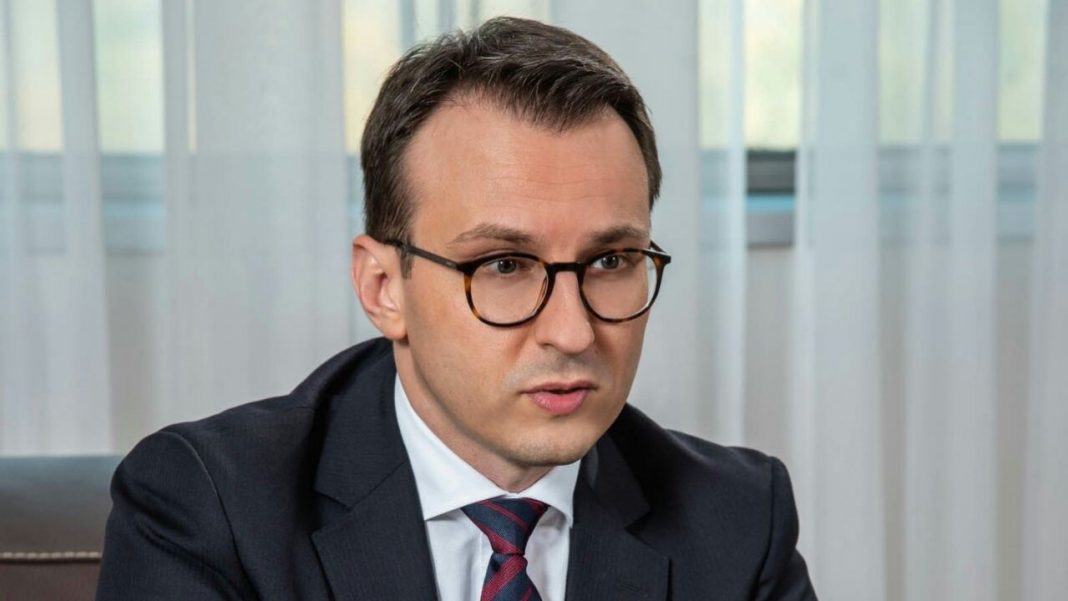
The Head of the Office for Kosovo in the Serbian Government, Petar Petković, has stated that Kosovo’s Prime Minister Albin Kurti is not interested in engaging in negotiations or seeking compromises with Serbia.
These comments from Petković came shortly after the latest round of discussions between Kosovo’s Prime Minister and Serbia’s President Aleksandar Vučić, as part of the ongoing dialogue aimed at normalizing relations.
During the recent round of talks, which were facilitated by the European Union, the focus was on implementing the Basic Agreement for the normalization of Kosovo-Serbia relations. However, no agreement was reached.
Petković remarked, “Kurti is not in favor of the Association of Serb-majority municipalities, and he is the one who refused to discuss the situation in northern Kosovo. On the other hand, Vučić has demonstrated a willingness to find a compromise because this is the only way to protect the Serbian population in Kosovo.”
Petković emphasized that the negotiations are taking place under extremely challenging conditions and urged everyone to recognize the complexity of the situation.
According to Petković, Kurti is unwilling to consider elections, agreements, or any other form of compromise.
Petković stressed that, from Serbia’s perspective, dialogue and compromise are not negative terms but rather a path towards de-escalation and peace in the broader Western Balkans region.
The most recent round of dialogue took place on September 14, while tensions remain high in northern Kosovo, an area predominantly inhabited by Serbs, since Albanian leaders assumed local governance at the end of May.
As a means to reduce tensions, the European Union has called for new local elections, a process that Pristina has committed to pursuing.
During a press conference on Monday, Kurti claimed that the European envoy for the dialogue, Miroslav Lajčák, appeared to be favoring Serbia’s position in the recent round of talks.
According to Kurti, there seemed to be coordination between Lajčák and Vučić to create an “alternative scenario” where only half of the Basic Agreement is implemented.
In response, Petković accused Kurti of making unfounded claims.
Regarding the events of the September 14 negotiations, European mediators reported that Kurti was not prepared to move forward, unlike Vučić, who “accepted their proposal” for implementing the Basic Agreement for the normalization of Kosovo-Serbia relations.
Josep Borrell, the EU’s Chief of Foreign Policy, who, along with Lajčák, mediated the meeting, stated that Kurti insisted on Serbia formally recognizing Kosovo before any progress could be made.
Borrell noted that the EU had offered a proposal to both parties for the simultaneous implementation of the Basic Agreement, which includes 11 provisions.
This agreement provides for a degree of self-governance for the Serbian community in Kosovo and calls on Pristina and Belgrade to honor all previous dialogue agreements.
Kurti, following the talks, claimed that “Serbia’s condition” for establishing the Association of Serb-majority municipalities had effectively become the stance of EU envoys.
The Association was originally agreed upon by Kosovo and Serbia in 2013 but has not been implemented due to concerns in Pristina about its potential impact on the state’s functionality.




