

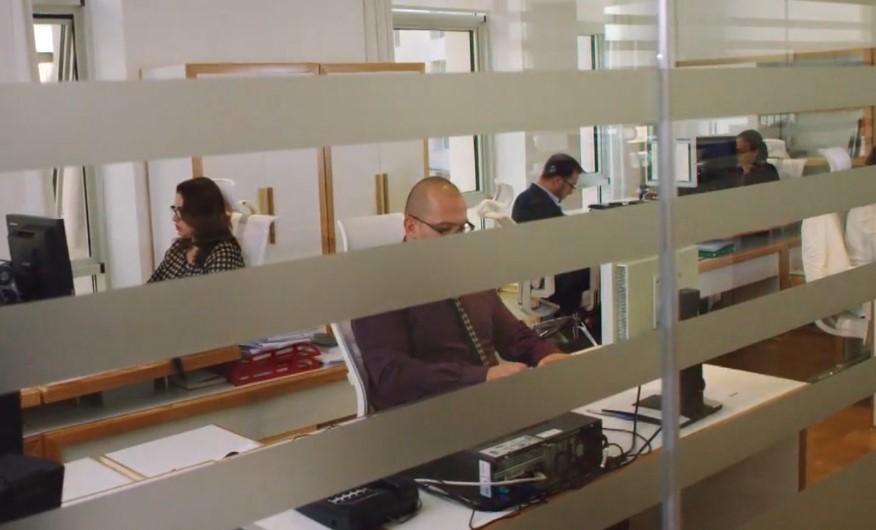
An average salaried employee in Albania worked approximately 43.7 hours per week in 2022, slightly up from 43.3 hours the previous year, according to data released by the Institute of Statistics (INSTAT).
Additional Eurostat data, which tracks working hours across European nations and select regional countries, reveals that Albanian workers boast the longest weekly working hours in Europe, a distinction they share with several neighboring countries.
Eurostat data shows that the average European worker toiled for 37.5 hours per week in 2022, a notable 6.2 hours less (nearly a full workday) than their Albanian counterparts.
Following Albanians, Serbians ranked second with an average of 43.3 working hours per week. For North Macedonia, the latest available data dates back to 2020, when the weekly average was 40.9 hours.
According to Eurostat, the standard workweek for individuals aged 20-64 in the EU averaged 37.5 hours in 2022.
It’s worth noting that significant variations exist among EU member states. The longest workweeks were recorded in Greece (41.0 hours), Poland (40.4), Romania, and Bulgaria (both 40.2).
On the opposite end of the spectrum, the Netherlands reported the shortest working week (33.2 hours), followed by Germany (35.3) and Denmark (35.4).
Women in Albania work longer hours than EU counterparts
In Albania, as reported by INSTAT, men logged an average of 44.8 working hours per week, while women worked 42.5 hours.
The most substantial disparity in working hours between Albania and the European Union becomes apparent when examining women’s employment. Women in Europe appear to enjoy more favorable conditions, working fewer hours and thus having more leisure time to devote to family and childcare responsibilities.
Eurostat data reveals that women in the European Union put in an average of 34.7 hours per week. In contrast, according to INSTAT, Albanian women work 42.5 hours weekly, a difference of 7.8 hours compared to their EU counterparts.
Notable differences persist among EU member states, with women in Germany averaging just 31.2 working hours per week, while in the Netherlands, which boasts the shortest average in Europe, the workweek extends to only 28.5 hours.
Eurostat data indicates that men in the European Union work an average of 39.9 hours. The Netherlands had the lowest figure at 37.4 hours, while Iceland reported the highest at 42.2 hours. The disparity in working hours between Albanian men and the EU average stands at 4.9 hours, significantly lower than that for women.
Work more, earn less
Despite boasting the longest working hours, Albanian workers receive the lowest wages in Europe. In 2022, Albania reported the lowest average wages in the region, amounting to approximately 520 euros (gross), according to data from respective national statistical institutes.
Serbia emerges as the regional leader in wage levels, with an average of 880 euros in 2022. In December 2022, Serbia came close to the 1,000-euro gross level, reporting 983 euros, as indicated by data from the Statistical Institute of Serbia.
Other regional countries also reported higher average wages compared to Albania, with North Macedonia at 832 euros, Montenegro at 900 euros, and Bosnia at 934 euros by the end of 2022.
In contrast, many other European nations report average monthly wages exceeding one thousand euros.




