

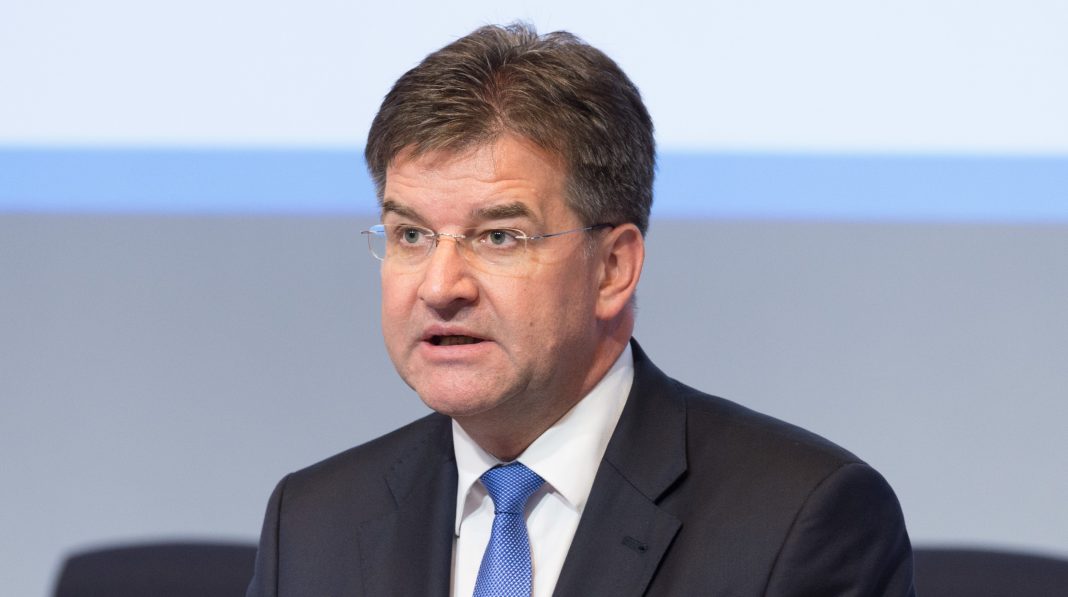
The European Union’s Special Envoy for the Kosovo-Serbia dialogue, Miroslav Lajčák, announced on Monday his commitment to focus on advancing the dialogue in the wake of an armed attack against the Kosovo Police in the northern region of the country.
On Sunday, a tragic incident unfolded as a member of the Kosovo Police was killed, and several others were injured during clashes with an armed group in the predominantly Serbian-populated northern area of Kosovo.
Taking to his Facebook account shortly after midnight, Miroslav Lajčák expressed his deep shock and concern over the attack on Kosovo Police officers in the village of Banjska in Zvecan. He strongly condemned such acts of violence, emphasizing that they are at odds with the fundamental principles of peace and cooperation.
Lajčák stressed that this unfortunate incident underscores the pressing need for dialogue and preventive diplomacy. He highlighted the significance of these approaches during his recent participation in the United Nations General Assembly in New York, where he engaged in strategic discussions with American counterparts regarding the region’s path forward.
On September 14, Kosovo’s Prime Minister Albin Kurti and Serbia’s President Aleksandar Vučić convened in Brussels for high-level talks mediated by the European Union. Unfortunately, the discussions did not yield any agreements concerning the normalization of relations between the two parties.
Kurti publicly accused Lajčák of displaying a bias against Kosovo during these negotiations.
Kosovo authorities reported the tragic death of a police officer, Afrim Bunjaku, who succumbed to injuries sustained during the attack. Authorities further revealed that the armed assailants, numbering around 30, had taken refuge in the Banjska Monastery, where they engaged in a sustained exchange of fire with law enforcement personnel throughout the day on Sunday.
Kosovo’s Interior Minister Xhelal Sveçla confirmed that three of the attackers lost their lives during the operation, while six individuals, suspected to be affiliated with the assailants, were apprehended. Additionally, authorities seized a significant cache of weaponry.
Kosovo held Serbia accountable for the attack, while Belgrade officially placed the blame on Kosovo Serbs.
Tensions in northern Kosovo have been running high since May, sparked by the refusal of residents in predominantly Serbian-majority municipalities to accept newly elected Albanian leaders, who emerged victorious in elections that were boycotted by the Serbian population.
At times, these tensions have escalated into acts of violence, posing a significant challenge to the region’s stability.
The international community has called upon Kosovo to coordinate its actions moving forward and to actively work towards de-escalating the situation.