

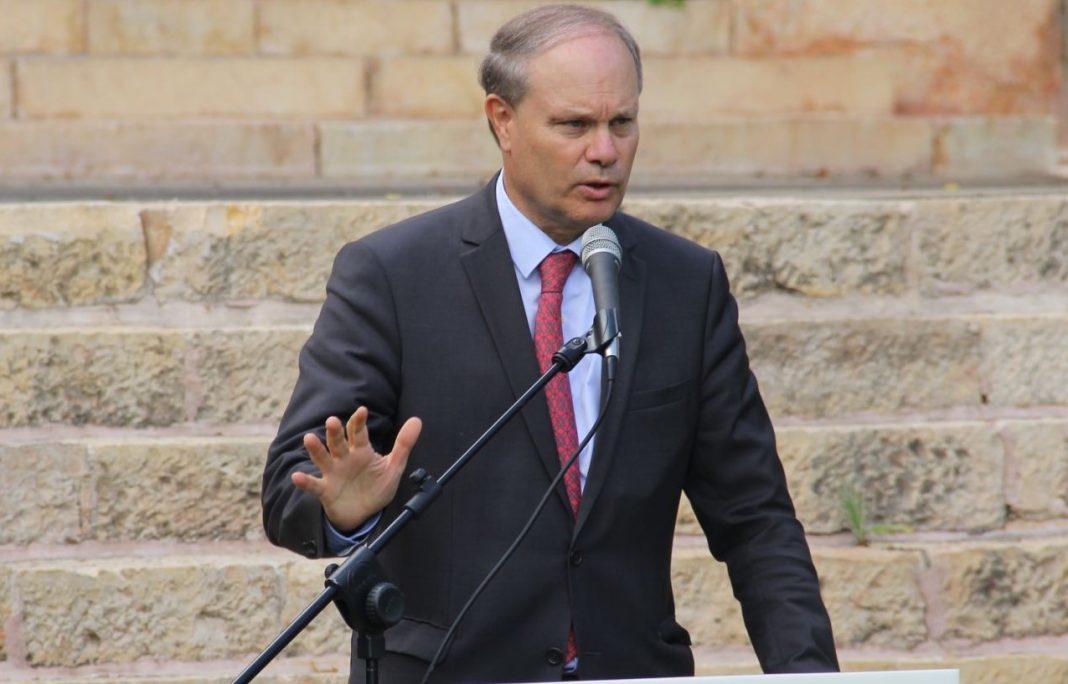
France has designated diplomat René Troccaz as a special envoy for the Western Balkans region. The Ministry of Foreign Affairs announced this appointment, highlighting that it corresponds with France’s increased engagement in the region due to the Western Balkans’ growing ties with the European Union.
According to the statement, the special envoy’s role will encompass pivotal issues in regional politics, aligning with European and American counterparts. Additionally, Troccaz will oversee regional cooperation initiatives, notably the Berlin Process, among other responsibilities.
.@MinColonna a nommé un envoyé spécial pour les #Balkans occidentaux, @troccazrene. Cette nomination s’inscrit dans le cadre du renforcement de l’action de la France dans cette région, dans le contexte de son rapprochement avec l'🇪🇺, que nous soutenons.
➡️https://t.co/6LUVaxRjon https://t.co/T5NLRFlNsu— France Diplomatie🇫🇷🇪🇺 (@francediplo) September 29, 2023
Troccaz previously served as France’s Consul General in Jerusalem and held the position of France’s ambassador to Cyprus. He also occupied various roles within the Ministry of Foreign Affairs and the Ministry for Europe.
Troccaz becomes the fifth Western envoy appointed for the Western Balkans region.
Currently, Gabriel Escobar, the Acting Assistant Secretary of State of the United States, serves as the American special envoy, while Sir Stuart Peach represents the United Kingdom as the British special envoy. Miroslav Lajčák acts as the European Union’s special representative for Kosovo-Serbia dialogue and other Western Balkans issues. Germany’s envoy for the region is Manuel Sarrazin.
All these appointments form part of collective efforts to facilitate an agreement between Kosovo and Serbia through negotiations mediated by the European Union.
This appointment comes at a time of heightened tensions between Kosovo and Serbia. On September 24, an armed group attacked Kosovo Police officers in the village of Banjska in the northern region, resulting in the death of one officer and injuries to another.
The incident led to the armed group forcibly entering a monastery in the village and continuing to engage with law enforcement. The confrontation concluded when most of the attackers fled the scene, leaving three armed assailants dead.
Kosovo institutions, the European Union, and Western diplomats classified the attack as a terrorist act. Serbia, on the other hand, denied any involvement with the armed group, while Kosovo accused Belgrade of orchestrating and supporting the attackers.
This event has reignited international concerns regarding regional stability, and experts suggest that it may have significantly hindered the already challenging process of normalizing relations between the two countries.




