

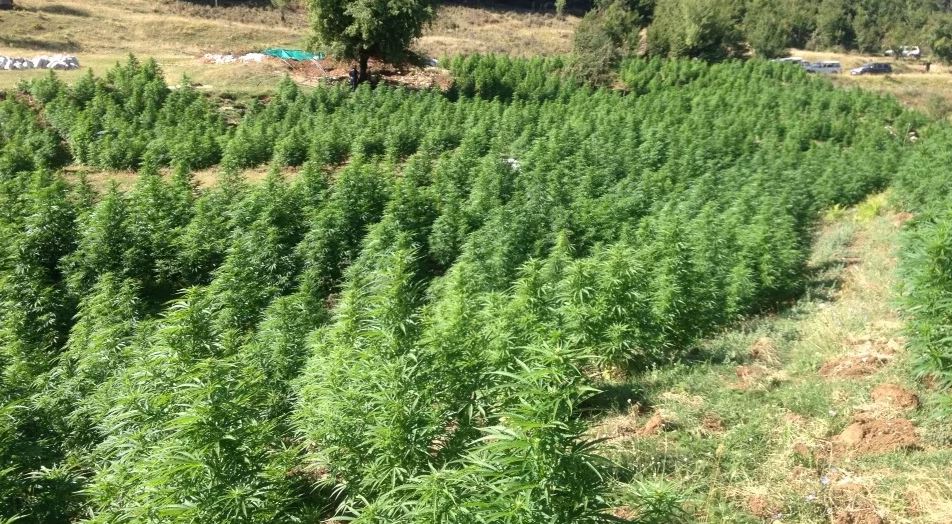
Albania’s stunning natural landscapes, particularly its mountains, have been increasingly drawing adventure tourists. However, these areas have also become fertile ground for the cultivation of cannabis sativa, a narcotic plant.
The mountainous terrain, challenges in road infrastructure, depopulation, and difficulties in territorial control by both locals and the police have made the Albanian Alps an attractive location for the illegal cultivation of these narcotic plants.
In the last five months, Operation “Clean Alps” has uncovered 132 cases of cultivation and led to the destruction of over 76,000 narcotic plants. Additionally, nine suspects involved in cultivation have been arrested, and 11 others are currently wanted by law enforcement.
The region most affected by narcotic plant cultivation is Dukagjin, which covers the administrative units of Shalë, Shosh, and Pult. This area has seen a rise in criminal activity, including three homicides and one injury since late June, suspected to be connected to the cultivation of narcotic plants.
Across Shkodra County, encompassing five municipalities, authorities have discovered and destroyed 197,000 cannabis plants and seedlings so far. This accounts for approximately 62% of the narcotic plants eradicated in the entire country this year. Shkodra has thus emerged as the most problematic area regarding narcotic plant cultivation.
Official data from the State Police reports that, as of early September, nearly 290,000 narcotic plants and seedlings had been discovered and destroyed in Albania, with 111 cultivators arrested. Nevertheless, local sources suggest that the actual quantity of narcotic plants cultivated in the country this year is much larger than what the police have uncovered thus far.




