Folk costumes are one of the factors that set Albanians apart as a nation from neighboring countries.
Many of these costumes date back to the Illyrian period and have naturally evolved with changing times and circumstances, yet they still preserve the fundamental motifs that can be explained by prehistoric beliefs.
In the attire of the northern regions, one can find triangles, diamonds, circles, and crosses known as symbols of health and fertility.
The Regional Directorate of Cultural Heritage in Shkodra (DRTK Shkodër) recently presented some costumes from the Dukagjin, Puka, and Mirdita regions, which are part of Gjon Dukgilaj’s private collection, unveiling a valuable ethnographic treasure.
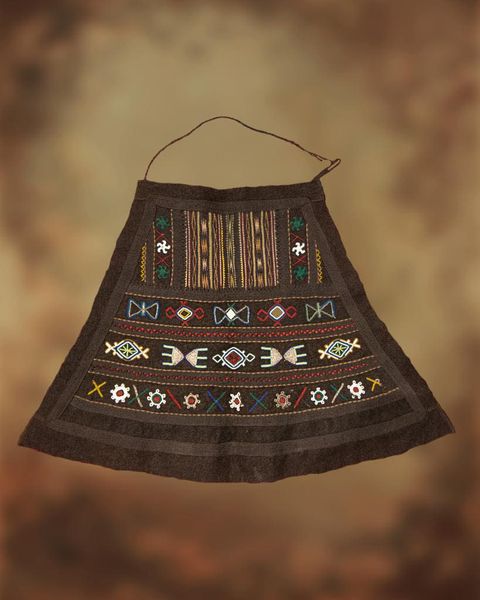
One element of the collection is the large apron (known as “paraniku”) in the shape of a trapeze from the Puka region, which connects the Dukagjin area with the region beyond the Drin River, bridging common elements between the Puka apron and the Dukagjin region.
In this photo, one can see a part of the apron, always embroidered with very interesting motives used before the deaths of Skanderbeg and Lek Dukagjini, with the same colors also present in the attire of the Dukagjin region.
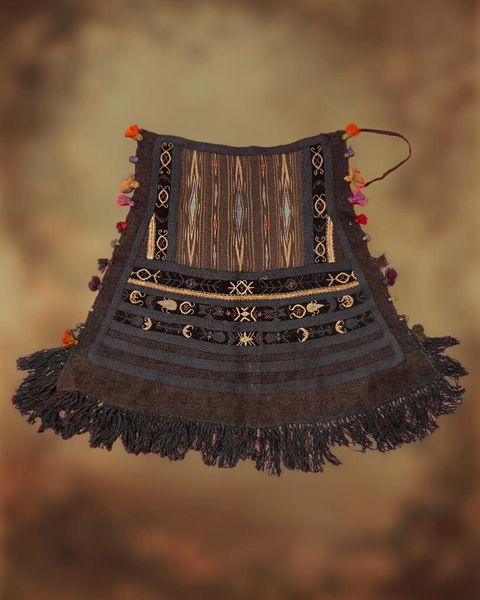
Later, the jublet turns black, and its mourning character is inherited in the Mirdita and Dukagjin regions, which bear the mourning color of Skanderbeg and Lek Dukagjini.
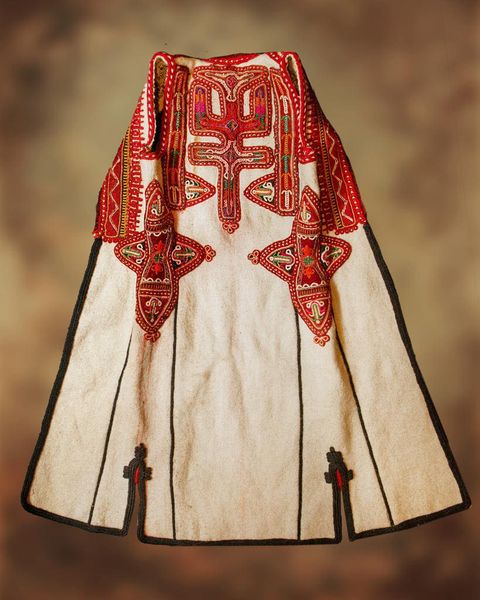
Another preserved element is the jacket for Mirdita women and girls – known as “xhybja mirditore”.
This jacket is like a sleeveless vest and is long, reaching below the knees, adorned with black ribbons and symbolic figures in red, violet, cherry, or black.
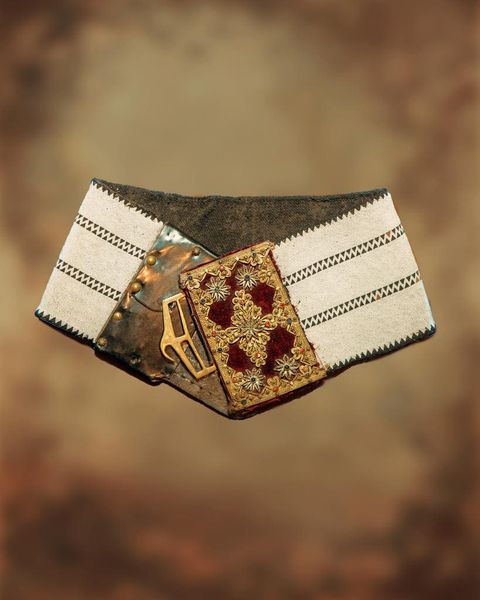
The white belt signifies that the girl in the house was engaged and came from a large and wealthy family.
The Dukagjin-region apron with its violet-colored fringe, worn in wedding and funeral ceremonies, indicates the colors that jublets used to have, embroidered with very interesting motifs that evoke the symbolism of Mother Earth.