

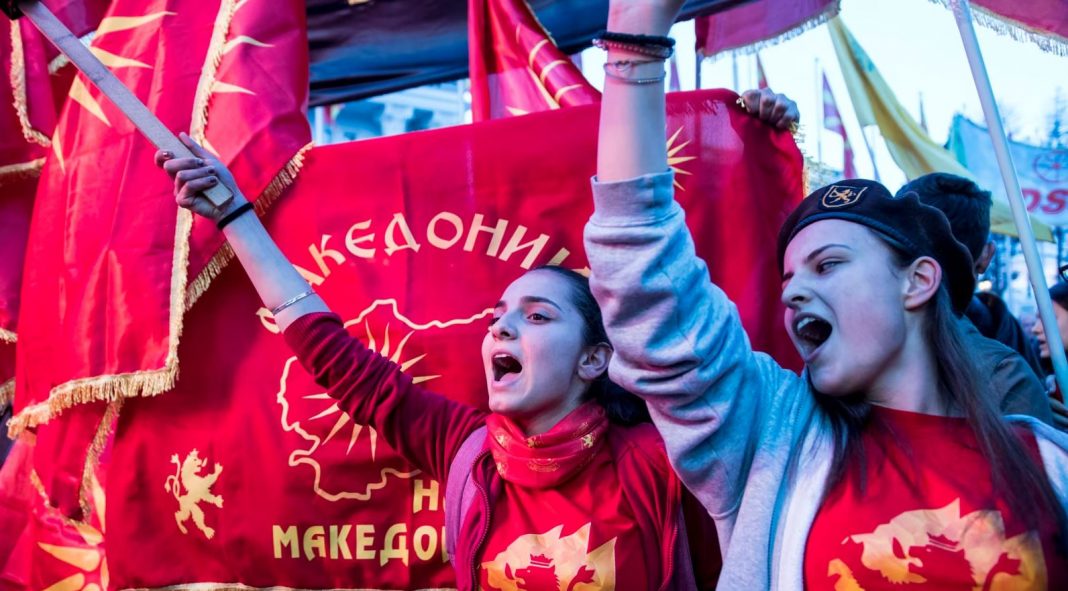
Despite the absence of a set date for the upcoming parliamentary elections, political parties in North Macedonia have commenced their electoral campaigns, rallying their supporters.
The elections for the new 120-seat Parliament and the President are slated for the next year. However, the date will be determined no later than December, as stated by the Speaker of Parliament, Talat Xhaferi.
The President is chosen through a two-round voting process, but the opposition is advocating for the second round to coincide with the parliamentary elections. Potential dates for this combined approach are May 5 or May 8 of the upcoming year.
Talat Xhaferi, the Speaker of Parliament, has indicated that if parties fail to reach an agreement by December, he will announce the dates for the presidential and parliamentary elections at the end of that month.
Nonetheless, the Macedonian opposition, which polls favor as the likely winner, has already launched efforts to engage with their constituents, encouraging a robust turnout in the elections.
VMRO-DPMNE aims to secure a majority of seats to enact what it terms as “significant reform in a nation that has been undermined, depleted, and exploited by the ruling parties”.
“We require substantial reform as Macedonia is in a dire state, having been torn down and looted. Therefore, it is imperative for the coalition led by VMRO-DPMNE to secure 61 seats (deputies). We are striving for 61 deputies, and victory is assured,” stated VMRO-DPMNE leader Hristijan Mickoski during a party gathering in Prilep.
Mickoski held the ruling parties, particularly the Democratic Union for Integration (BDI), accountable for the state of affairs in North Macedonia concerning issues such as crime, corruption, the erosion of trust in the judiciary, and others. He emphasized that there would be no coalition with BDI following the elections.
On the flip side, BDI accused VMRO-DPMNE of fanning ethnic tensions.
“This method of inciting ethnic hatred, subsequently leveraged for political gain, is extremely perilous for a multi-ethnic democracy like North Macedonia. I would like to tell VMRO that as long as BDI and Ali Ahmeti exist, not a single strand of hair will be missing from the Albanians,” remarked Bujar Osmani, Deputy Chairman of BDI and Minister of Foreign Affairs.
Meanwhile, three Albanian opposition parties have formally united in a coalition known as the “European Front for Change”.
Leaders of the Besa Movement, the Alternative Party, and the Democratic Movement declared at a rally in Skopje that this coalition is dedicated to “bringing change for Albanians, addressing issues like crime, corruption, unemployment, and poverty”.
The coalition’s primary objective is to expedite North Macedonia’s integration into the European Union.
“This unified Albanian coalition remains unwavering in its commitment to the rapid integration of North Macedonia into the European Union. We have no intention of compromising on this matter, as we have frequently emphasized that there is no alternative to EU integration,” affirmed Afrim Gashi from the European Front for Change.
Nevertheless, it was also noted that the Albanian opposition will persist in advocating for a revision of the definition of the Albanian language in the Constitution, where it is currently defined as the language spoken by 20 percent of North Macedonia’s population.
In contrast, the ruling parties, the Social Democratic Union and BDI, have centered their activities on presenting infrastructure projects and pledging to “accelerate European integration”.
As parties heighten their rhetoric even before the official election announcements, political experts believe that, given the economic crisis, it would be in the country’s best interest to conduct concurrent elections, despite the opposition from the ruling parties.
“I cannot confirm whether the parties will reach an agreement or not, but simultaneous elections are a practical option since it would not make sense to hold separate elections for the Parliament and the President when the difference between them is minimal. Parties will strategize until the last moment, with the ruling parties more inclined to oppose concurrent elections, arguing they have an advantage in presidential elections,” assessed analyst Petar Arsovski.
The election campaign in North Macedonia spans 20 days and concludes 48 hours before the voting process commences.




