

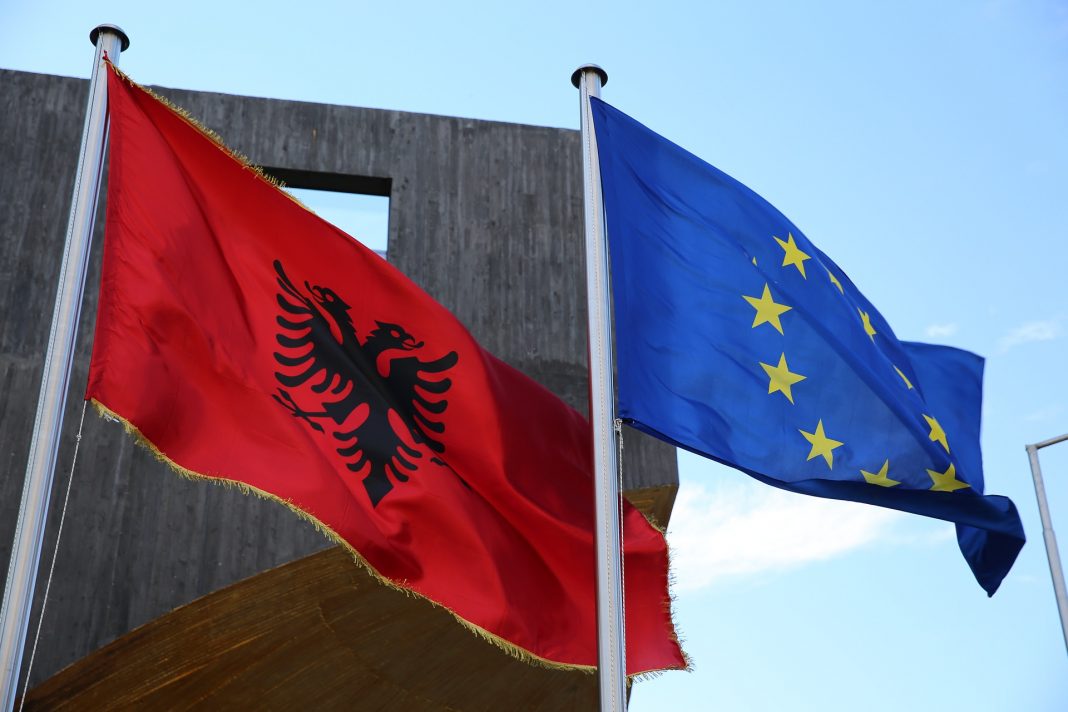
The European Commission has warned in its latest report that the Albanian economy will face several growing risks in the coming year, stemming from internal factors such as increased climate risks and issues arising from the lack of labor force due to high emigration and declining population.
In the report, the Commission stated that the economy is expected to slow down in 2023 and 2024.
“After a strong expansion in 2022, reaching 4.8%, Albania’s economic growth is expected to ease to 3.5% in 2023 and 3.1% in 2024, as private consumption is predicted to slow down due to high food prices and weaker employment growth,” the report said.
However, this outlook is also subject to growing risks, according to the European Commission, primarily due to Albania’s high exposure to climate change, the increasing shortage of qualified labor force due to emigration, and negative population growth.
In the latest enlargement report, the Commission highlighted the significant efforts and investments needed to adapt to climate developments.
“Albania is highly exposed to the consequences of climate change. Rising sea levels and floods/droughts are expected to significantly impact society, public infrastructure, and economic activities. Therefore, risk management plans for climate change need to be adopted at all levels, and key critical infrastructures must be climate-protected to increase the country’s resilience to the impacts of climate change”.
The European Commission states that the Bank of Albania should also analyze the exposure of the financial system and credit risks related to climate change.
Another risk is linked to the high dependence on hydroelectric power plants for energy generation, making it vulnerable to climate change.
“The country is a net importer of electrical energy by around 30% annually, as hydroelectric energy is not sufficient to cover its needs. Progress is needed in connecting energy with neighboring countries and establishing an integrated regional energy market to enhance supply security and create opportunities for the development and trade of green energy. Diversification into large solar and wind resources would significantly improve Albania’s energy security and reduce its vulnerability to the impacts of climate change”.
Issues related to finding labor force due to high emigration and the gradual decline in population are another risk for the economy.
“Despite improvements in the labor market situation, emigration increased by 10.5% compared to 2021, leading to a population decrease of 1.1% in 2022. This also contributes to an aging population and affects the financing of the pension system, where Albania already has a low contributor-to-beneficiary ratio,” the European Commission states in the enlargement report.
The report emphasizes the growing concerns of businesses due to the lack of labor force.
“There is a growing perception that difficulties in recruiting qualified labor are becoming a hindrance to businesses, and entrepreneurs are increasingly seeking measures from the government to assist in retaining workers and offering incentives to attract the diaspora back”.