

The Prime Minister of North Macedonia, Dimitar Kovačevski, has called on the opposition party VMRO-DPMNE to respect the legal provisions for its participation in the technocratic government, which is set to start working on January 27, 2024.
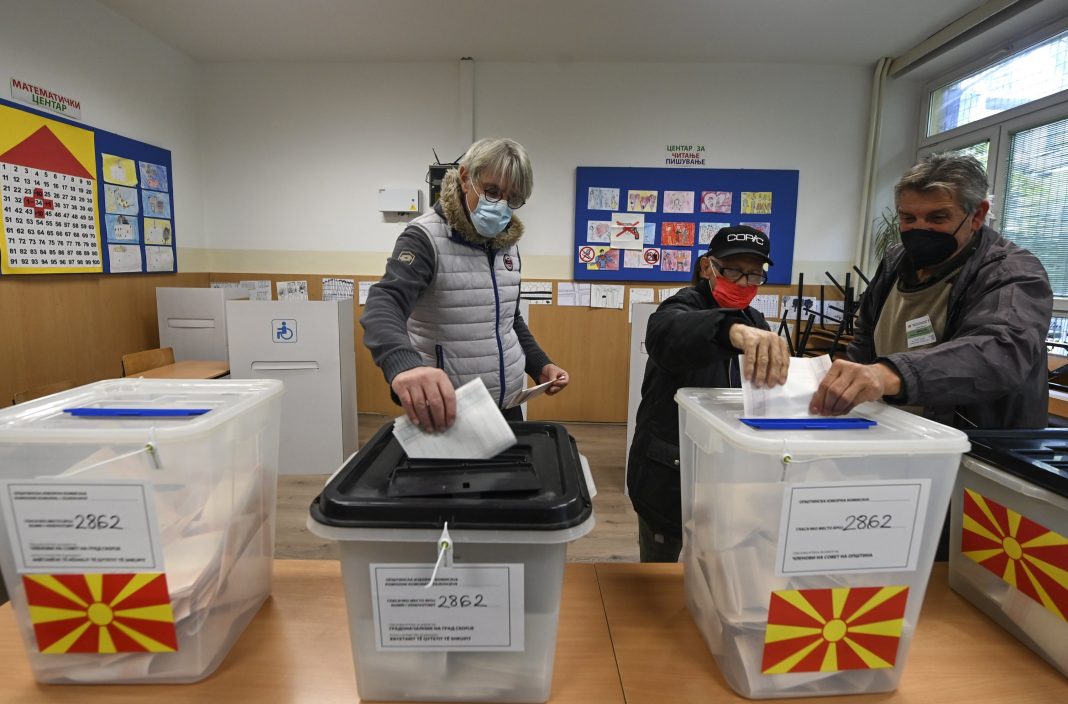
The technocratic government, based on the Election Law, is formed 100 days before each election cycle and is responsible for organizing and conducting parliamentary elections, which will be held on May 8.
The opposition is required to be part of this government, and it is assigned the Ministry of Internal Affairs, the Ministry of Labor and Social Policy, as well as three deputy ministers with specific competencies. This means that ministers cannot make any decisions without the signature of deputy ministers.
However, VMRO-DPMNE has not yet decided whether to participate in this government, although its officials have emphasized the need for participation to prevent, as they have said, “the current authorities’ aims to abuse the electoral process”.
Prime Minister Kovačevski said on Wednesday that VMRO-DPMNE has a legal obligation to participate in the technocratic government.
“This is a legal obligation for all political parties. If they do not appoint members to the technocratic government, it means they do not respect the law. According to the Election Law and the technocratic government, each party has responsibilities and must respect them so that the electoral process is not tainted,” said Kovačevski, who is also the leader of the Social Democratic Union (SDSM).
On Tuesday evening, SDSM approved all decisions regarding its participation in the technocratic government.
“The central council of SDSM has already approved all decisions regarding participation in the technocratic government. Based on the party’s status, we have already appointed the names of government members, ministers, and deputy ministers. Meanwhile, we have also confirmed the decision that the coordinator of the Parliamentary Group, Jovan Mitrevski, will be appointed as the Speaker of the Parliament, meaning that we have fulfilled all our obligations,” said Kovačevski.
Meanwhile, VMRO-DPMNE has opposed the proposal of the Democratic Union for Integration (BDI) for Talat Xhaferi to be the prime minister of the technocratic government, who also has the support of SDSM.
The Macedonian opposition accuses Xhaferi of “violating the rules” of the Parliament, and the Left party has filed a criminal complaint due to the non-procedure of one of its initiatives for a referendum against the agreement with Bulgaria to resolve bilateral disputes, based on the “French proposal”.
However, such accusations have been dismissed by BDI, while Talat Xhaferi stated on Wednesday that his successor, Jovan Mitrevski, will be elected as the Speaker of the Parliament by January 20.
Nevertheless, until the formation of the new government, political parties must also agree on completing the composition of the State Election Commission (SEC) with an additional member, claimed by both the Albanian opposition and the ruling parties.
According to legal provisions, one member of the SEC should represent the Albanian opposition, but the Alliance for Albanians, which is part of the government, claims that this position belongs to them since they were in the opposition in the last parliamentary elections.
Afrim Gashi from the Alternative party, which is part of the opposition coalition, the European Left for Change, said that if the SEC member is not elected from the opposition ranks, there will be a boycott of the Parliament’s work, among other measures, including a possible boycott of the elections.
Parliamentary elections in North Macedonia will be held together with the second round of presidential elections on May 8 and are considered crucial for the country’s future, as the new parliamentary composition must approve the constitutional changes, a key condition for North Macedonia’s EU integration.





