

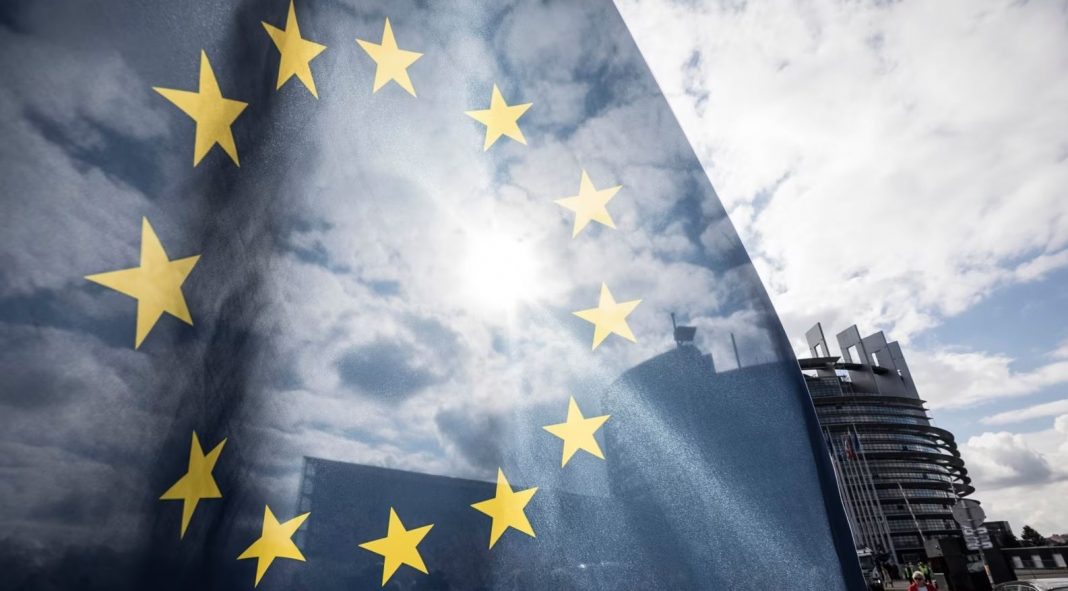
Spain concludes its presidency of the European Union (EU) at the end of 2023 to hand over this role to Belgium.
Thus, Belgium, the country where the headquarters of the European Union is located, and which was the first to have the role of the presidency when this system was established, will lead for the 13th consecutive time.
And Belgium’s presidency occurs at a crucial moment for the EU, as European elections will take place between June 6 and 9, shortly after the end of this presidency.
For Belgium, election day will be even more critical because on the same day as the European Parliament elections, national, regional, and local elections will also take place. Despite this, the Belgian Government has promised to have the necessary capacity and sufficient focus to successfully carry out the duties of the next presidency.
During Spain’s presidency with the EU in the second half of 2023, it went through the enlargement process.
Spain, during its presidency with the EU, prioritized the enlargement process, and this is also expected to be the case for Belgium.
During Spain’s presidency, historic decisions were made to start accession negotiations with Ukraine and Moldova, and readiness to start negotiations with conditions was expressed for Bosnia and Herzegovina and Georgia.
There was no progress regarding Kosovo’s application for EU membership during Spain’s presidency, which was expected since Spain is among the EU member states that strongly oppose Kosovo’s independence.
However, Kosovo participated in a European Political Community summit held in Granada, Spain, and in a joint EU-Western Balkans summit held in Brussels in December.
Diplomats in Brussels say that in the first half of 2023, when Sweden held the EU presidency, there were efforts for the EU Council to consider Kosovo’s application for membership and possibly mandate the European Commission to prepare an opinion on this application. However, Sweden also failed to secure the support of all member states for such a move, and Spain was among the countries that opposed it most.
Now that Belgium takes over the presidency, it is not clear whether it will reconsider Kosovo’s application for EU membership, submitted at the end of 2022 when the Czech Republic held the presidency.
“This is also a legal issue because not all member states have recognized Kosovo’s independence, and enlargement decisions are made by consensus. But it is also a political issue because it is also related to Kosovo’s behavior in the dialogue process with Serbia and the implementation of obligations arising from this process,” an EU diplomat told Radio Free Europe.
In Belgium’s Government documents listing priorities for the presidency, it is only stated that during this period “it will advance work on the ongoing enlargement process”.
“The Belgian presidency will monitor the ongoing processes with all relevant countries, in accordance with the existing methodology, based on the individual merit approach, and the progress of each candidate in meeting the accession criteria,” the document says.
“We will encourage integration into the EU by promoting necessary transformative reforms in key areas, especially the rule of law, democratic institutions, media freedom, and fundamental rights,” the document states.
Also, it is emphasized that during Belgium’s presidency with the EU, precisely on May 1, 2024, the 20th anniversary of the largest enlargement of the European Union will be marked. Belgium, as the EU leader, sees this as a “great step towards the unity and prosperity of the European continent”.
Belgium, during its presidency, will also deal with defining a strategic agenda for the development of the EU, where enlargement will have a significant place. This “strategic agenda” will set the foundation for the EU’s action in the period from 2024 to 2029.
“Parallelly, the presidency will pay special attention to the EU’s capacities to integrate new members and advance reflections on the internal reforms needed for a successful expansion in the future,” the document says.
Regarding the EU enlargement process during Belgium’s presidency, negotiations for accession could begin with Ukraine and Moldova, as a decision for this was approved at the last European Council meeting in December. Bosnia and Herzegovina will be evaluated in March to see if it has fulfilled some conditions for starting accession negotiations.
Belgium has announced that it will continue to deepen cooperation with European neighbors outside the EU, from Switzerland to the Western Balkans, to address common challenges such as energy supply security and migration issues. Also, Belgium will focus on strengthening the Alliance with the United States and cooperation with NATO.




