

According to preliminary data from the European Border and Coast Guard Agency, FRONTEX, the number of irregular border crossings at the external border of the European Union reached around 380,000 in 2023, driven by an increase in arrivals through the Mediterranean region.
This marks the highest level since 2016 and represents a 17% increase compared to irregular crossings in 2022, indicating a continuous upward trend over the last three years.
According to FRONTEX, the Central Mediterranean route was the most active migration route into the European Union, accounting for two out of every five irregular crossings.
This route constituted 41% of crossings in 2023, followed by the Western Balkans, constituting 26%, and the Eastern Mediterranean, constituting 16% of crossings.
Syrians accounted for over 100,000 irregular crossings in 2023, marking the highest number among all nationalities.
They were followed by Guineans and Afghans. These three major nationalities accounted for over one-third of all crossings, according to FRONTEX.
Statistical data shows that women constituted 10% of the overall number of irregular crossings in 2023, and similarly, children constituted 10%.
“The numbers show the evolving challenges we face in managing the external borders of the European Union,” said FRONTEX Executive Director Hans Leijtens in a statement.
“We remain committed to ensuring the safety and integrity of the EU’s borders. It is equally important to address the humanitarian aspects of migration. These figures represent not only statistics but real people,” he added.
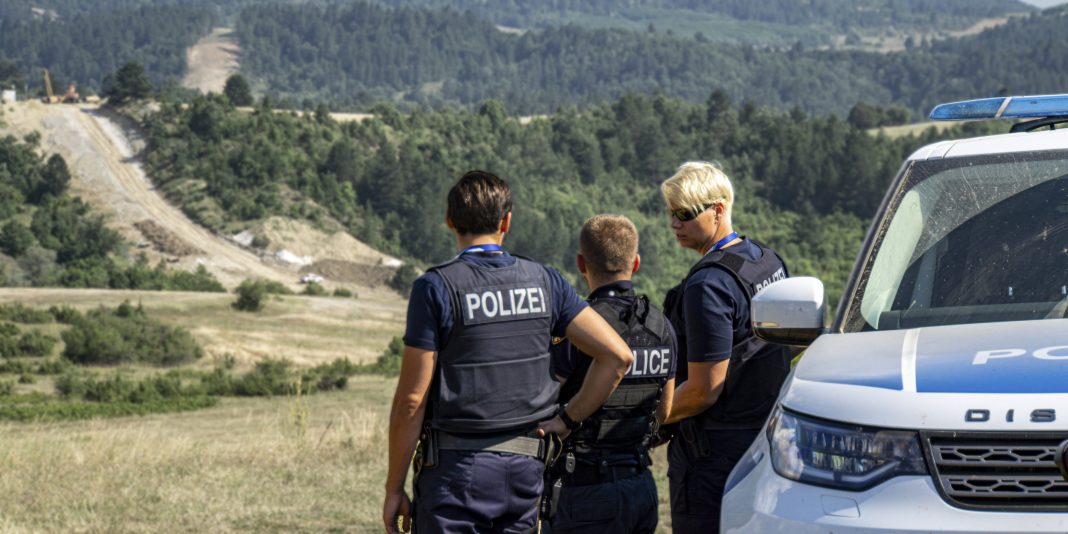
FRONTEX currently has 2,500 border guards and other staff participating in its joint operations at Europe’s borders, supporting EU member states and third countries in managing migratory flows and contributing to preventing and detecting cross-border crimes such as migrant smuggling, human trafficking, and terrorism.
Albania, as part of the Western Balkans route and migrant inflows during 2023
Albania is part of the Western Balkans route, where irregular migrants entering from the southern and southeastern Albanian border with Greece transit to travel from northern areas towards Montenegro or Kosovo, with the final destination being European Union countries.
Migrant inflows into Albania in 2023 were closely linked to the situation in Greek migrant camps, the pace of irregular migrant entry into Greece, primarily from the Turkish border, but also with the activity of regional or national migrant smuggling networks.
Around 9,000 irregular foreign migrants were identified within Albanian territory based on preliminary data, with the majority having entered from Greece at the Qafë Botë point in Saranda.
Albanian authorities signed a cooperation agreement with FRONTEX earlier this year aiming to facilitate the exchange of information between the European border protection agency and Albanian authorities regarding claims of fundamental rights violations in FRONTEX’s operational activities in Albania’s territory.
Both FRONTEX and Albanian authorities have independent complaint mechanisms in place, and the agreement builds a bridge between them.
FRONTEX initiated its joint operation in Albania, the agency’s first operation in the Western Balkans, in May 2019. Currently, 162 European border guards work together with the Albanian Border Police.
Albanian border authorities opened a Temporary Shelter Center for irregular migrants in the southernmost part of Albania at Qafë Botë in Saranda in 2023.
The center was established with the support of the International Organization for Migration (IOM) and provides services for groups of irregular migrants until the return process to the Greek border or referral for asylum.