

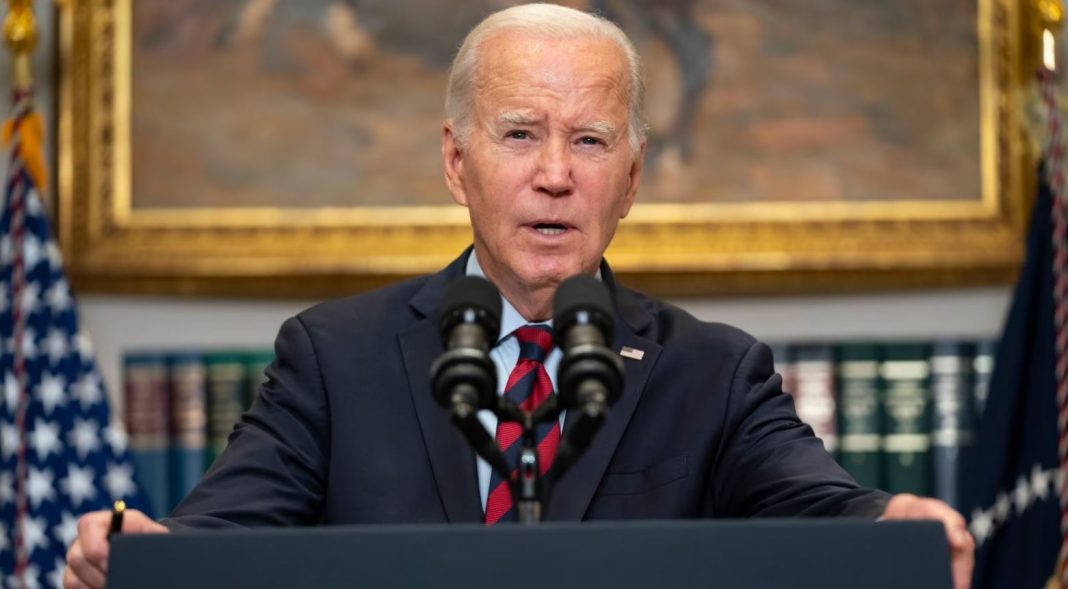
U.S. President Joe Biden has mentioned the Balkans and the risk it faces if the United States does not continue to send aid to Ukraine, which has been facing Russian invasion since February 2022.
Speaking after a conference with the heads of U.S. states on January 19, Biden discussed the strong position of the United States in the world and the challenges other countries are facing.
“If we stop, and Russia continues to fight and defeat Ukraine, what do you think will happen to the Balkan countries? What will happen to Poland up to Hungary? Seriously, think about it. It changes the dynamics,” Biden said, according to the White House.
The United States, which has been the biggest supporter of Ukraine since the beginning of the conflict, is currently facing opposition from some conservative Republican lawmakers who are against further aid to the country.
Biden’s aid package includes 50 billion dollars for Ukraine and 14 billion dollars for Israel.
Even the European Union has not been able to allocate funds worth 50 billion dollars for Ukraine due to the veto used by Hungary.
Last month, the head of the U.S. Budget Office, Shalanda Young, wrote in a letter to House Representatives leader Mike Johnson that if military aid ends, Kiev will kneel to the Russian invasion.
In total, the United States has allocated 111 billion dollars for Ukraine since the start of the conflict, including 67 billion dollars for the purchase of military equipment.
Russian President Vladimir Putin refers to the conflict as a “special military operation” to militarize Ukraine.
The West has responded to Russia by imposing harsh sanctions on its economy.
As a result of the war, thousands of people have died, and millions have been displaced from their homes.
Preventing any conflict in the Balkans
U.S. Secretary of State Antony Blinken reiterated last November that the last thing the West wants in the Western Balkans is a return to conflicts, emphasizing the importance of NATO’s presence.
After the attacks in Banjska of Zvecan in September of last year, KFOR, NATO’s mission in Kosovo, increased its presence in the region and now has 4,500 members.
On September 24, a group of armed Serbs attacked the Kosovo Police, killing officer Afrim Bunjaku.
Kosovo blamed the state of Serbia for the attack, although the latter denied any involvement.
Milan Radojičić, former deputy chairman of the Serb List, the largest Serbian party in Kosovo, took responsibility for the attack.
INTERPOL has issued an arrest warrant for him.




