

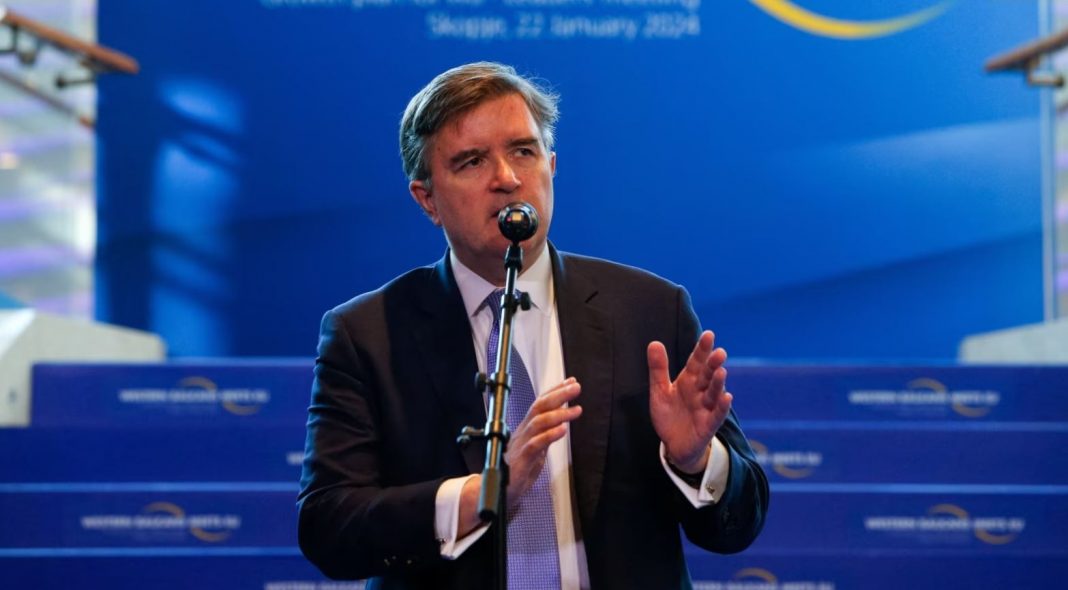
The U.S. Assistant Secretary of State for Europe and Eurasia, James O’Brien, told the leaders of the Western Balkans on Monday that they have never been closer to EU accession, but there is still work ahead.
He made these statements at the beginning of the conference “The Western Balkans Growth Plan and Faster Integration into the EU”, held in the capital of North Macedonia, Skopje.
The U.S. official warned the leaders of the Balkans that they will not have the opportunity to hinder each other’s progress because there should be no unresolved issues, and anyone attempting to obstruct something will face consequences.
“If a state wants to wait, observe, then the citizens of that state will decide whether these political leaders are the right ones”.
O’Brien expressed support for the initiative of a free market, citing the obstacles businesses have faced so far due to numerous border restrictions.
According to him, the new EU plan differs from previous offers.
“The EU growth plan is not like other plans we have seen so far. It says not only do you need to make reforms and get the budget later, it says if you make the necessary reforms, then your companies and people will gain EU freedom very quickly – the freedom to move, to work wherever they want”.
The EU plan for the Western Balkans aims at the economic growth of the region, speeding up necessary reforms, and making investments that can advance the EU enlargement process with these countries.
The amount allocated by the EU for this plan, in the period 2024-2027, is 6 billion euros.
Gert Jan Koopman, the Director of the European Commission for Neighborhood, has called for significant commitment from the leaders of the Balkans for the road ahead.
“We have rolled up our sleeves to help you. I am encouraged by your commitment, and this can only happen if the governments of the region appreciate that this is a high priority, and only if they ensure that changes are happening. Precisely, logic says that we will help you integrate among yourselves if you integrate into the internal market. I appreciate that this is of absolute importance because without such integration in the region, you simply will not be able to reap enough benefits from the internal market. These are two issues that go hand in hand, so we have set a condition in this growth plan that says you should not block your neighbors. We want you to come with us. If you don’t block your neighbors, we will accept you, but if you block them, then we won’t have access to the internal market, as the internal costs from non-cooperation are significant,” stated Koopman at the conference.
Suggested reading:




