

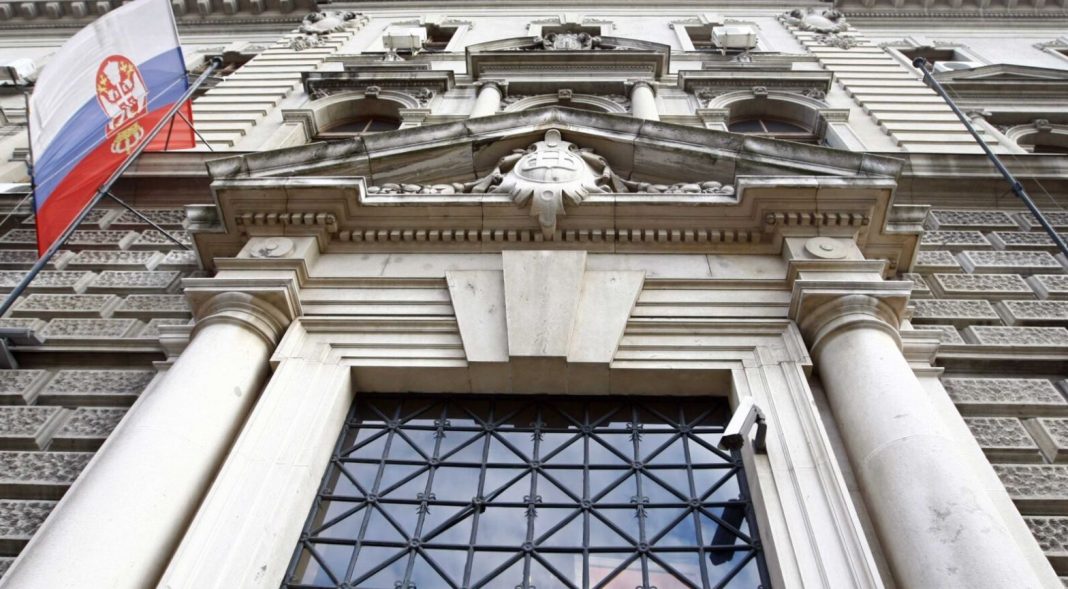
The National Bank of Serbia demanded the annulment of the regulation of the Central Bank of Kosovo – which designates the euro as the sole currency for payments in Kosovo – and called for the issue to be resolved through political dialogue.
With the Central Bank’s regulation, which came into force on February 1, the use of the Serbian dinar in Serb-majority municipalities in Kosovo was terminated.
The National Bank of Serbia told Radio Free Europe that “there can be no talk” of an agreement between it and the Central Bank of Kosovo, as suggested by Kosovo’s Deputy Prime Minister, Besnik Bislimi.
“This issue must be resolved exclusively within the framework of dialogue at the existing level,” said the National Bank of Serbia, referring to negotiations for the normalization of relations between Kosovo and Serbia.
Bislimi said on Wednesday that a transition period from the dinar to the euro will be ensured and that the Central Bank regulation does not imply a ban on money transfers from Serbia to Kosovo.
He also expressed hope that the central banks of both countries will engage in discussions to find a mechanism for transparent money transfers.
Contacted by Radio Free Europe, the Central Bank of Kosovo said it is ready to engage in negotiations with the counterpart institution in Serbia.
Without offering many details, the Central Bank of Kosovo said that “there are ways and examples” of how “money transfers to the bank accounts of beneficiaries in euros” can be realized.
However, the National Bank of Serbia insisted that the Central Bank of Kosovo regulation “implies the impossibility of payment of wages, pensions, social benefits, and other incomes for the Serbian population in dinars”.
This institution said that, in cooperation with other state institutions of Serbia, it will “undertake all necessary measures, taking into account the interests of the citizens of Serbia” in Kosovo.
The dinar in Kosovo
Since the post-war period in 1999, Serbia, which does not recognize Kosovo’s independence, has used the dinar to pay pensions, social assistance, and salaries for the parallel institutions it has in Kosovo, including hospitals and schools.
Residents of the ten municipalities with a Serbian majority in Kosovo have also used the dinar for payments in shops and restaurants.
They have also been able to withdraw dinars from ATMs of banks based in Serbia.
The dinars have entered Kosovo through the National Bank of Serbia, which has a branch in the municipality of Leposavic, in north Kosovo.
Those funds are then transported by the money transport company “Henderson”.
This situation has developed despite Article 11 of the Constitution of Kosovo, which defines “a single currency” as the valid means of payment in Kosovo.
The Central Bank of Kosovo has justified its regulation by saying that it has a “legal obligation” to regulate the financial system, especially an issue like currency, which “has remained unregulated for a very long time”.




