

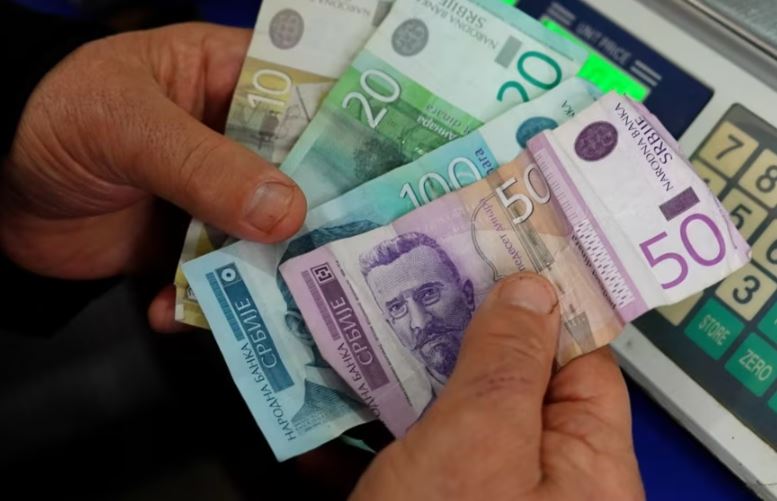
The chairman of Serb List, the largest party of Kosovo Serbs, Zlatan Ellek, said on Saturday that banning the use of the dinar “means the expulsion of Serbs and all Serbian institutions from the territory of Kosovo.
Speaking at a media conference in North Mitrovica, Ellek emphasized that all those who enjoy income from Serbia are at risk and that around 100 thousand Serbs in Kosovo will be directly affected by the decision of the Kosovo authorities to ban the use of the Serbian dinar.
“This applies to all institutions operating in the Serbian system, pensioners, beneficiaries of social benefits, students, scholarship recipients. So, the entire Serbian people”, said Eleku.
The new regulation of the Central Bank of Kosovo (CBK), which stipulates that only the euro is used as a currency for cash payments, entered into force on February 1, despite calls from the international community to postpone its implementation.
The chairman of the Serb List says that the removal of the dinar from the payment system means putting the Serbs in an “unbearable position” and that it is a “prelude to the total exodus of the Serbian people” in the territory of Kosovo.
He described the decision as a “preparatory move” by the Government of Prime Minister Albin Kurti.
“The decision to abolish Serbian institutions that take care of education, health, economy and social assistance, is abolishing the lives of Serbs”, Elleku said.
He indicated that in talks with the international community, Serb List underlined that “the ultimate goal of the Government in Pristina is the ethnic cleansing of the Serbs”, and that in a meeting with the American ambassador, Jeffrey Hovenier, they expressed their fear stemming from the decision to abolish of the dinar.
Serb List announced that it will send a letter to the ambassadors of the QUINT countries.
Ellek said that the international community and the QUINT countries are “directly responsible for multi-ethnicity” in Kosovo and “will be direct collaborators, if there is an exodus of the Serbian people from Kosovo”.
The Government of Kosovo has announced that the implementation of the regulation on cash transactions will be done through an easy transition and that there will be no fines for the possession of other countries’ currencies.
This decision of Kosovo was opposed by Serbia, while the international community requested the postponement of its implementation on the grounds that there is concern that it may have a negative impact on the Serbs of Kosovo.
Until now, dinars in Kosovo circulate through the Serbian public company “Posta e Srbije” which operates in the Serb-inhabited settlements in Kosovo. There are also dinar accounts in the banks “Postanska stedionica” (Post Savings Bank) and “NLB Komercijalna banka”.
The dinars have come to Kosovo from Serbia through the National Bank of Serbia, which has a vault in Leposavic, a municipality in the north of Kosovo inhabited by a majority of Serbs. The money was transported there by the money transport company “Henderson”.
In the CBK regulation, it was said that the import and export of euro banknotes and coins and other currencies in Kosovo is its executive right.




