

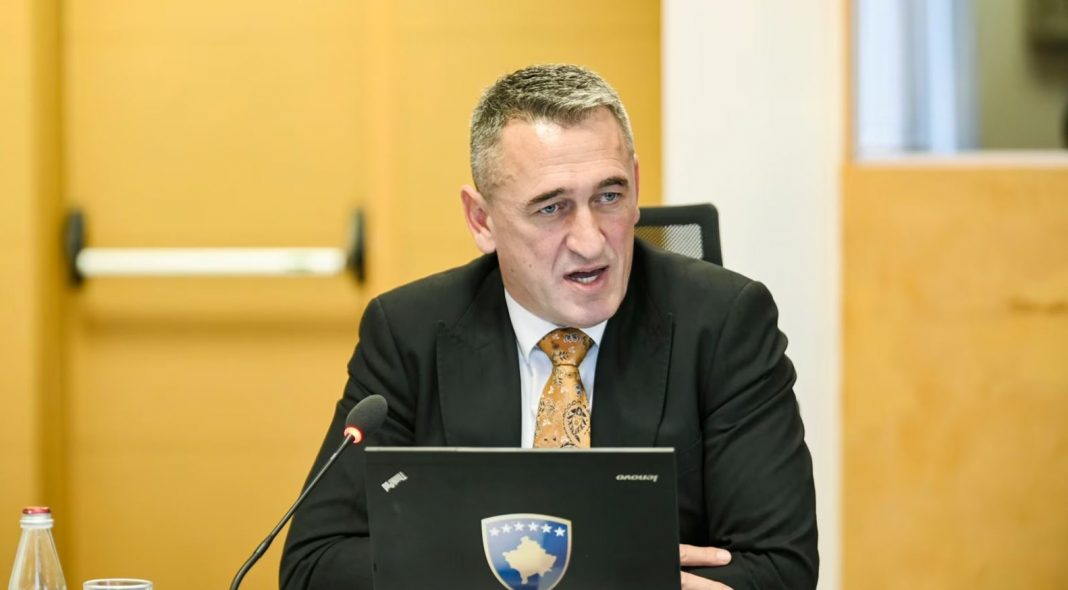
The Minister for Communities and Returns in the Government of Kosovo, Nenad Rašić, said on Wednesday that during a meeting with Kosovo’s Prime Minister, Albin Kurti, they agreed that the regulation of the Central Bank of Kosovo (CBK) regarding the ban on the dinar is in a transitional period.
The CBK regulation, which requires the euro to be the only currency that can be used for cash payments throughout the country, came into force on February 1, despite significant international pressure to delay its implementation.
Rašić said that the Governor of the CBK, Ahmet Ismaili, “mentioned that the transitional phase may end by the end of February, but again, if there is readiness from the other side, because any deadline we set now would be inaccurate”.
“When I met with the Prime Minister, we came to a conclusion that this is a transitional period so that users have the opportunity to prepare for the use of this regulation. Legally and technically, this is the right way to proceed,” Rašić said.
Prime Minister Kurti said yesterday that he understands that “a transitional period is necessary”, adding that such a transitional period has already begun.
The Kosovar Prime Minister said that during this month, authorities will provide information so that “this transition is as smooth as possible”.
“A transitional period should never be misinterpreted as an attack or deepening division. And the short-term uncertainty encountered during this period should not be exploited for political gain,” Kurti said, according to a media statement released by his office on February 6.
In the Serbian-majority municipalities in Kosovo, the Serbian dinar has been circulating since the post-war period.
The Serbian state pays Kosovo Serbs – through a parallel system – salaries, pensions, social assistance, and other benefits.
The Serb List – the largest party of Serbs in Kosovo – has harshly criticized the decision of the CBK, considering the authorities’ decision an attempt to expel Serbs from Kosovo.




