

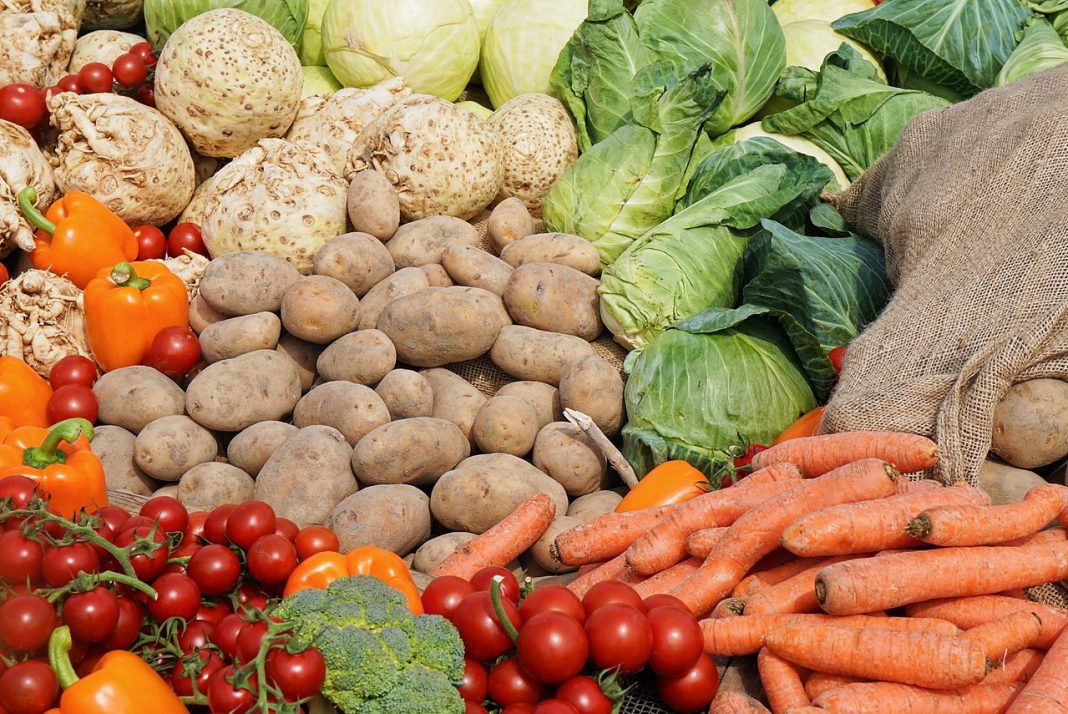
Albania ranks among the poorest countries in Europe in terms of per capita income, but when it comes to the consumption of fruits, vegetables, and greens, Albania has the highest spending on produce after Switzerland.
According to Eurostat data, an Albanian spent an average of 761 euros on purchasing fruits and vegetables in 2022, the second-highest level in Europe, trailing only Switzerland with 822 euros per capita.
Mediterranean countries spend more money on consuming fruits and vegetables compared to other countries even though they are the largest producers and have lower prices.
After Albania, Montenegro has the highest consumption expenditure per capita for produce with 679 euros, ranking third in Europe, followed by Italy with 636 euros and Greece with 625 euros.
The high expenditures in Mediterranean countries come from their diet based on fruits and vegetables, considered among the healthiest in the world.
On the other hand, the lowest expenditures are in Hungary with 241 euros per capita, Serbia with 244 euros, Bosnia with 247 euros, and Bulgaria with 291 euros.
In 2022, high expenditures on fruits and vegetables were also driven by rising prices. Albanian families allocate about 42% of their monthly expenses to food, a figure that is higher than the European Union average of 13%.
As a result, food inflation burdens much more on the budget of an Albanian family than that of a family in European Union countries or in the region.
The highest price increase was for vegetables, including potatoes. Potatoes and onions, two staple products in Albanian cuisine, are being sold at an average of 20% higher prices in 2022. The market experiences regular supply shortages, and as a result, prices fluctuate daily with a tendency to rise.
Expansion of export channels, increasing tourist numbers, and on the other hand, limited capacities to expand production, combined with the damages caused by climate change, have created conditions for a new normality in agricultural and livestock product prices.
Operators, from production to trade and export, claim that prices of vegetables, greens, fruits, dairy products, meat, etc., will not revert back; on the contrary, the data indicate further increases.
Meanwhile, an Albanian spent an average of around 385 euros on meat consumption during the year 2022, with spending increasing by nearly 17 percent compared to 2021, according to Eurostat calculations on European consumption components.
Albanians are listed among the eight countries with the lowest meat expenditures in Europe. Turkey spends the least with 258 euros per capita, followed by North Macedonia with 265 euros per capita, Bulgaria with 300 euros, Poland with 329 euros, Hungary with 339 euros, Bosnia with 370 euros, and Albania with 385 euros.
On the other hand, the highest meat expenditures in Europe are in Luxembourg, where 790 euros per capita are spent annually. Further down the list, Iceland spends 785 euros, Switzerland 740 euros, and Belgium 719 euros per capita on meat.
Meat is more expensive in Luxembourg and Switzerland, where prices are about 2.5 times higher than in the rest of Europe. According to Eurostat data, price levels are generally higher in Northern European countries like Iceland, Norway, and Luxembourg.
In Eastern European countries, meat is a cheaper product compared to Western Europe. Poland had the lowest meat prices compared to the European Union average, followed by Bulgaria, which was about 42% cheaper.
In recent years, meat prices in Albania have increased, reflecting issues with domestic production due to a decline in livestock numbers. On the other hand, demand is increasing due to high tourist influxes.
Part of the meat demand is being met through imports.
Meat and dairy were the categories with the highest import growth in 2022 among other food categories. Last year, Albania was visited by around 10 million tourists, with meat being at the core of traditional cuisine. Restaurants are now challenged to offer locally sourced products to visitors.
While consumers face high meat prices, breeders are reducing the number of livestock due to high costs. The abandonment of villages by people is reducing the number of small farms, while large farms with many animals are facing issues in the food chain.
The number of livestock has halved in two decades, while the decline is accelerating in recent years.
The Food and Agriculture Organization (FAO), in an analysis last year conducted for Agriculture and Rural Development in the country, recommended that financial support is very low to lead the sector on a sustainable development trajectory.
FAO estimated that the subsidy measure should reach 10% of Gross Value Added from less than 1% currently provided by the Albanian Government.




