

The establishment of the Association of municipalities with Serbian majority in Kosovo and the suspension of actions that hinder the work of Serbian institutions in the country are the demands that the Serbian civil sector in Kosovo sent to the Government of Kosovo on Thursday.
The requests come after the Central Bank of Kosovo – with a special regulation, but in accordance with the Constitution of Kosovo – determined that the euro would be the sole currency for payments in Kosovo, removing the Serbian dinar from circulation, but also after the closure of several municipalities in the south of the Ibar River, which operate under Serbia’s system and which Kosovo considers illegal.
For Serbs in Kosovo, the removal of the dinar is concerning because most of them receive various incomes from Serbia in dinars.
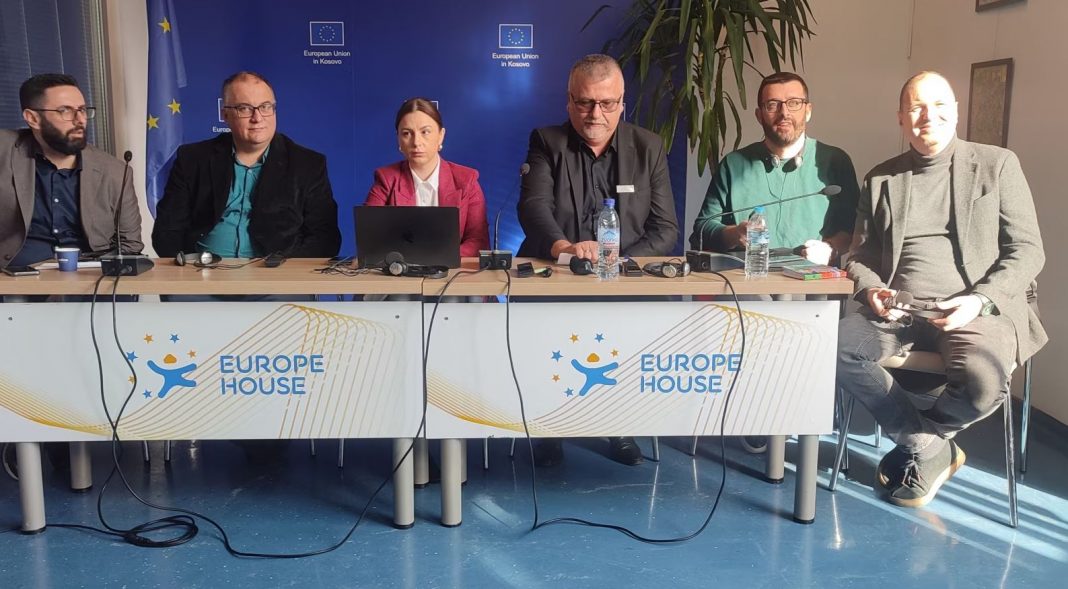
Five Serbian non-governmental organizations, as well as the local radio station Goraždevac from the Peja region, said at a conference in Pristina that the authorities of Kosovo “blatantly violate media freedom and attack the civil sector”.
As an example of these claims, they mentioned the raid by the Kosovo police on the premises of the non-governmental organization Center for Peace and Tolerance in Pristina, arguing that “illegal medical services” are provided there.
The editor of Radio Goraždevac, Darko Dimitrijević, presented a series of accusations regarding the behavior of the Kosovo police during the operation to close the parallel municipality of Peja, which operated in Goraždevac under the Serbian system.
They all concluded that the authorities of Kosovo are creating an atmosphere that “encourages interethnic tensions”.
On behalf of the Serbian civil sector, Jovana Radosavlević, from the non-governmental organization New Social Initiative, also spoke, stating that despite efforts, Kosovo’s institutions do not heed the calls of the Serbian community.
“It’s as if we live in two separate realities,” she said and presented a series of demands addressed to the Government of Kosovo, the main one being the establishment of the Association of municipalities with Serbian majority.
“All actions without first resolving the status of the Association of Serb-majority Municipalities are and will be considered escalating, therefore the Government of Kosovo should urgently commit to resolving the status and formalization of the Association and stop all other actions aimed at making the work of Serbian institutions in Kosovo more difficult before providing them with an alternative in the form of this international obligation of Kosovo,” said Radosavlević.
For this association, Kosovo and Serbia agreed within the framework of the dialogue for the normalization of relations, mediated by the European Union, as far back as 2013. It was supposed to offer greater autonomy to the Serbian minority in Kosovo.
Kosovo refused to establish the Association, arguing that it could be detrimental to internal functionality, but with the insistence of the international community, a new draft statute was presented to the parties in October of last year, drafted by the European Union.
The document for the formation of the Association, among other things, provides solutions for all outstanding issues, including the financing of some institutions by Serbia and their functioning.
The Serbian civil sector demanded from the Government of Kosovo to recognize the issues presented by the Serbian community and not to take action without consulting the individuals directly affected.
Their request followed several operations by Kosovo institutions in recent weeks to, as stated, close the offices of parallel structures of Serbia, which have operated within Kosovo, and concerns with the regulation of the Central Bank that prohibits the use of the Serbian dinar in Kosovo.
The decision of the Central Bank of Kosovo, which came into force on February 1, according to which the euro is the only currency that can be used for cash payments in Kosovo, prompted an angry reaction from Serbian leaders who said its purpose is the “persecution of Serbs in Kosovo” who receive salaries and pensions from Serbia in dinars, which is used for payments in Serb-majority areas.
The international community condemned the recent actions of the authorities in Kosovo and called for all issues to be resolved through dialogue for the normalization of relations.
The U.S. Ambassador to Pristina, Jeffrey Hovenier, said on February 4 that the recent moves by the official Pristina are increasing unnecessary ethnic tensions and hindering the United States’ ability to advocate for Kosovo on the international stage.
He emphasized that it is up to the Government to promote a multi-ethnic Kosovo and address the concerns of all its citizens.
Authorities in Kosovo have agreed to a transitional period to clarify and avoid ambiguities regarding the regulation of the Central Bank that prohibits the use of the Serbian dinar in Kosovo and have requested that channels of communication between the Central Bank of Kosovo and that of Serbia be opened on this issue, but Serbian leaders have dismissed such a possibility, emphasizing that this would imply recognition of Kosovo’s independence, which Serbia continues to oppose.




