

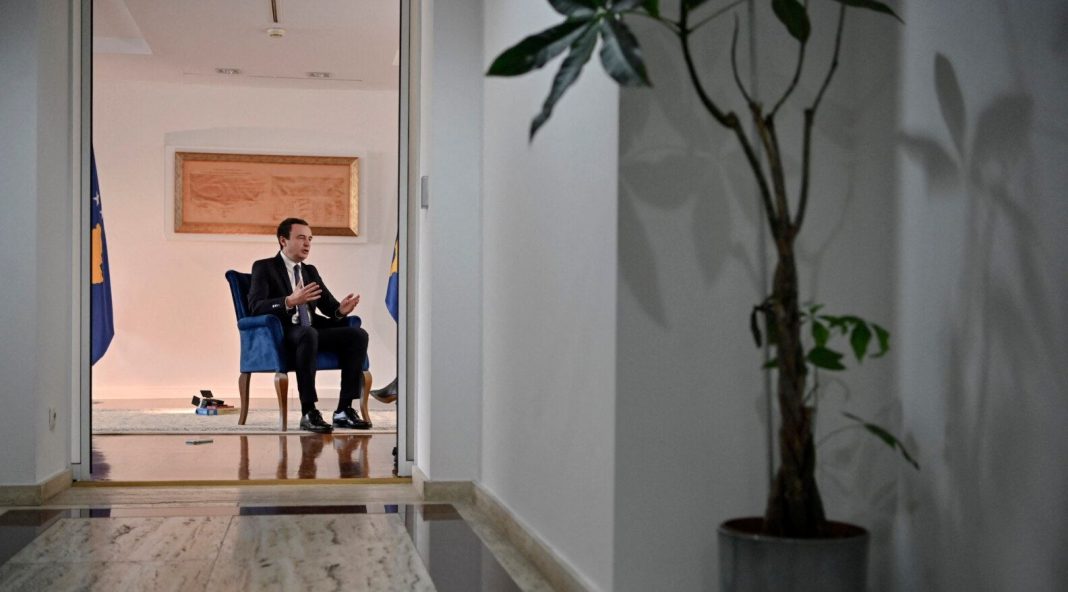
The Prime Minister of Kosovo, Albin Kurti, said that he will not back down from the decision that only the euro will be the currency for payments in Kosovo but stated that he is respecting the demands of the international factor regarding this issue.
Since February 1, a regulation of the Central Bank of Kosovo (CBK) has entered into force, which excludes other currencies, including the Serbian dinar, for payments.
During an interview with Bloomberg, Kurti reiterated that with the regulation of the CBK for cash operations, the holding of Serbian dinars is not prohibited, as this currency can only be used for payments after being converted into euros at one of the licensed banks in Kosovo.
“We cannot reverse this decision. So, they asked for more time, and we are giving them more time. Now, even our American and European partners are saying that the regulation is legal because it fights terrorism financing, illegal activities, but we should not rush too much in full implementation. And that’s how we will proceed during February,” Kurti said.
The Serbian state allocates millions of euros for Serbs in Kosovo as it pays them – through a parallel system – salaries, pensions, and additional assistance.
The regulation has been criticized by the international community, which argued that the decision was made without prior consultations. Internationals have asked Kosovo to postpone the implementation of the regulation, saying that more time is needed for the Serbian community to adapt to the decision.
The Government of Kosovo has said that during February, there will be campaigns to inform Serbs about this decision, and in this context, on February 11, Kurti addressed Serbian citizens in the Serbian language, saying that the decision does not prevent Serbia from continuing to help Serbs in Kosovo.
During the Bloomberg interview, Kurti was asked about his ultimate goal for Serbs in north Kosovo, where they make up the majority of the population.
Kurti said that he wants them to integrate into society, emphasizing that most of them have already done so, through the issuance of identity cards and passports of Kosovo.
“The problem is not the Serbs of Kosovo, the problem is the autocratic regime in Belgrade, which is a Russian collaborator. It is a regime that depends on the Kremlin. They are making this pre-apocalyptic alarm, stirring up ethnic tensions because they want to cause problems in the region,” Kurti said.
During an extraordinary session of the United Nations Security Council on February 8, which discussed the situation in Kosovo following the decision to ban the dinar, Serbia and Russia stated that with these actions, Kosovo is carrying out “ethnic cleansing” against Serbs in Kosovo.
Kurti responded to these accusations, calling them lies.