
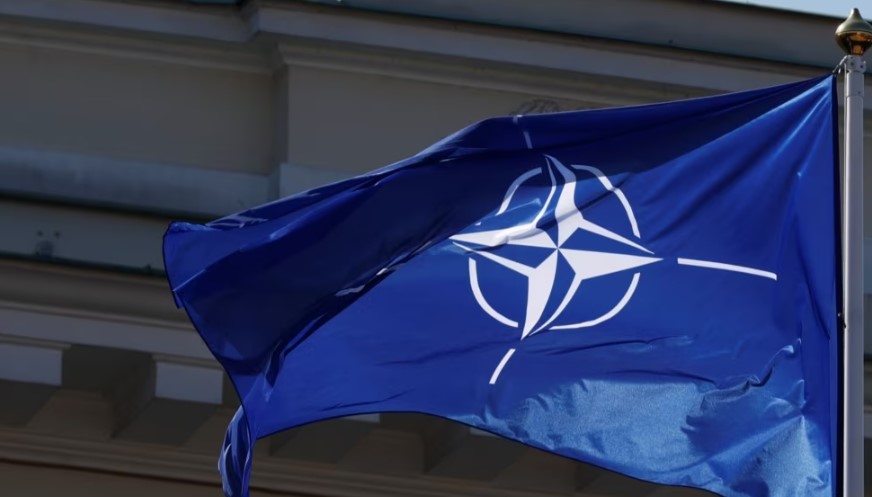
The Secretary General of NATO, Jens Stoltenberg, on Wednesday called on all parties to refrain from using inflammatory language in the case of Kosovo and to focus on dialogue.
Stoltenberg gave these orders while speaking to journalists in Brussels on the eve of the meeting of NATO Defense Ministers, which will take place on February 14 at the headquarters of the Alliance.
“We have seen tensions in Kosovo and in other parts of the Western Balkans in recent months. I was visiting the region before Christmas. My main message was that all parties should refrain from inflammatory language and actions that could cause increased tensions in the region,” said Stoltenberg, adding that in Kosovo, the Alliance has increased its military presence as a response to security challenges, but the only way to solve problems is dialogue, writes Radio Free Europe.
“When it comes to Kosovo, the way forward is dialogue facilitated by the European Union [EU] and I encourage both Belgrade and Pristina to engage in good faith,” he said.
In his response, Stoltenberg said that after the recent attacks and violence in Kosovo, NATO allies have increased their presence.
“KFOR’s mission is there to provide a safe environment for all communities. We have sent approximately 1,000 additional troops to ensure such a thing and we will continue so that we are able to implement our mandate from the UN”, said the head of NATO.
The situation in Kosovo and beyond in the Western Balkans was also discussed on Wednesday in the Committee for Defense and Security of the European Parliament, where Mircea Geoană, Deputy Secretary General of NATO, answered the questions of the deputies.
Among the topics that cause NATO’s concern, he mentioned the situation in Kosovo and Bosnia and Herzegovina, but also Russia’s efforts to influence the political processes, especially in North Macedonia and Montenegro, which are also members of NATO and candidate countries for EU membership.
“What is happening with disinformation, as well as attempts to influence the elections in North Macedonia, is worrying for us. We are seeing Russia’s efforts on this. The aim is to hinder the pro-Western forces in this country”, said Geoană.
Even in the case of Montenegro, he said that the efforts to influence this country are continuing in order to obstruct the pro-Western path of Montenegro.
“I was impressed after the meetings, both with the president and the prime minister of Montenegro. But, in that country, indeed, there are ideological and religious divisions and there are forces that want to stop the western journey of Montenegro. We need to give Montenegro more support to deal with cyber attacks and disinformation campaigns”, said Deputy Secretary General of NATO, Mircea Geoană.
NATO’s number two said that, indirectly, the Western Balkan region is feeling the effects of Russia’s aggression in Ukraine.
According to him, NATO sees the Black Sea and Western Balkan areas technically as two areas, but from a strategic point of view they are interconnected.
“In the Western Balkans we see a level of instability, which is not dangerous. But you never know how a spark can start a fire. Russia may be interested in creating problems for us in that part as well”, added Mircea Geoană.
In this debate, it was said that NATO and EU cooperation should continue, but EU countries should invest more in increasing defense capacities.