

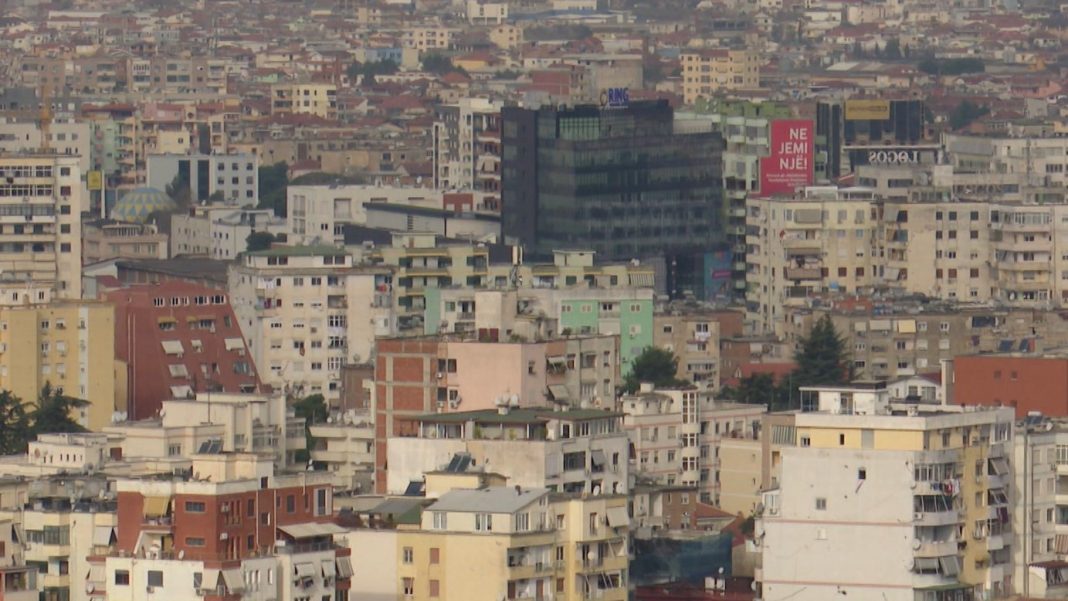
Albanians may be among the poorest in Europe, but they spare no effort when it comes to construction, especially housing, surpassing every other European state.
Eurostat data calculating nominal expenditures as a percentage of gross domestic product (GDP), or what the economy produces in a year, were 18.8% of GDP in 2022 for Albania, compared to the EU average of 11.3%.
At these levels, Albania ranks first in Europe. Following in the region are North Macedonia (13.2%), Montenegro (12.7%), Bosnia and Herzegovina (11.7%), and Serbia at the bottom with 10.2%.
The indicator is calculated as part of Gross Formation of Fixed Capital, which measures residents’ investments in fixed assets. It includes engineering and residential construction as well as the purchase of plants, machinery, equipment, and computer programs. Other Institute of Statistics (INSTAT) data indicate that residential construction dominates, accounting for 60% of total construction spending.
Conversely, investments in machinery and equipment, essential for business advancement as they positively impact productivity, are lower in Europe. According to Eurostat, in 2022, spending on machinery and equipment was 4.1% of GDP in Albania, the second lowest in Europe. In Serbia, this indicator is 8.9% of GDP, in Montenegro 7.9%, in Bosnia and Herzegovina 9.5%, and in North Macedonia 7.5%.
Housing construction reaches 1.8 billion euros
Despite population decline and slow growth in official incomes, the residential construction sector continues its activity, especially in the capital. In 2022, the area of building permits reached a record level in the last decade.
Although demand does not seem very promising, construction companies are not withdrawing. According to INSTAT data, in 2022, the area granted for residential construction permits was around 1.8 million m2, the highest level on record.
Other INSTAT data, available until 2021, show that gross formation of fixed capital for residential buildings, which measures residents’ investments in housing, reached 209 billion lek (around 1.8 billion euros), the highest historical level on record, surpassing 2006 when the peak of the first cycle of sectoral growth was achieved, driven by massive population shifts after the 1990s.
Subsequently, construction entered a cycle of decline, lasting until 2016. After this year, the growth cycle started again, this time not driven by population shifts but by the orientation of free capital in this sector, which is among the most profitable in the economy.