
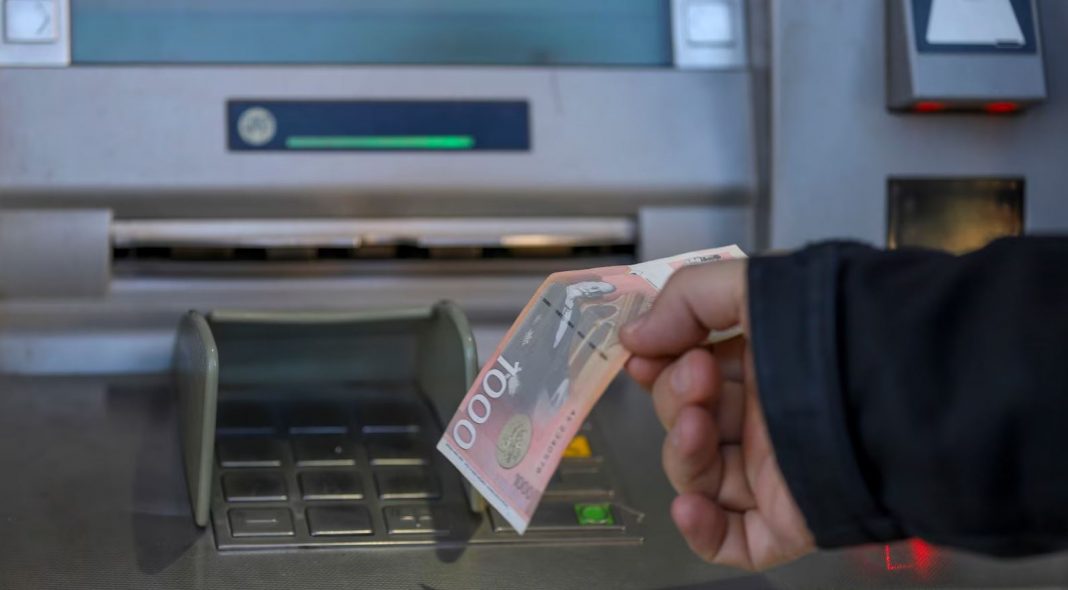
Meetings are taking place in Brussels on Tuesday as part of the dialogue between Kosovo and Serbia, aiming to find a solution regarding the use of the Serbian dinar.
A regulation by the Central Bank of Kosovo (CBK), which came into effect on February 1, and stipulates the euro as the sole currency for cash transactions in Kosovo, prohibiting the use of the Serbian dinar, has caused tensions between Kosovo and Serbia.
This decision, according to the EU, has caused practical problems for the Serbian community in Kosovo, who have used the Serbian dinar and received assistance from Serbia in this currency. Therefore, the EU has convened a meeting on February 27 to find a solution.
The meetings in Brussels start in the morning, and according to diplomatic sources, the EU’s envoy for the dialogue, Miroslav Lajčák, will first meet with the Serbian delegation, then with that of Kosovo. According to past practice, after separate meetings that Lajčák will hold with the parties, trilateral meetings will also take place.
Although the EU announced that both parties had confirmed their participation, the composition of the delegations in these meetings seems to be different from the past. While Serbia will be represented by its chief negotiator for the dialogue, Petar Petković, Kosovo will be represented by the governor of the CBK, Ahmet Ismaili.
Kosovo’s Deputy Prime Minister Besnik Bislimi, who is also the chief negotiator for dialogue with Serbia, disagreed that the issue of the Serbian dinar should be part of the dialogue. This is because the Government of Kosovo considers this matter an internal issue for which the CBK has independent competence.
Bislimi criticized the EU’s special envoy for dialogue, Miroslav Lajčák, last week for including this issue on the agenda of the meetings in Brussels without prior agreement from Kosovo. According to the Kosovar chief negotiator, Lajčák violated the principles of the dialogue established by himself, according to which, no issue can be put on the agenda without prior agreement of Kosovo and Serbia.
However, the EU responded that they are committed to finding a solution to the problem, which, according to Brussels, “Kosovo has caused with the unilateral decision and without consultations with partners or the community that directly suffers from this decision”. According to the EU, the dialogue is the forum where a solution should be found for all open issues between the parties, and this has also been stated by the member states as well as other international partners.
The EU spokesperson for foreign affairs, Nabila Massrali, said a day earlier that Tuesday’s meeting will be “in the usual format of the dialogue” and will discuss “finding solutions to the issues”.
“Tomorrow’s meeting [on Tuesday] is a dialogue meeting that will focus on finding solutions to the open issues related to the recent decisions regarding the circulation of currencies by the CBK,” she said.
The CBK has told Radio Free Europe (RFE) that they are ready to meet with representatives of the National Bank of Serbia to facilitate the transfer of funds through banking channels.
“In this regard, [the CBK] also responds to invitations when necessary, for such informative meetings, as it has continuously done with international presence in the country,” the CBK replied to RFE.
The Serbian state distributes millions of euros to Serbs in Kosovo as it pays them in dinars – through a parallel system – for salaries, pensions, and additional assistance.
Authorities in Kosovo have stated that the CBK regulation on cash transactions will be implemented through a facilitated transition, lasting no longer than three months, while Prime Minister Albin Kurti has insisted that the decision will not be revoked.
Meanwhile, the United States has urged Kosovo to postpone the implementation of the CBK’s decision, arguing that it was taken without prior consultations and without considering the negative impacts on the Serbian population in Kosovo.