
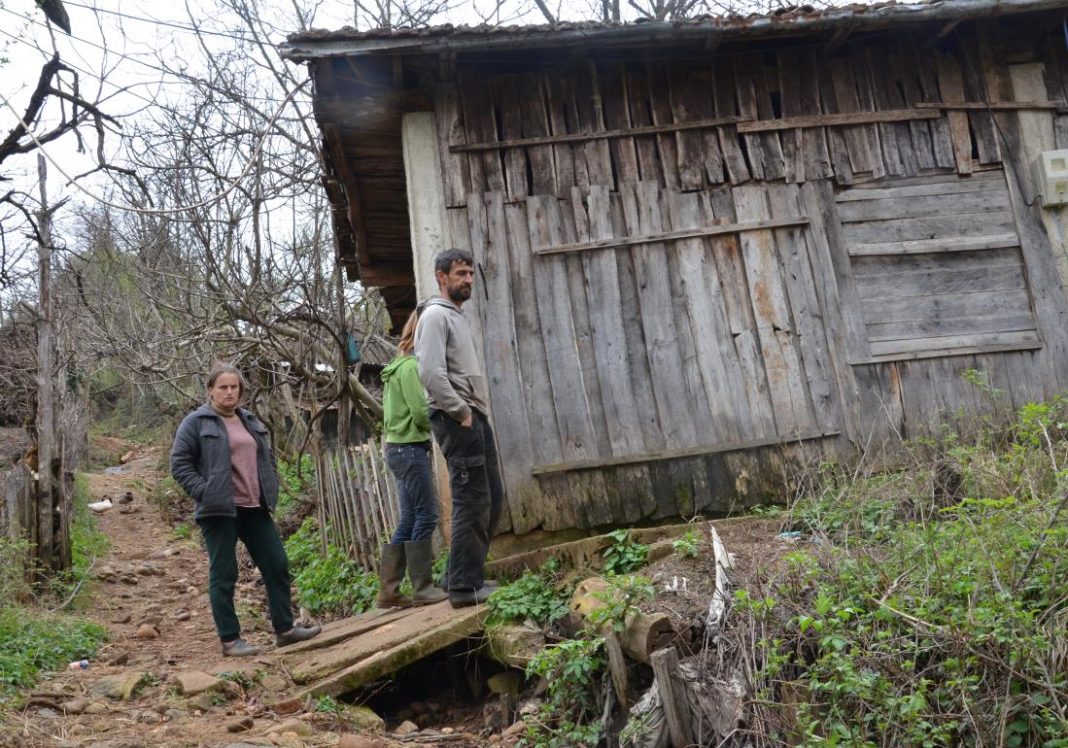
The risk of poverty in Albania decreased in 2022, and so did the number of people living below the poverty line. There has also been a decline in the inequality index.
The Institute of Statistics (INSTAT) published the results of the 2022 Survey on Income and Living Conditions, which measures the standard of living, relative poverty, and material and social deprivation in Albanian families.
The poverty risk index in Albania in 2022 is 20.6%, experiencing a decrease of 1.4 percentage points compared to 2021.
Poverty indicators in the Survey on Income and Living Conditions are based on the relative poverty concept, which considers disposable family income, the number of family members (family size), and income distribution among population groups.
The poverty risk threshold for an individual in 2022 is assessed at 225,931 lek, compared to 191,791 lek in 2021.
In 2022, about 576,316 individuals were assessed as living below the poverty risk line, compared to approximately 622,705 individuals in 2021. The number of individuals at risk of poverty decreased by about 7.4%.
The intensified material deprivation according to the Europe 2020 strategy indicates the percentage of individuals living in families who do not cover at least four out of nine material deprivation categories.
This index was assessed at 33.2% in 2022, compared to 35.2% in 2021, marking a decrease of two percentage points.
Material and social deprivation refer to indicators showing the material conditions affecting the quality of life of families and individuals.
The intensified material and social deprivation according to the Europe 2030 agenda represents the percentage of the population not covering at least seven out of 13 material and social deprivation categories. For 2022, this index was assessed at 37.0%, compared to 39.0% in 2021.
The risk of poverty or social exclusion (AROPE) refers to individuals at risk of poverty, or deeply deprived materially and socially, or living in families with very low employment intensity. In 2022, according to the Europe 2020 strategy, this index was assessed at 41.6%, compared to 43.9% in 2021, while according to the Europe 2030 agenda, this index was assessed at 44.5%, compared to 46.6% in 2021.
Social benefits, such as elderly and family pensions, included in disposable family incomes, influence the reduction of the poverty risk. If not all types of social benefits were included in income levels, the poverty risk in 2022 was assessed at 36.5%, compared to 24.5% if only social benefits from elderly and family pensions were included in income levels.
The risk of poverty by age groups and gender has been analyzed for three age groups. The downward trend is observed in all three age groups, but the largest decline is in the 18-64 age group, where the risk of poverty in 2022, compared to 2021, decreased by 1.6 percentage points in this age group. The 65 and over age group experienced a slight decline in 2022 by 0.1 percentage points compared to 2021.
The risk of poverty by employment status for employed individuals aged 18 and over decreased by 2.1 percentage points in 2022 compared to 2021. The risk of poverty for unemployed individuals increased by 0.4 percentage points, while for pensioners, it increased by 0.2 percentage points.
The percentage of individuals at risk of poverty by family type in 2022, in childless families, is lower compared to child-rearing families, at 12.2% and 24.4%, respectively, of individuals. Child-rearing families are those with children under 18 years of age and individuals aged 18 to 24 who live with at least one parent and are economically inactive. A year ago, these percentages were 12.8% and 25.9%, respectively.
Inequality also declines
The level of income inequality measured by the Gini coefficient is 31.0% in 2022, experiencing a two-percentage point decrease from 2021.
The S80/S20 quintile ratio is an indicator that measures income inequality by comparing the total equivalent disposable income of the top 20% of the population with the lowest 20% of disposable income.
It represents the ratio between the total equivalent income of the top 20% of the population with the highest incomes and the 20% of the population with the lowest incomes. In 2022, the S80/S20 ratio was assessed at 5.2, compared to 5.7 in 2021.
For the population aged 65 and over, this ratio in 2022 was evaluated at 3.6 compared to 3.9 in 2021. For individuals under 65, this ratio was evaluated at 5.4 in 2022 compared to 6.1 in 2021.
Comparison with other countries
Comparing the risk of poverty for 2022 between Albania and other countries in the region and the European Union shows that: The highest value of relative poverty is recorded in Bulgaria (22.9%), Estonia (22.8%), Latvia (22.5%), Romania (21.2%), Lithuania (20.9%), followed by Albania (20.6%).
The lowest poverty rates are recorded in the Czech Republic (10.2%), Slovenia (12.1%), Hungary (12.1%), Norway (12.2%), and Denmark (12.4%). The EU average (27 countries) is 16.5%.