

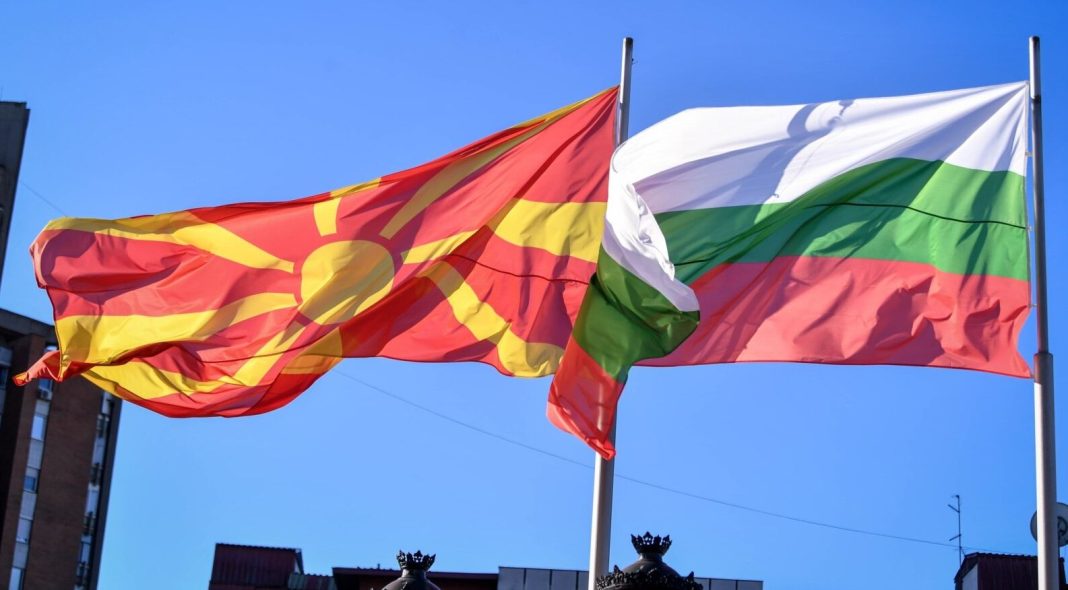
Bulgaria has reacted to North Macedonia’s officials, who, according to it, are using Sofia as an “excuse” for the lack of progress in front of their citizens.
On Thursday, Bulgaria’s Ministry of Foreign Affairs summoned the Macedonian ambassador to Sofia to express dissatisfaction with what it called “efforts to draw Bulgaria and the relations between the two countries into North Macedonia’s internal political debate, in the context of the current election campaign”.
The Bulgarian diplomatic reaction came after President Stevo Pendarovski accused Sofia of “continuously mistreating the Macedonian minority in Bulgaria” in a television interview.
“Bulgaria consistently supports constructive rhetoric and refrains from commenting on continuous provocations in North Macedonia’s public space. It does so with an understanding that it is necessary to ensure a constructive environment for the normal conduct of the electoral process. However, unfortunately, it is clear that these Bulgarian efforts have not been understood and appreciated by certain factors in Skopje, who continue to use our country as a justification for the lack of progress in front of their citizens,” the Bulgarian Ministry of Foreign Affairs statement said.
Sofia once again invited the political elite in North Macedonia to “demonstrate the necessary political maturity” in fulfilling the political obligations undertaken within the framework of the 2022 compromise.
In June 2022, North Macedonia and Bulgaria accepted what is known as the “French proposal” to resolve disagreements over language, identity, and historical differences.
However, Skopje must fulfill another obligation – the inclusion of the Bulgarian minority in the preamble to the Constitution of North Macedonia.
This issue has reopened the debate on the eve of the presidential elections in North Macedonia.
Current President Stevo Pendarovski, nominated for another term, said that “constitutional changes must be approved and that the opposition VMRO-DPMNE must not ‘mislead’ the Macedonian people because, in parallel, the Macedonian minority in Bulgaria must also be included in the Constitution of the neighboring country”.
Pendarovski told Sitel television that if VMRO achieved such a thing, he would immediately join that party.
“God willing, not tomorrow, but today, let the Macedonians be in the Bulgarian Constitution. Our people, the minority living there, have been mistreated for decades, at least 70-80 years. It has gone through terrible torture. However, let them tell us the magic formula, how will they put them in the Constitution? Let the opposition propose something else, not deceive us,” Pendarovski declared.
VMRO-DPMNE leader Hristijan Mickoski accused Sofia again of “unfairly blocking the EU integration process”, at the Congress of the European People’s Party in Budapest, Hungary.
“The dynamics between Bulgaria and North Macedonia have brought unjustified obstacles that negatively affected our path towards EU membership. Although we are committed to solving these issues through dialogue and mutual respect, it must be acknowledged that this process requires reciprocity. It is crucial that we engage with each other fairly, acknowledging that our common future in the EU is mutually beneficial and interconnected. The European Union is a beacon of hope for many people,” Mickoski stated.
Due to disagreements with Sofia, namely the obligation to include the Bulgarian minority in the Constitution as a constituent people, North Macedonia has not yet started negotiations with the EU on chapters.
The two countries signed a good neighbor agreement in 2017, but it has further deepened the divisions between the two countries, opening up unresolved historical issues since the pre-World War II period.