

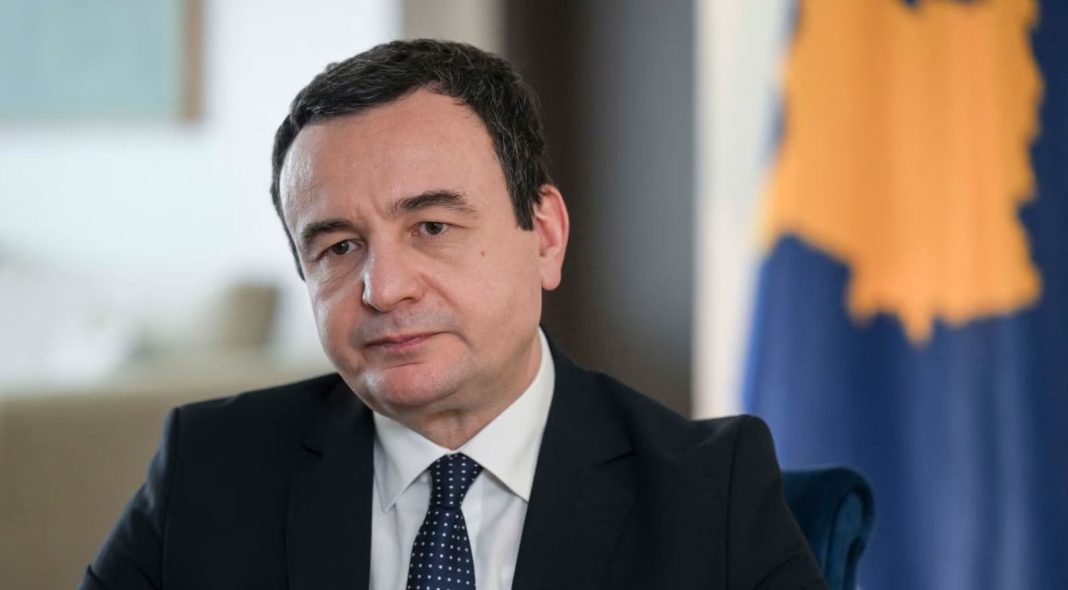
Kosovo’s Prime Minister Albin Kurti said on Tuesday during the inauguration of a State Training Center for Cybersecurity in Pristina that “we are clear that our northern neighbor is aggressive”, referring to Serbia.
“However, this makes us cautious, not scared at all,” Kurti told reporters.
Kurti emphasized that Kosovo is preparing maximally with “everything we can and know”, hence it has opened the center which will offer training for cybersecurity.
“Conflicts are not interethnic, ethnic difference is not what causes conflict, but it is the autocracy in Belgrade, intertwined with despotism in Moscow,” he added.
The Kosovar prime minister said he has long warned that “non-democratic states in our region, not only in Eastern Europe, are a risk to security and peace, but of course, nobody can know this as thoroughly and deeply as the United States”.
Last September, Kurti had stated that the “allies of Russia” are affecting the normalization process of relations between Kosovo and Serbia, through disinformation and other malicious behavior in cyberspace.
Kosovo has earlier accused Russia of pushing its ally, Serbia, to provoke tensions in the neighboring country, although such claims have been dismissed by Russia.
In a report by the Democracy Plus organization, published in 2022, it was stated that Kosovo “is subject to disinformation by foreign malign actors, such as Russia, China, and Serbia”.
The recent reported cyberattacks against state institutions occurred in September 2022. The government of Kosovo then said the attack originated from outside the country, but did not specify from which country.
State institutions have been targets of cyberattacks earlier as well.
Tensions between Kosovo and Serbia escalated last September when a group of armed Serbs attacked the Kosovo Police in Banjska of Zvecan, killing a Kosovar policeman. During the ensuing clashes, three Serbian attackers were killed.
On February 13, Kurti said that by refusing to sign the Agreement on the normalization of relations between the two countries, the President of Serbia, Aleksandar Vučić, is leaving open the possibility of “the invasion of Kosovo”.
Last February, Kosovo and Serbia agreed in Brussels on this agreement, while in April in Ohrid, agreement was reached on its implementation annex. However, the parties did not sign the agreement, but the European bloc, mediating the dialogue for the normalization of relations between Kosovo and Serbia, said it is binding for the parties.