

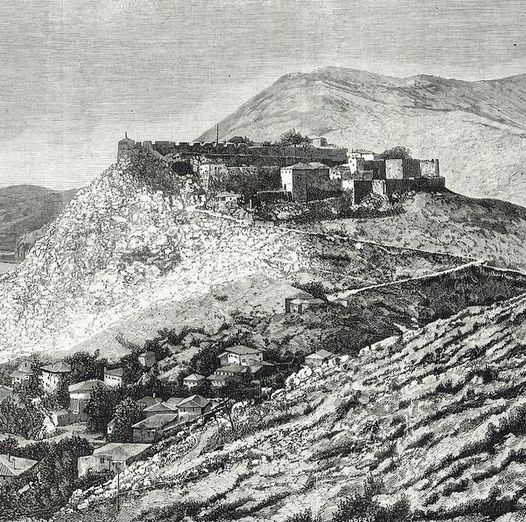
The expansion of Shkodra throughout the centuries has had various phases up to the present day. The Shkodra Regional Directorate of Cultural Heritage published an engraving depicting the fortress of Shkodra, preserved in the Ambrosiana Library in Florence, dated 1877.
According to the Regional Directorate of Cultural Heritage, the city preserved its ancient-medieval territory with a shift further east, in the plain area until the beginning of the 19th century. The new neighborhoods mainly took the names of Ottoman officials, geographical positions, or occupations practiced by the residents.
The cannons of Hafiz Pasha in 1835 and the earthquakes of the years 1815, 1837, 1852, 1905 influenced the displacement of inhabitants from the old city, towards the west, towards the market and the fields of Lake Shkodra. The deviation of the Drin River after 1858 marked the decline of the center, which gained momentum during the period of the Pashalik of Shkodra.
Among the few traces preserved today are only the toponymy of the neighborhoods Tabake, Bexhene, Ajasem, the ruins of the Tabake mosque, and those of Qafë-Kala, the centuries-old cypress, a natural monument.