

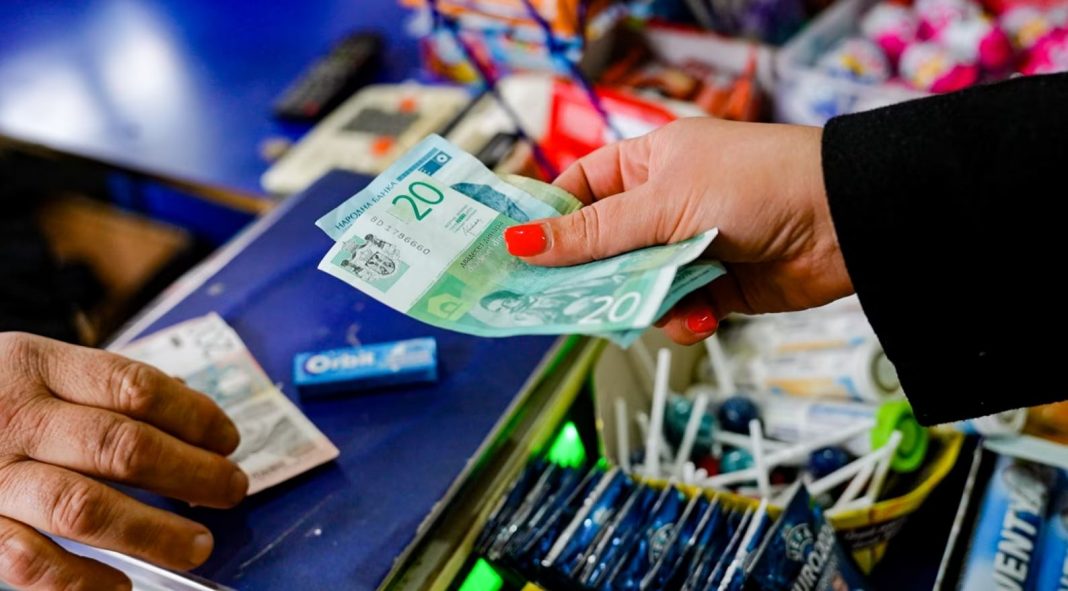
Meetings on the issue of the Serbian dinar, the use of which was banned in Kosovo last month, are continuing in Brussels, where Kosovo is represented by its chief negotiator, Besnik Bislimi, while Serbia is represented by Petar Petković.
Following a trilateral meeting between Bislimi, Petković, and the European Union’s Special Representative Miroslav Lajčák earlier in the morning, there will now be separate meetings between the parties.
A separate meeting between Bislimi and Lajčák has already concluded and is being followed by a meeting between Petković and the European mediator, ahead of another trilateral meeting later in the day.
Today’s meetings are a continuation of last week’s meeting when both parties agreed to propose a solution to the dinar issue.
They are expected to discuss each party’s proposals during these current meetings.
The use of the dinar for cash transactions in Kosovo was prohibited on February 1, when the Central Bank of Kosovo (CBK) enforced a new regulation that designated the euro as the sole official currency in the country.
This issue, besides angering Serbia, also prompted disagreement between the government of Kosovo and the international community, as the Serbian community in Kosovo has been receiving payments in dinars from the budget of Serbia for years.
Western diplomats urged Kosovo to suspend the regulation to give affected citizens time to adjust to the new practice.
In an interview with Radio Free Europe last week, Kosovo’s Prime Minister Albin Kurti said that proposals for the dinar that contradict the Central Bank of Kosovo’s regulations will not be accepted.
EU spokesperson Peter Stano said after last week’s meeting that discussions on finding a solution to the Serbian dinar issue will continue at the March 25 meeting.
Stano said that last week’s meeting “was important to clarify facts and address some issues”.
“The parties agreed to continue discussions on this issue on Monday, March 25, with the aim of discussing concrete proposals and finding a short-term solution,” he added.
This was the first time that officials from the government of Kosovo participated in such talks since the Central Bank of Kosovo’s regulation came into effect.
Last week’s meeting also discussed the Agreement on the Normalization of Relations between Kosovo and Serbia.
However, Stano warned after that meeting that a high-level meeting between the leaders of Kosovo and Serbia is needed to discuss the implementation of this agreement.
“The implementation of the agreement on the road to normalization, as well as additional requests for formalism, need to be addressed by the leaders at the next high-level meeting within the framework of the dialogue,” Stano said last week.
Kosovo and Serbia reached the Basic Agreement in February 2023 in Brussels, while on March 18 in Ohrid, they agreed on the Annex implementing this agreement.
At the beginning of this week, the EU announced that it will increase pressure on both countries to implement this agreement.
Among other things, the agreement calls for good neighborly relations, mutual recognition of documents and state symbols, as well as mutual respect for sovereignty and territorial integrity. It also requires the parties not to obstruct each other in the integration processes but does not require mutual recognition.




