

Young people in Albania and the Balkans overwhelmingly prefer to pursue higher education and develop careers.
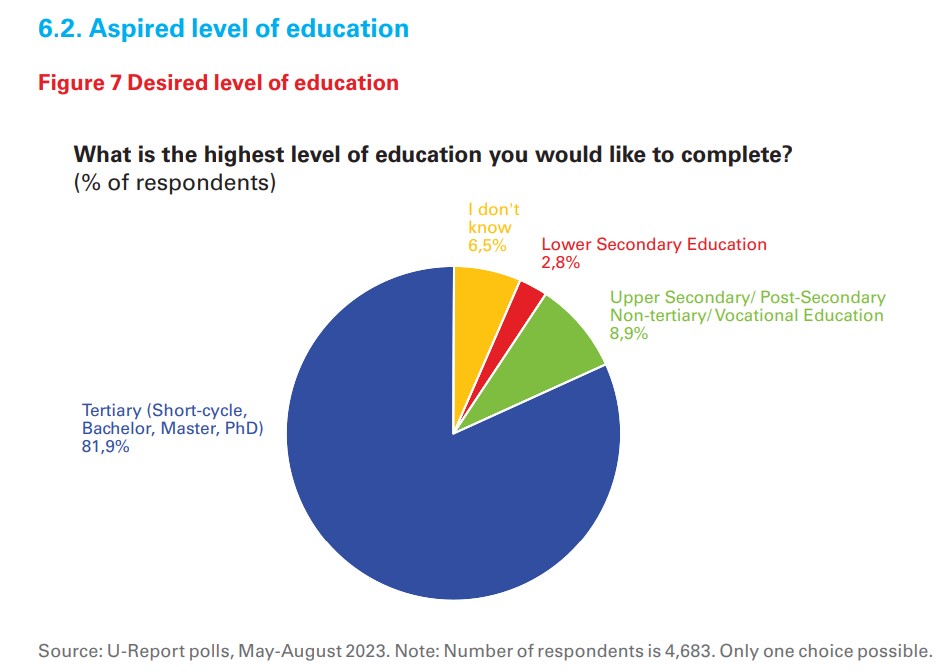
According to a survey by the European Training Foundation (ETF), about 81.9% of young people in Albania and the region want to complete higher education, while only 2.98% prefer primary education, 8.9% secondary education, and another 6.5% are unsure about their academic career path.
The vast majority of young people, around 82%, stated that they aim to complete a higher level of education (including short-cycle bachelor’s, master’s, doctoral studies, or their equivalents).
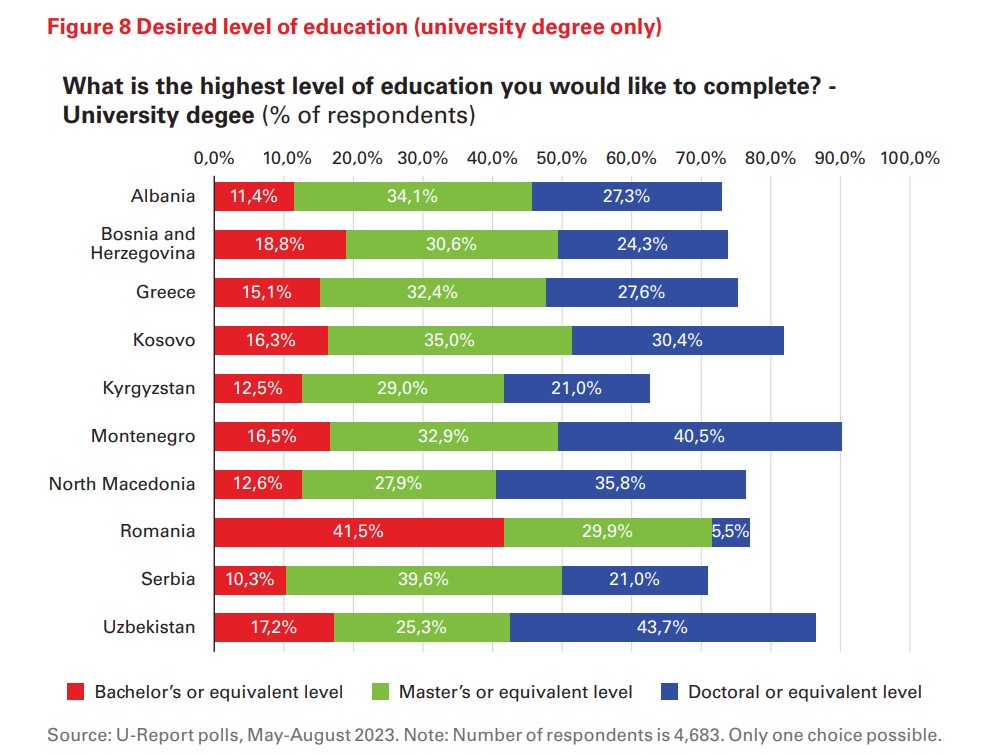
Among Albanian adolescents aspiring for higher education, 11.4% want only bachelor’s studies, 34.1% want both bachelor’s and master’s studies, and 27.3% also aspire for doctoral studies.
The aspirations for higher education levels among Albanian youth are similar to the region except in Romania, where only 5.5% of young people aspire for a doctoral degree.
Survey participants and focus groups mentioned that young people face high expectations from their families and societies. Therefore, these educational aspirations may largely reflect familial expectations and consequently social expectations to achieve the highest possible education.
ETF analysis shows that, however, these expectations are highly problematic because they do not necessarily reflect labor market needs or skills. Parental expectations often do not recognize opportunities regarding salaries, careers, and job satisfaction that can come from professional advice.
Follow-up studies on graduates’ employment can be a very useful tool to guide young people who have not yet started higher education. Labor force surveys and labor market statistics are essential information for young people in the early stages of education.
Both in Albania and the region, young people aim to over-qualify in elementary professions that do not require higher education such as agriculture, forestry, fishing, and manufacturing.
Elementary professions are favored by 60% of young people who also aspire to have a higher level of education even though it is not necessary.
ETF highlights that schools in the region should develop curricula to help students understand the relationship between education levels, professions, and job prospects.