

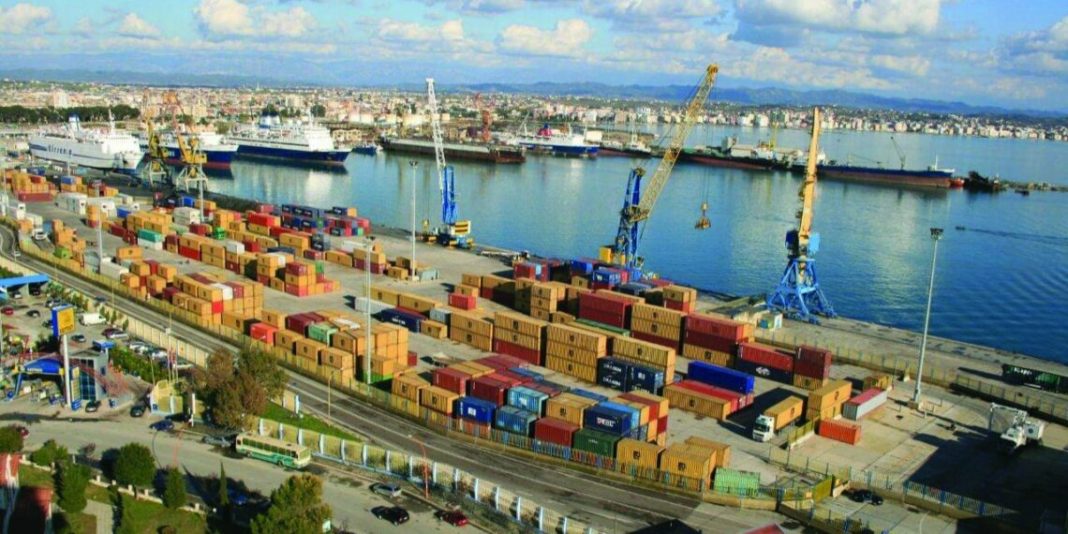
The Ministry of Infrastructure and Energy, as well as the Ministry of Tourism and Environment have issued a joint statement on the issue of containers with toxic waste that were sent from the Port of Durrës to Thailand and China and returned again.
The statement states that the goods containing waste have come out of the technological processes in Albania and Kosovo.
According to the statement of these Ministries, from the verifications of both logistics processes above, as well as of similar cargoes in the past, goods with such classification have never been considered as hazardous waste by the customs and environmental authorities.
The statement also states that this issue, to which the Albanian authorities have reacted in time, has been used politically by the opposition and some media to attack the government.
STATEMENT FOR MEDIA
A few simple facts, to clearly separate toxic news from the suspected dangerousness of goods.
For several days, certain media sources have been making allusions to “dangerous goods” that have come out of Albania, while political statements accuse the Government of inaction in relation to suspected cases of irregular transport to Thailand and China of a quantity of goods with content of waste from technological processes in Albania and Kosovo.
It is important to reiterate that from the first moment these suspicions were signaled last month, state structures immediately launched an intensive exchange of information as well as a joint investigation with OLAF (European Union Anti-Fraud Office).
But despite the fact that it would be right to wait for the results of the investigations, against the injustice of those whose only means of survival in the media and political market is the denigration of law enforcement agencies, we must react to public opinion, to establish the border between the real world and that of fabrications and unstoppable accusations.
Refuge goods, be they minerals, metals, scrap or their by-products, as well as their production or processing areas, are often subject to special control by environmental, national and international customs entities, due to the waste related to the process of processing, and polluting properties that these may contain.
However, it should be made clear that whether the Basel Convention on the control of transboundary movements of hazardous waste and their disposal, whether European or national regulatory acts for the export, transit and classification of waste, never prohibit the transport and export of goods that are categorized such, but only regulate the special protocols and procedures of authorizations and control of their export.
It is precisely the environmental and customs regulatory acts that clearly define which goods require special authorizations to be exported.
In both reported cases of transport, from Elbasan to Thailand and from Kosovo to China, the goods declared as iron oxides/hydroxides or zinc concentrate were transported from the Port of Durrës to European ports through international container lines with unquestionable reputation and not they became control objects in the EU countries, where they stopped and were temporarily stored, but were allowed to continue their route.
From the verifications of both the logistics processes above, as well as of similar cargoes in the past, goods with such classification have never been considered as hazardous waste by the customs and environmental authorities.
The same applies from the point of view of port legislation and maritime transport: These goods do not belong to the categorizations provided for in the International Maritime Dangerous Goods Code (IMDG Code) and consequently it cannot be alluded to the inaction of the port administration or that marine.
The facts show that such cargoes are regularly accepted by transit countries and by final destination countries. More specifically, it turns out that recently 360 such container units have been accepted by the Chinese customs authorities in the last 10 months alone.
In any case, international conventions provide that the declaration of cargo as dangerous goods or hazardous waste is the obligation of the exporter or importer, which must be evidenced through the accompanying documentation of the goods from the manufacturer, analyzes and relevant authorizations. Even in this case, it is the investigations of law enforcement bodies, which we fully support and encourage, that will clarify the responsibility in question.
The Albanian environmental, port and customs authorities have been operating for years with strict protocols in terms of authorizations for the processing and transport of dangerous goods, in accordance with the relevant international conventions. Moreover, this readiness of our critical infrastructures has been verified and certified in several international inspections during the last years, classifying Albania as a safe country.
In these circumstances, it is not possible for Albania to accept a priori the return of such cargoes, even more so only on the basis of suspicions and speculations, without the realization of exhaustive analyzes and reliable and verifiable legal evidence.
Therefore, instead of making the law enforcement agencies responsible for the evident efforts of two economic operators, namely one in Albania and the other in Kosovo, to avoid their responsibilities, it would be better for everyone to wait for the results of the investigations and relevant analyses.
Meanwhile, we assure the public opinion that the above is the truth based on national and international laws and real facts, while the others are toxic consumption of the political and media market.




