

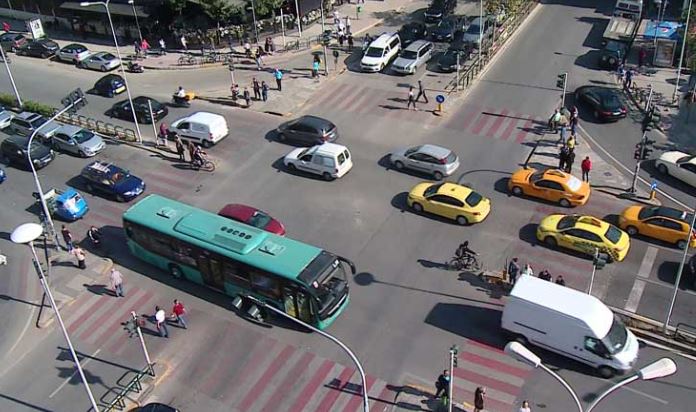
Despite the continuous growth in the number of vehicles in the country, Albania remains one of the least motorized countries in Europe.
The latest data published by Eurostat, updated with the 2023 Census population figures, show that by the end of last year, around 742,000 active vehicles were registered in the country. This translates to 306 cars per 1,000 inhabitants. This ranks Albania third from the bottom on the continent, ahead of only Turkey, with 176 vehicles per 1,000 inhabitants, and North Macedonia, with 264.
However, the situation is different in Tirana. The number of people who own a car in the capital has increased significantly. At the end of 2024, 340,000 vehicles were registered in Tirana, accounting for one-third of the total vehicles in the country.
In relation to the municipality’s population, this means that in Tirana, there are now about 500–550 vehicles per 1,000 residents, or roughly one car for every two people.
These figures are close to the European Union average, which stands at about 550 cars per 1,000 people. However, this number does not reflect the situation across the entire country, as other areas remain far below this average.
The data show that Albania has few cars per capita, but urban traffic—especially in Tirana—is increasingly problematic. This raises serious concerns about urban planning, the quality of public transport, and the condition of road infrastructure.
The country with the highest number of vehicles is Italy, where, according to Eurostat, there are 694 cars per 1,000 inhabitants. Meanwhile, countries like the Netherlands, Sweden, and Denmark lead in the percentage of electric vehicles, reflecting a growing trend toward clean technology and environmental sustainability.
The data also show that Central and Eastern European countries have seen rapid growth in motorization over the past two decades. Romania, for example, has had the highest average annual increase in cars per capita, at +5.4% per year, followed by Poland.




