
Preliminary results from Kosovo’s weekend municipal elections showed that most major municipalities are heading to runoff votes, highlighting the country’s ongoing political fragmentation — and underscoring the persistent tensions in Kosovo–Serbia relations, Associated Press reports.
Most of the main ethnic Albanian–majority municipalities, including the capital Pristina, appeared to be heading for a runoff, according to preliminary results released on Monday. In contrast, all but one of the Serb-majority municipalities were won by Srpska Lista (Serb List) — the dominant Serb party closely aligned with Serbian President Aleksandar Vučić.
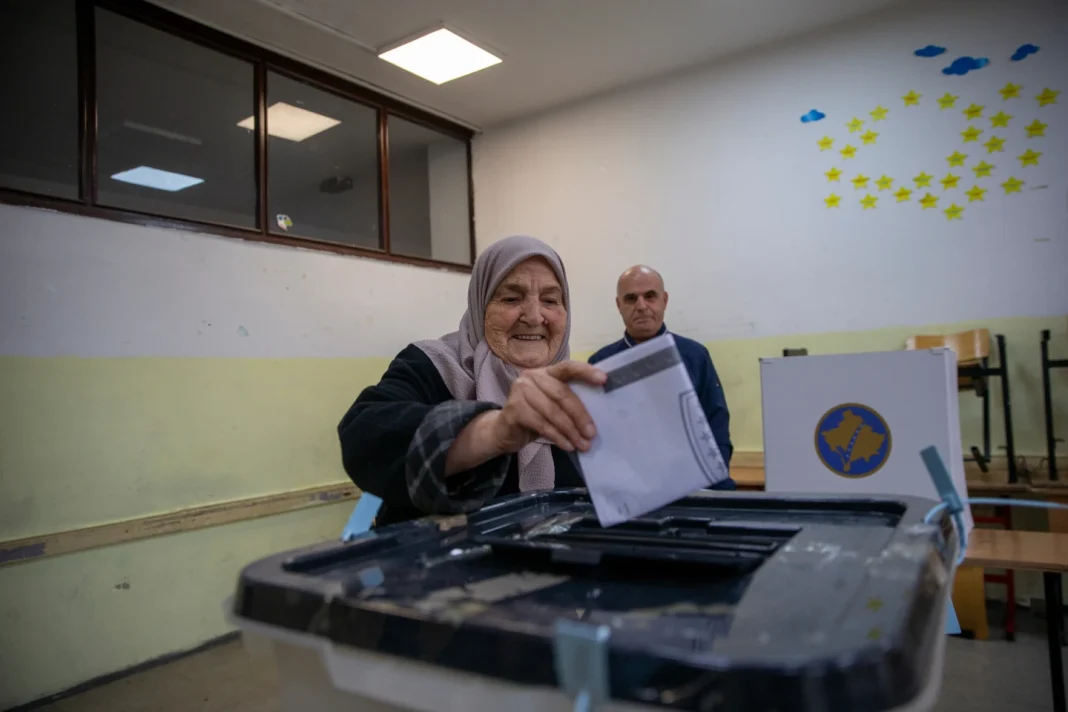
About 2.1 million voters in the small Balkan nation cast ballots on Sunday to elect mayors in 38 municipalities and around 1,000 seats in local councils. Election officials said preliminary voter turnout stood at 40%, lower than four years ago and compared to the parliamentary elections earlier this year.
According to the Central Election Commission (CEC), 21 municipalities will head to a runoff on November 9, as no candidate secured more than 50% of the votes — the threshold required to win outright in the first round.
Preliminary results for the mayoral races show that the ruling left-wing Vetëvendosje (Self-Determination) movement of Prime Minister Albin Kurti won in only three municipalities, while most other victories went to center-right opposition parties.
The weekend vote came as Kurti’s party also faces the challenge of forming a new government, and the lack of decisive wins suggests a difficult road ahead in that process as well.
The absence of a new government has been detrimental for the country, which seeks greater engagement from the European Union in developing its economy and advancing its path toward EU membership.
The local elections were held just two days after Kosovo’s Parliament ended an eight-month political deadlock, completing the election of its full leadership — including a representative from the ethnic Serb minority.
On Saturday, the acting prime minister was officially tasked with forming a new cabinet within 15 days — a process further complicated by Sunday’s local election results, as major opposition parties have so far refused to enter coalition talks.
Kosovo’s independence remains a hot issue in the Balkans. Around 11,400 people, mostly ethnic Albanians, were killed in the 1998–1999 war, which ended after a NATO air campaign drove out Serbian forces. While most Western countries recognize Kosovo’s statehood, Serbia — backed by Russia and China — does not.
Associated Press